

Audio By Carbonatix
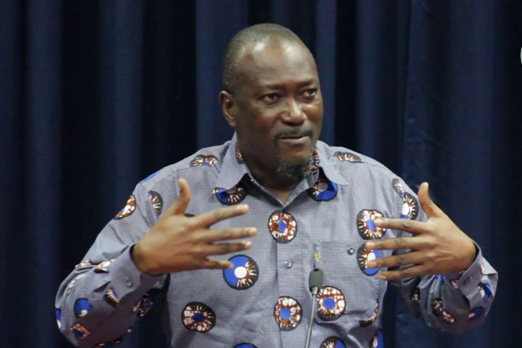
Professor Henry Kwasi Prempeh, Executive Director, Ghana Centre for Democratic Development, has expressed concerns about the secrecy of Article 146 of the 1992 Constitution concerning a Chief Justice’s (CJ) Removal Petitions.
In a statement, Prof Prempeh, who is also the Chairman of the Constitution Review Committee, noted that he had at least two problems with Article 146 in its present form.
He said the first was the secrecy or lack of transparency concerning the removal petition.
“Even if the removal proceedings must be held in camera, I believe that, at the minimum, the findings and outcome of the proceedings, including the grounds and supporting evidence behind the removal petition, must be made public after the fact–that is, whether or not the petition succeeds,” he stated.
“The public must not be kept in the dark as to why a removal petition failed or succeeded.”
Prof Prempeh reiterated that in the interest of justice, he believed the grounds and evidence in support of the Committee’s decision, whichever way must be made public, so that the public, too, could judge for themselves as to whether justice was served in the matter.
Touching on his second concern, Prof Prempeh said: “I think that, where the removal petition pertains to a Chief Justice, no sitting judge should be included in the five-person removal Committee that is constituted to hear the petition”.
“In other words, none of the CJ’s judicial peers must be made to sit in judgment on a removal petition involving their judicial colleague or “boss”, as they are likely to have an interest in the outcome of the case.”
He advocated that they could use retired jurists or other retired career public servants, preferably appointed by a special Committee of the Council of State, in place of sitting judges.
Prof Prempeh said the three other non-lawyer members of the removal Committee could also be selected through a more politically inclusive, diverse or neutral process, as opposed to being appointed, as Article 146 currently provides, by the President in consultation with the Council of State.
“Better to keep a President out of the removal process, except to implement, after the fact, the final outcome of the process as determined by an independent removal Committee,” Prof Prempeh said.
Latest Stories
-
Photos: President Mahama meets Tanzania President Suluhu Hassan
5 minutes -
Fuel prices could rise if Middle East conflict escalates – ACEP Boss
9 minutes -
Mahama calls for cessation of Iran-US-Israel conflict, urging return to dialogue
24 minutes -
Elsie Addo Awadzi: Leadership reflections, one year on; 7 lessons from 7 years in public office
40 minutes -
Finance Minister announces expiration of DDEP-induced restrictions on domestic bond issuance
53 minutes -
Gov’t urged to aid private nursing training colleges to ease burden on public ones
58 minutes -
Kumasi Mayor vows to keep Kejetia Market free from highly inflammable materials
1 hour -
Ghana safe from fuel supply disruptions amid Middle East tensions – Dr Oppong
1 hour -
Ghana Development Awards 2026 set to celebrate excellence in nation-building and economic recovery
2 hours -
IMANI opens applications for 12th SYPALA summer seminar
2 hours -
Khamenei’s wife dies after suffering injuries in air strike – Iranian media
2 hours -
Modernising customs operations: Leveraging advanced technology to combat fraud and inefficiencies
2 hours -
Accra Professional Ladies Open returns after three-year hiatus to mark International Women’s Day
2 hours -
Savannah police command lauds Yagbonwura and others for sustaining current peace
2 hours -
SONA crafted to set up President Mahama – Economist
3 hours