

Audio By Carbonatix
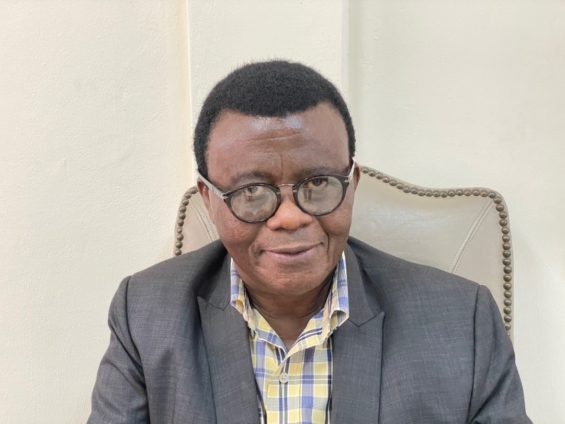
Governance expert and former UN Senior Governance Advisor, Prof Baffour Agyeman-Duah, has raised concerns over the timing and manner in which the Chief Justice, Gertrude Torkonoo, has been suspended by President John Mahama.
He suggests it casts a shadow over the integrity of the process and creates an impression of a political agenda.
Speaking in an interview on Joy FM's Middaynews on Wednesday, April 23, Prof Agyeman-Duah said the rushed nature of the suspension and its proximity to recent political declarations give room for speculation and public doubt.
“The issue of timing and the rush create an impression that perhaps the President has an agenda in this particular case,” he stated, referencing President Mahama’s earlier commentary about the judiciary on the campaign platform. “This becomes what you call a self-fulfilling prophecy. He said it, and now he’s doing it.”
His comment comes after President John Mahama suspended the Chief Justice after concluding that there are sufficient reasons to pursue further investigation, based on a petition filed by three individuals accusing the Chief Justice of misconduct and incompetence.
Read also: Mahama suspends Chief Justice after setting up committee to probe petitions
While acknowledging that the Constitution outlines a clear process for addressing allegations against a sitting Chief Justice and that the President appears to be operating within those legal boundaries, Prof Agyeman-Duah stressed that the optics and political context of the move are problematic.
He emphasised the importance of preserving the principle of separation of powers, warning that if partisan motives begin to drive actions against independent institutions, it could set a dangerous precedent.
“Even if the Chief Justice has serious cases to answer, that prejudice that was expressed earlier changes the whole thing. We are creating some kind of muddiness in this whole process.”
He further explained that his comments are not an attempt to exonerate the Chief Justice, but rather to highlight the need for caution and restraint in handling matters involving the judiciary, especially in a fragile democratic environment.
Latest Stories
-
Mahama honoured at 2026 World Health Summit in Berlin for global health leadership
2 minutes -
Breast cancer is not a death sentence – Besease Kontire Obaapanin, Magmina Foundation lead awareness campaign
4 minutes -
EcoBank invests in digital education of 4 Garisson School to mark 40 years in Africa
35 minutes -
AGI urges investment in skills and raw materials to strengthen local manufacturing
38 minutes -
GPL 2026/27: ‘We have to rectify our mistakes’ – Boadu reacts to Aduana FC defeat
39 minutes -
No disability access, no building permit – KMA declares
39 minutes -
Asantehene to lead environmental restoration effort at Jimi Land Reclamation Site
43 minutes -
Poor Ghanaians are being jailed because they cannot afford justice – Crime Check Foundation
44 minutes -
No conflict in appointing Emelia Agbenyo as Deputy EC Chair – NDC
45 minutes -
87-year-old man jailed 20 years for defiling 9-year-old girl at Ofankor
47 minutes -
Sankofa Gold targets 70kg output after 9-month shutdown
50 minutes -
Tamale, Bolgatanga had just one Legal Aid lawyer between them – Kwesimintsim MP
57 minutes -
PAC orders eviction of former irrigation company MD from official residence
1 hour -
Legal Aid Commission has offices in only 45 of Ghana’s 261 districts, needs 180 more staff
1 hour -
Challenging Heights welcomes Ghana’s Tier 1 ranking, calls for more anti-trafficking funding
1 hour