

Audio By Carbonatix
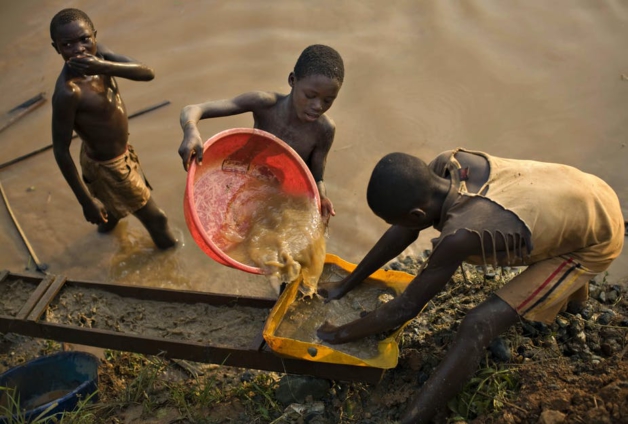
As the world marks the World Day Against Child Labour, the Ghana Statistical Service (GSS) has unveiled concerning statistics showing that close to 900,000 children aged 5 to 17 years are engaged in paid employment across the country.
In a statement issued to commemorate the day, the GSS highlighted that male children dominate the child labour force, comprising 56% of the working children. Disturbingly, nearly half a million (458,443) of these children are not attending school, including 68,500 who have never attended school and 389,943 who attended school in the past.
“The 2023 Annual Household Income and Expenditure Survey indicates that over 1.1 million children 5 to 17 years were involved in different forms of work in the fourth quarter of 2023, which represents one in every 10 (10.3%) children in this age range. Among these children, about 893,000 are involved in employment work, which is mostly paid work,” portions of the statement reads.
The report underscores a stark urban-rural divide, with 72% of working children residing in rural areas, compared to 28% in urban areas.
It added that "regionally, Ashanti leads with the highest percentage of working children at 13.6%, followed by Bono East (12.1%) and Northern Region (11.8%). Conversely, Ahafo (0.8%), Greater Accra (1.6%), and Western North (1.8%) have the lowest percentages of working children."
Breaking down the types of work, the GSS found that 35.4% of children are engaged in family help, 31.2% in farm work, 11.7% as unpaid trainees, and 7.3% in own-use production. Additionally, 6.2% of children are involved in non-farm work, 5.3% in wage work, and 2.9% in domestic, non-productive agriculture, voluntary work, or apprentice work.
Elementary occupations dominate the landscape for working children, accounting for 60.4%, followed by craft and trade-related work (19.8%) and skilled agricultural, forestry, and fish-related work (17.7%). Service and sales workers make up 1.7%, while plant and machine operators and assemblers represent 0.2%, and managers constitute 0.1%.
The services sector employs the majority (91.7%) of working children, with agriculture and industry accounting for 4.8% and 3.6%, respectively.
Latest Stories
-
Photos: Speaker Bagbin Commissions MPs constituency office under parliamentary decentralisation programme
11 minutes -
Black Stars technical advisor Winfried Schäfer sacked as GFA shakes up backroom staff
16 minutes -
Wenchi water project almost complete, critical to gov’t agenda – GWL MD
32 minutes -
Anti-LGBTQ+ bill not part of government’s legislative agenda – Inusah Fuseini
34 minutes -
Anti-LGBTQ Bill: Forget the rumour mongers, I’m a man of action, and will pass the bill – Speaker
1 hour -
Women and children among those killed in Sudanese army shelling of wedding celebration
1 hour -
President Mahama is not sincere with Ghanaians on LGBTQ bill matter – Hassan Tampuli
2 hours -
Gov’t to establish Prison Industrial Hub to equip inmates with income-generating skills – Prison Service boss
2 hours -
Alhassan Tampuli donates cement, roofing sheets to support storm victims in Gushegu
2 hours -
Alhassan Tampuli appeals for urgent support for storm victims in Gushegu
2 hours -
The hypocrisy must stop; pass Anti-LGBTQ+ Bill now – Alhassan Tampuli to Mahama
2 hours -
Imprisonment should be rehabilitative, not punitive – Ghana Prisons boss at UNGA
2 hours -
Ga Adangbe traditional priests petition Mahama over McDan aviation licence revocation
3 hours -
Anti-LGBTQ Bill: NDC’s arrogance is worrying – Hassan Tampuli
3 hours -
Let’s give OSP time to mature, not to scrap it – Hassan Tampuli
3 hours