

Audio By Carbonatix
New data from the Ghana Statistical Service (GSS) shows that education and gender are significant shields against food security, with uneducated and female-headed households bearing the heaviest burden.
The quarterly food insecurity report (from the first quarter of 2024 to the third quarter of 2025) noted that households headed by persons with no formal education faced a 50 percent insecurity rate, compared to just 15 per cent for those with tertiary education.
The data also showed that food insecurity prevalence among female-headed households reached a maximum of 44.1 per cent between the first and second quarters of 2025, compared with 38.7 per cent among male-headed households.
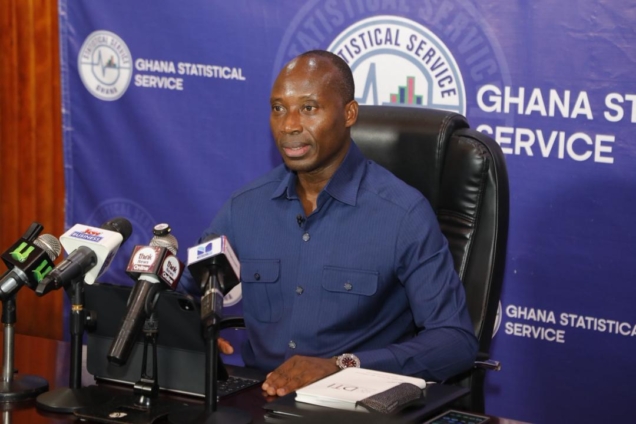
Dr Alhassan Iddrisu, the Government Statistician, speaking at the release of the report on Tuesday, emphasised that education served as a “protective shield,” providing better income opportunities and resilience against economic shocks.
“The link between food insecurity and child malnutrition is very striking. This is not just a food issue—it’s a human capital issue with long-term implications for learning, productivity, and health,” Dr Iddrisu said.
In quarters two and three of 2025, food insecurity was the highest among households with no education, at about 50 per cent, and lowest among those with tertiary education, at about 15 per cent, he said.
“Education matters a lot in addressing food insecurity, as it provides a protective shield for food insecurity…,” he said.
Dr Iddrisu recommended that the government invest in education and child nutrition to break the long-term vulnerability, focusing on skills development, youth employment, and rural income diversification.
He also called for expansion of nutrition-sensitive social protection, prioritising female-headed households and families with children and the elderly, instead of a one-size-fits-all social intervention.
He encouraged Metropolitan, Municipal, and District Assemblies (MMDAs) to use the data to identify vulnerable communities and align local development plans accordingly, while supporting community-based nutrition and livelihood programmes.
The Government Statistician urged development partners to align their financial and technical support with region-specific food insecurity patterns and nutrition risks in the data.
For civil society organisations, he said it was important to provide investment and interventions that supported livelihood diversification, food value chains, and affordable nutrition, particularly for vulnerable households.
Latest Stories
-
Dîner en Blanc Accra returns on December 28 for second edition
42 seconds -
David Selassie Anthony declares bid for NDC Deputy National Organiser
2 hours -
Amin Adam proposes 13 measures to strengthen Ghana’s debt transparency and market confidence
2 hours -
Mahama announces $2bn annual investment to accelerate industrialisation
2 hours -
Amin Adam urges monthly disclosure of Sinking Fund as Ghana prepares for DDEP repayments
2 hours -
Stronger banks will fuel business growth and jobs – ADB MD
2 hours -
Galamsey: ‘Rivers that fed our grandparents now run the colour of chocolate milk’ – Sam Jonah
2 hours -
We have been scammed by NDC, government is only doing PR – Abanga Fuseini
2 hours -
Republic Bank–JoyNews Habitat Fair opens in Ho today
2 hours -
Dr Boako challenges government over new digital tax
2 hours -
BoG pledges stability to attract investment, urges stronger Africa–Asia partnerships
2 hours -
Amin Adam warns treasury bill dependence could expose Ghana to refinancing risks
2 hours -
Ghana better placed to withstand commodity price shocks – IMF
2 hours -
GAPTE intensifies efforts to increase bus availability for Aayalolo contra-flow
2 hours -
Amin Adam warns cedi depreciation could reverse Ghana’s debt relief gains
2 hours