

Audio By Carbonatix
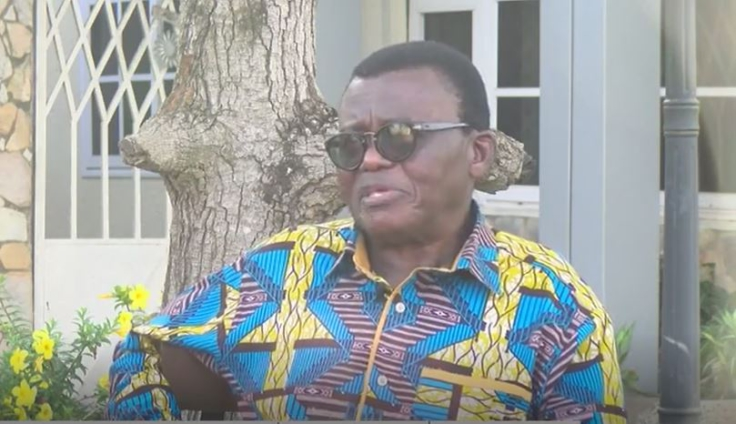
Former United Nations Senior Governance Adviser Prof. Baffour Agyemang-Duah has attributed many of Ghana's governance challenges to a lack of character-driven leadership, arguing that education without strong moral values has contributed to corruption and poor public administration.
Speaking on Joy FM's Midday News during a discussion on the ongoing constitutional review process, Prof. Agyemang-Duah said legal reforms alone would not transform the country unless they are accompanied by efforts to cultivate integrity, accountability and civic responsibility.
According to him, Ghana's governance problems stem not only from institutional weaknesses but also from a crisis of values.
"If a nation does not have core values that it cherishes, no matter what laws you pass, or consitutiomnal reviews you undergo, we are not going to change anything. The character of the people is a problem and I think I can say that education without character is worse than getting no education at all because we are going to use that education, as we have it now, to create problems for the country," he said.
He argued that despite the country's investment in education, many of those entrusted with public office continue to engage in corruption and other unethical practices.
"I mean, all the people who are making laws for us and regulations are highly educated, and yet we have problems of corruption and stealing. I can go on and on," he stated.
He therefore called for a fundamental overhaul of Ghana's educational system to place greater emphasis on character formation alongside academic achievement.
According to him, schools should deliberately instil values such as honesty, patriotism, discipline and public service to prepare young people for responsible leadership.
"We have to find an educational system that inculcates certain fundamental values in our children so that when they grow up to become leaders, they can be different from us," he said.
Prof. Agyemang-Duah also expressed concern that the current generation of leaders risks passing on poor governance practices to future generations if deliberate efforts are not made to change the country's value system.
"This generation may be failing the younger generation, and if they fail us, it is because they will be reflecting our failures, not their own failures," he said.
He noted that Ghana's democratic and governance aspirations would remain difficult to achieve unless reforms focus not only on institutions and laws but also on building leaders of integrity and strong character.
Latest Stories
-
Mahama urges African governments to treat healthcare as an investment, not budget cost
2 minutes -
Bawumia congratulates John Boadu and new NPP executives, pledges support ahead of 2028
4 minutes -
‘No talent should be left out’ – Bawumia pledges inclusive NPP campaign for 2028
10 minutes -
Prof. Mike Oquaye recounts how he blocked Special Prosecutor’s attempt to arrest Bawku Central MP
25 minutes -
Make health sovereignty a priority for Africa – Mahama
37 minutes -
Dorimon Naa, Wa West DCE lead massive clean-up exercise; threaten sanctions against recalcitrant residents
54 minutes -
Photos From Adom FM Y2K Jam
57 minutes -
Praye Tiatia steals the show at Adom FM Y2K Jam [Watch]
1 hour -
Boakye Agyarko congratulates John Boadu, pledges support for NPP leadership
1 hour -
Antwi HiMight thrills fans with Antwi ne Antwi hits at Adom FM’s Y2K Jam [Video]
2 hours -
Amb. Edward Boateng congratulates Boadu, Kodua on election wins
2 hours -
John Boadu pledges to rebuild NPP from grassroots and restore ‘winning machinery’
2 hours -
Ashaiman Assembly deploys monitoring system to curb dumping in storm drain
2 hours -
John Boadu must rebuild, unite NPP for 2028 – Edward Boateng
2 hours -
Executive intimidation of opposition undermines separation of powers – Prof Oquaye
2 hours