

Audio By Carbonatix
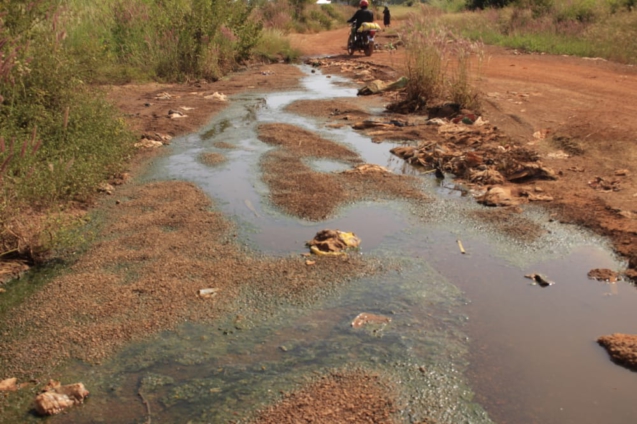
Residents of four communities around the landfill site in the Sagnarigu Municipality of the Northern Region say sewage from the site is contaminating their source of drinking water.
They allege that water from the site moves into a stream and finds its way into their wells and dams.
The communities of Gbalahi, Santugu Kontaliga and Kula are situated down the hill from the landfill site which makes it possible for elements from the site to easily get into these communities.
The people say the situation is heightened during the rainy season.
According to them, diarrhoea, cholera and typhoid are the most common illnesses in the area.
A farmer within the enclave, Yamba Salifu, said during the rainy season faecal matter overflows and runs into their water bodies.
He said farmers who have their farms around the area are forced to carry water from home anytime they go to the farm.
"You see that I am carrying my pure water. We the farmers know the toilet runs into the water so we can't drink it," Mr Yamba stressed.
He said it is an age-long problem that has been left unsolved.
A resident of Kontalga, one of the communities affected, said cholera is a common illness in the area.
He appealed to the government to intervene.
"We do not have potable water here. The only water is from the dam which is polluted; making us sick all the time. We also do not have a clinic, so you see the difficulty?" he added.
The Chief Linguist of Santugu said it is a huge problem facing the community but they have no option. According to him, most residents have been in and out of the hospital, especially this year.
Afa Abukari said the people most affected are women and children.
On her part, a midwife at the Kula CHIPS compound, Isaiah Swad, confirmed that diarrhoea, typhoid and cholera are top cases they record in children under five.
“The most common sickness is diarrhoea and vomiting and it is always among children," she said.
Madam Swad added that typhoid is also common among the adult population.
She attributed these sicknesses to the contamination of the water the people drink.
Meanwhile, an Engineer at the Tamale Metro Assembly, the department that manages the landfill site, Demedeme Emmanuel, said the site was established after due process.
He said per their assessment and by the design, there shouldn't be residues running into waterbodies; adding that pipes were laid to convey the water into the wastewater treatment facility.
Mr Demedeme explained that what is happening could be excess water or rainfall that has saturated around the premises of the landfill site running into the stream and not from the landfill site.
Latest Stories
-
NACOC set to issue licences to qualified applicants for cannabis cultivation – Deputy Director-General
6 minutes -
Easter Outreach: Victory Bible Church offers free healthcare, NHIS support to hundreds
9 minutes -
NPP cannot pressure Mahama to sign a bill not yet received—Solomon Owusu
19 minutes -
MPs, institutions deepen support for Ghana Sports Fund with fresh contributions
26 minutes -
Four people die trying to board boat in Channel crossing attempt
33 minutes -
Abirem MP announces GH₵500,000 education fund to support needy students
33 minutes -
African stakeholders call for stronger ‘One Health’ action on climate and health crises
35 minutes -
DVLA to commission 5 new service centres in Greater Accra
40 minutes -
Agenda 111 and the right to health: A broken social contract
43 minutes -
Bawa-Rock Ltd funds GH¢400,000 free surgeries for 102 vulnerable patients
46 minutes -
Lambussie MP awards over GH¢200,000 in scholarships to students
50 minutes -
Vice President expresses gratitude after double enstoolment in Volta Region
51 minutes -
Beyond the Noise: Rebuilding trust in journalism in a digital age
55 minutes -
I have to follow the law – CAF president tells Senegal regarding AFCON saga
59 minutes -
No government has shown urgency — Political scientist pushes Mahama on LGBTQ+ bill
59 minutes