

Audio By Carbonatix
The United Nations Economic Commission for Africa says it is optimistic that the 2023 United Nations Climate Change Conference or Conference of the Parties of the UNFCCC (COP28) underway in Dubai will fully "operationalize" the much-anticipated loss and damage fund.
The fund has been a long-standing demand of developing nations on the frontlines of climate change coping with the cost of the devastation caused by ever-increasing extreme weather events such as drought, floods, and rising seas.
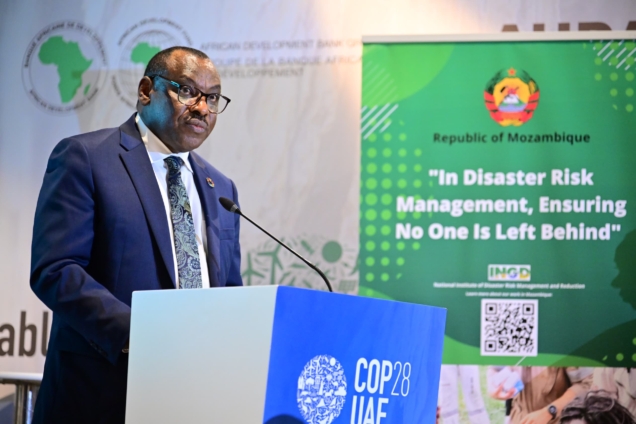
Claver Gatete, Executive Secretary of the United Nations Economic Commission for Africa, in his opening address to participants at the COP28 side event on Loss and Damage, intimated that "we are aware that there is so much work to be done to make the fund operational, but we are optimistic that before the end of this COP28, we'll have an agreed-upon the necessary arrangements."
The Executive Secretary, however, noted with pleasure the efforts of COP28 - Sharm El-Sheikh, which established the loss and damage fund, concluding the entire discussion that crossed almost three decades.
"COP28 has started positively with the adoption of the recommendation of the transitional committee on loss and damage. The fund is now funding pledges amounting to six hundred and fifty-six million as of yesterday (December 2, 2023). It is very encouraging and marks the beginning of a very important era in our efforts to address climate change and its impacts," Claver Gatete intimated.
According to a G20 panel's assessment released at the start of 2023, additional funding of about $3 trillion annually by 2030 will be needed for incremental investments in climate action and for reaching other sustainable development targets.
The Group of 20 countries commissioned the independent group, led by economists Lawrence Summers and N.K. Singh, suggesting changes for multilateral development banks, with an emphasis on boosting funding for goals related to sustainable development and climate change, among other things.
Given the much-needed financing arrangements, the Executive Secretary of UNECA remained hopeful that the pledges would be "promptly translated into actual payments" into the fund while making it usable by the member countries.
In the African context, the UNECA boss supported projections that the economic cost of climate change in developing countries will reach between 290 billion and 580 billion annually by the year 2030.
"This, of course, calls for a lot of resources to be invested, especially for the Loss and Damage fund; thus, there is a need for the rapid scaling up of the Loss and Damage fund," Mr. Gatete noted.
Latest Stories
-
The Ghanaian prophet and the mysterious death of his scottish wife Charmain Speirs
43 minutes -
Nearly 400 sentenced in Nigeria for links to militant Islamists
1 hour -
Ghana’s recovery supported by gold strength despite global oil price pressures – Standard Bank Research
1 hour -
‘Excellence is our inheritance’ – Nana Sam Brew-Butler hails Mfantsipim’s 150-year reign in leadership
2 hours -
Kwaku Azar writes: A-G vs OSP
2 hours -
Mfantsipim–Adisadel rivalry built excellence, not division – Sam Jonah
2 hours -
Vice President launches Mfantsipim’s 150 years of shaping Ghana’s greatest mind
2 hours -
I assure Otumfuo, Mahama will join him to commission KNUST Teaching Hospital by end of this year – Haruna Iddrisu
3 hours -
Barcelona dominate derby to extend La Liga lead
3 hours -
Gov’t to roll out free special education for persons with disabilities from July 1 – Education Minister
3 hours -
Importers and Exporters Association declares full support for Publican AI port system
4 hours -
“We used it to test our officiating officials’ readiness” – Bawah Fuseini after CAA Athletics event
4 hours -
Volleyball emerges as Ghana’s fastest rising sport
4 hours -
National Sports Fund needs strong leadership from the top – Administrator David Wuaku
4 hours -
JoySports Exclusive: Steve McLaren in talks with GFA after expressing interest in Black Stars job
4 hours