

Audio By Carbonatix
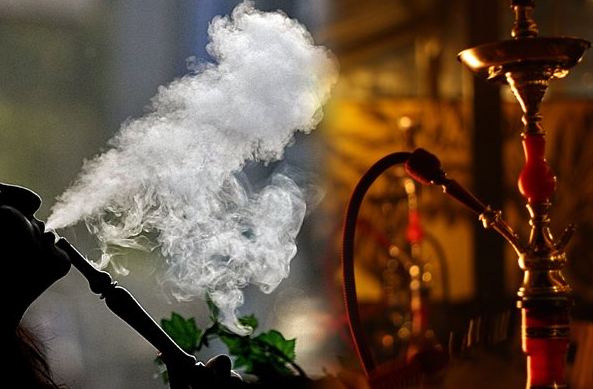
A policy document on Covid-19 and tobacco use by the School of Public Health, Kwame Nkrumah University of Science and Technology has called for the ban of Shisha use in Ghana to prevent the spread of Covid-19.
It further called for the ban of the sale and importation of tobacco products including cigarettes during the Covid-19, noting that the disease is a respiratory illness and tobacco could aggravate symptoms and worsen outcomes.
The document which was prepared in August, 2020 and copied to the Ghana News Agency, reports key result from a rapid response study (the Covid-19 and Tobacco Project) and it was set up to examine tobacco use and tobacco control during Covid-19 while building on an existing multi-country collaboration.
The study was carried out by Ellis Owusu-Dabo, Divine Darlington Logo and Patricia Amoah Yirenkyi with grant support from the UK Global Challenges Research Fund and additional funding from the University of Edinburgh’s Scottish Funding Council Global Challenges Research Fund (GCRF).
The document said: “Shisha use prevails among the youth, and involves sharing of the same mouth-piece which can be a route for SARS-Cov-2 transmission and other communicable diseases.”
It urged the government to increase tobacco taxes, ideally by 50 per cent to generate revenue to support healthcare delivery in the wake of Covid-19, adding that; “It is very necessary to raising tobacco tax to make money available for treating people who suffer from tobacco-related diseases as well as Covid-19”.
The document said this would reduce tobacco use among the youth because they were sensitive to high prices of tobacco products.
It said cigarettes remained the commonest form of tobacco use, pipe smoking (shisha), chew, sniffing, smokeless tobacco and ‘tawa’ use among other forms by Ghanaians and that the most recent Demographic and Health Survey in 2014 reports the prevalence of cigarette smoking among males to be 4.8 per cent and females 0.1 per cent.
It said the regional trend continues to show high prevalence from the northern part of Ghana – 31.2 per cent, 22.5 per cent and 7.9 per cent in the Upper East, Northern and Upper West Regions respectively.
The document said the recent data indicated that close to one in 10 junior high students use any form of tobacco products.
It said the current tobacco use could, from existing evidence, affect Covid-19 severity and therefore there was the need for government to integrate communicable and non-communicable disease risks into the overall health and wellbeing of the population.
Latest Stories
-
Volta Region seen as top choice for luxury weekend breaks — V. L. K. Djokoto
49 seconds -
Halt small-scale mining for one year to fight galamsey – Hopeson Adorye
5 minutes -
President Mahama orders full probe into ‘Big Push’ procurement exposé
23 minutes -
Weija-Gbawe MP calls for commissioning of Weija paediatric hospital
42 minutes -
Ghanaians dying in Russia–Ukraine war: The danger is real
43 minutes -
Player ratings: Oppong earns high marks as Sibo and Adjetey draw low scores in Germany defeat
46 minutes -
Pres. Mahama pledges action on 1.2m out-of-school children after School for Life raises concern
52 minutes -
Suhum MP vows NPP will probe Gold-for-Reserves in 2029
1 hour -
Ghana to host Zimbabwe’s President Mnangagwa on three-day state visit
1 hour -
Ghana pushes for stronger West African blue economy partnership at Liberia fisheries investment conference
1 hour -
Ghana hosts high-level African climate strategy meeting ahead of COP31 and COP32
2 hours -
Today’s Front pages : Tuesday, March 31, 2026
2 hours -
President Mahama welcomes Zimbabwe’s Mnangagwa for three-day state visit
2 hours -
Dr Anthony Adjiepong’s Pharmatrust Pharmacy receives top recognition at UG’s White Coat ceremony
2 hours -
OMCs increase in fuel prices at pumps: GOIL sells petrol at GH¢13.30 and diesel GH¢17.10
2 hours