


Audio By Carbonatix
Existing vaccines should still protect people who contract the Omicron variant from severe Covid cases, a World Health Organization (WHO) official says.
It comes as the first lab tests of the new variant in South Africa suggest it can partially evade the Pfizer jab.
Researchers say there was a "very large drop" in how well the vaccine's antibodies neutralised the new strain.
But the WHO's Dr. Mike Ryan said there was no sign Omicron would be better at evading vaccines than other variants.
"We have highly effective vaccines that have proved effective against all the variants so far, in terms of severe disease and hospitalisation, and there's no reason to expect that it wouldn't be so" for Omicron, Dr. Ryan, the WHO's emergencies director, told AFP news agency.
He said initial data suggested Omicron did not make people sicker than the Delta and other strains. "If anything, the direction is towards less severity," he said.
The new South African study - which has not yet been peer-reviewed - found the Pfizer/BioNTech vaccine may result in up to 40 times fewer neutralising antibodies against Omicron than against the original Covid strain.
But Omicron's ability to escape vaccine antibodies is "incomplete", said Prof Alex Sigal, a virologist at the Africa Health Research Institute, who led the research.
He said the results, based on blood tests from 12 people, were "better than I expected of Omicron".
Prof Sigal said vaccination, combined with previous infection, could still neutralise against the variant. That suggests boosters may bring a significant benefit.
Scientists believe previous infection, followed by vaccination or a booster, is likely to increase the neutralisation level and will probably protect people against severe disease.
More data on how well the Pfizer jab works against Omicron is expected to be released in the coming days.
There is no significant data yet on how the Moderna, Johnson & Johnson and other jabs hold up against the new variant.
Omicron is the most heavily mutated version of coronavirus found so far.
It was first identified in South Africa, where there is now a surge in the number of people catching Covid multiple times.
UK Prime Minister Boris Johnson's spokesman said early signs suggested Omicron could be more transmissible than the current Delta strain.
But Omicron's ability to cause severe disease is not yet clear.
Dr Anthony Fauci, the top US infectious diseases expert, said early evidence suggests Omicron could be more transmissible but less severe.
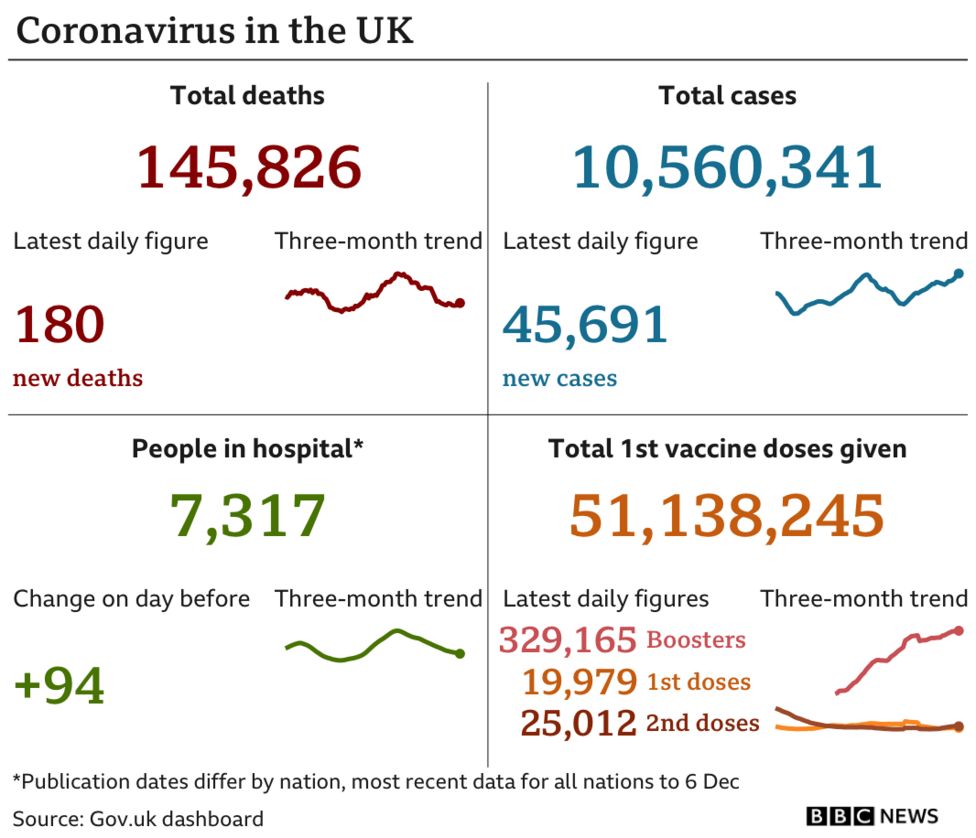
There have been more than 267 million cases and more than five million deaths around the globe since the pandemic started in 2020, according to data from Johns Hopkins University.
Latest Stories
-
IMANI wants NIC to probe possible conflicts of interest in reinsurance arrangements
40 seconds -
First Atlantic Bank strengthens balance sheet as net interest income surges 67%
5 minutes -
Choplife Gaming donates to Korle Bu Radiotherapy unit for Women’s Week 2026
6 minutes -
Would President Mahama have reduced cocoa prices if this were an election year ? – Annoh Dompreh asks
9 minutes -
Climate change, pollution and overfishing push White Volta fishermen to the brink
10 minutes -
IMANI demands review of SIGA directive steering SOEs toward SIC placements
15 minutes -
Climate change and pollution threaten livelihoods of White Volta fishermen
23 minutes -
First Atlantic Bank targets regional growth and digital expansion in 2026 outlook
26 minutes -
Bond market: Turnover surges 559.42% to GH¢2.49bn
30 minutes -
Dagomba line residents begin rebuilding after Easter Monday inferno
30 minutes -
ECG substation upgrade exercise: parts of Accra to experience power outages
34 minutes -
IMANI petitions Mahama over alleged procurement breaches in state insurance placements
39 minutes -
First Atlantic Bank posts strong 2025 results as profit surges 30.5%
42 minutes -
Maguire signs contract extension with Man United
45 minutes -
The WTO is debating trade: The world runs on investment
1 hour