

Audio By Carbonatix
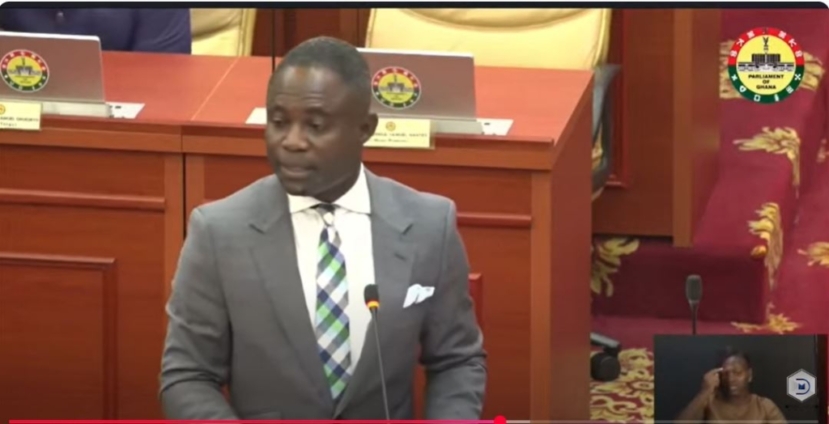
The recent surge in COVID-19 cases at the University of Ghana has prompted the Minister of Health, Kwabena Mintah Akandoh, to call on Ghanaians to remain vigilant and adhere to safety protocols while reassuring the public that there is "no need for panic".
The minister, addressing Parliament today, July 1, emphasised that the current outbreak is localised, caused by a known and generally mild variant, but he stressed the importance of continued caution due to its fast-spreading nature.
"This is not a new virus, and we are not back to 2020," Mr Akandoh affirmed, referring to the early days of the pandemic.
He explained that the cases are linked to the Omicron sub-variant, which Ghana's health system has successfully managed before.
"It spreads fast, yes – but it is mostly mild. And we know how to manage it."
While the University of Ghana's recent hall week celebrations were identified as the primary driver of the spike, bringing large crowds together with little adherence to face masks or social distancing, the minister's core message to the wider public was one of proactive prevention.
He outlined simple, yet critical, precautions that apply not only to COVID-19 but also to other circulating respiratory viruses like seasonal flu:
- Regular Handwashing: Wash hands frequently with soap and water.
- Mask Usage: Wear a mask in crowded or poorly ventilated places.
- Stay Home When Unwell: Isolate yourself if you are feeling sick.
- Avoid Gatherings if Sick: Refrain from attending social events if you are experiencing symptoms.
- Seek Early Medical Attention: Go to the nearest clinic as soon as symptoms are noticed.
The minister highlighted Ghana's robust influenza surveillance system and the confirmation capabilities of the Noguchi Memorial Institute for Medical Research, which detected the current outbreak early.
This, he noted, should reassure all Ghanaians that the surveillance system remains active and ready to detect and respond effectively should cases emerge outside the university campus.
As of July 1, the University of Ghana community has recorded 316 suspected cases, with 107 confirmed, and importantly, no hospitalisations or deaths.
All confirmed cases are reported to be recovering well.
Mr Akandoh concluded by urging calm, cooperation, and responsible public health practices.
"We’ve beaten back bigger waves before, and we can do it again—with calm, cooperation, and good public health practices," he stated, reinforcing the collective responsibility of Ghanaians in keeping communities safe. "COVID-19 is not over—but neither is our resolve."
Below is the full statement.
Latest Stories
-
KiDi brings the hits to London in sold-out UK headline concert
6 minutes -
The last goodbye of Ghanaian shot dead in the US
25 minutes -
MCC opens door to Ghana again as MiDA revives development partnership
34 minutes -
CSIR moves to turn scientific research into jobs, national growth
45 minutes -
More patrons troop in as 3rd Republic Bank-JoyNews Habitat Fair clinic enters final day stretch
53 minutes -
German, Russian foreign ministers hold rare talks amid rising tensions
55 minutes -
Gov’t to develop policy for Ghanaian Sign Language in education
1 hour -
Accra Academy defend ODADEƐ ’90 5-a-side title
2 hours -
Ghana risks EU gas market access over methane emissions – Expert warns
2 hours -
Salt Pond’s $200m warning: Why Ghana cannot afford to exclude Fisheries Commission from future decommissioning
2 hours -
Venezuela frees 39 political prisoners after post-Maduro talks
3 hours -
GoldBod financing model faces test as cedi, reserves come under pressure – Gideon Boako
3 hours -
EU unlocks humanitarian aid for crises worldwide
3 hours -
Tenth woman’s body found as South Africa police probe killings
3 hours -
Black woman found hanging from tree was dead before body was ‘staged’, police say
3 hours