

Audio By Carbonatix
Africa is pushing for stronger legal frameworks to prepare for future pandemics after repeated health emergencies exposed weaknesses in the continent’s response systems.
The Pan-African Parliament has called on African Union member states to speed up the adoption of continental health frameworks into national laws to strengthen pandemic preparedness, prevention and response.
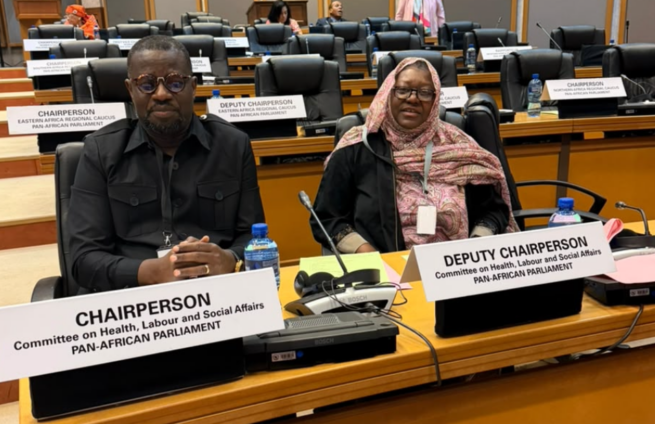
The call was made in a resolution adopted by the Pan-African Parliament’s Committee on Health, Labour and Social Affairs, chaired by Ghanaian lawmaker Frank Annoh-Dompreh.
The committee said outbreaks including HIV, Ebola, COVID-19, mpox, Marburg and recurring cholera crises have revealed gaps in Africa’s health systems and legal structures.
It said these challenges include “fragmented institutional mandates, limited cross-border information sharing, slow emergency procurement and inadequate emergency financing.”
The committee stressed that legal preparedness must become a key part of Africa’s health security strategy.
It noted that while public health policies set out government goals, legislation provides the authority needed to implement those policies effectively.
The Pan-African Parliament is urging countries to domesticate Africa Centres for Disease Control and Prevention (Africa CDC) frameworks into national laws, particularly in areas including biosafety and biosecurity, public health institutions, emergency preparedness, data governance, local manufacturing of health products and cross-border health cooperation.
The committee also renewed calls for African countries to honour the Abuja Declaration commitment to allocate at least 15 per cent of national budgets to health.
It further called on member states to establish statutory contingency funds to support emergency responses.
The Pan-African Parliament said stronger collaboration with the Africa CDC will be critical to achieving Africa’s Health Security and Sovereignty Agenda.
The agenda is built around five pillars: strong public health governance, expanded manufacturing of health products, investment in the health workforce, increased domestic investment in health, and trusted health data.
The committee also called for accelerated ratification and implementation of key continental health instruments, including the African Union Convention on Cyber Security and Personal Data Protection and the Treaty establishing the African Medicines Agency.
It urged countries to strengthen regulatory systems to improve Africa’s ability to produce and manage essential health products.
The committee said the partnership between the Pan-African Parliament and Africa CDC is essential to protecting African populations against current and future public health threats.
It has requested continued technical support from Africa CDC to national parliaments and the Pan-African Parliament on pandemic preparedness and interventions.
The resolution will be adopted in Midrand, South Africa, on July 30, 2026.
Latest Stories
-
Crowds, deals and home solutions as Republic Bank-JoyNews Habitat Fair enters final day
47 minutes -
Fire Service finds only five functional hydrants in Ministries enclave
1 hour -
Government to sign 1,200MW gas power deal before end of 2026 – Mahama
1 hour -
West Mamprusi launches community-led WASH and livelihoods project across 100 communities
1 hour -
Iran says it will wait for official US response after Trump rejects Strait of Hormuz proposal
1 hour -
90 Oti communities to benefit from government electrification project
1 hour -
Floods leave 246 without shelter as 93 houses collapse in North East Gonja
2 hours -
Labour Minister wants SOEs to help shape new public pay system
6 hours -
IPEC will ensure Equity and Sustainability in SOEs Compensation
7 hours -
White House bars CNN from travelling with Trump on Air Force One
7 hours -
Fennis wins second consecutive ITF J60 title in Accra
8 hours -
Spain beat England in thriller after Kane penalty miss
8 hours -
GPL 2026/27: Zaidan’s late goal ends Hearts of Oak unbeaten start
8 hours -
CEOs demand clarity on pay harmonisation, board autonomy as FWSC engages SOEs bosses over IPEC transition
8 hours -
2026 Women’s Super Cup: FC Savannah, Epiphany Warriors maintain top spots ahead of final group games
8 hours