

Audio By Carbonatix
The Ghana Tertiary Education Commission (GTEC) has directed Vice-Chancellors and other specified senior management officials of public universities to return to work, saying they are not eligible to participate in the ongoing industrial action by university administrators.
The directive affects senior management officials whose positions are classified as executive, managerial or policy-making roles.
They include Vice-Chancellors, Pro Vice-Chancellors, Registrars, Directors of Finance or Finance Officers, Directors of Internal Audit, Directors of Health Services, Directors of Procurement, Directors of Works and Physical Development, Directors of Information Technology, Deans, Directors and Heads of Academic Units, as well as all Deputy Directors and Vice-Deans.
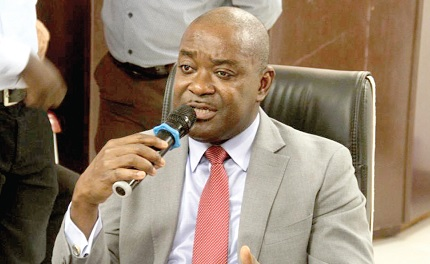
In a directive dated August 17, 2026, and addressed to heads of tertiary institutions, GTEC Deputy Director-General, Prof Augustine Ocloo, said the Commission had noted “with concern” that some officials in the excluded positions had joined the strike.
Prof Ocloo said the affected officials were required to return to work because of the nature of their functions and responsibilities.
The directive cited the Labour Act, 2003 (Act 651), particularly Sections 163 and 170, Section 20 of the Labour Regulations, 2007 (L.I. 1833), and the National Labour Commission Regulations, 2006 (L.I. 1822).
According to GTEC, the provisions restrict workers in executive, managerial or policy-making positions from participating in industrial action where their functions are aligned with the interests of management and the employer.
“A Senior Management Official who is both a member of a trade union and an officer of management may, therefore, be placed in a position of divided loyalty when the union undertakes industrial action,” the directive stated.
The Commission added that such officials owed a fiduciary duty to their employers, particularly those serving under contractual arrangements.
GTEC demands register of officials who joined strike
GTEC has directed Vice-Chancellors to submit, within 48 hours of receiving the directive, a register of all senior management officials who joined the strike and failed to comply with the order to return to work.
The Commission has also directed public universities to ensure that the industrial action does not disrupt essential institutional and student services.
These include end-of-semester examinations, auditing, telecommunications and internet services, student portals and registration systems, healthcare, cleaning and janitorial services, as well as the processing of salaries and other payments.
GTEC said it had received reports of attempts to disrupt internet access, student portals, registration systems, cleaning services and health services on some campuses.
It warned that any unlawful disruption of essential services could constitute a breach of the Labour Act.
Why university administrators are on strike
The directive follows the reactivation of a nationwide strike by the Ghana Association of University Administrators (GAUA) on August 10, 2026.
GAUA took the decision at its national congress in Sunyani on August 7 over what it described as persistent disparities in market premiums and related allowances between teaching and non-teaching senior members of public universities.
The dispute centres on differences in the revised market premium and related allowances paid to the two categories of university staff.
The Technical University Senior Administrators’ Association of Ghana (TUSAAG) has subsequently declared its full support for the GAUA action, saying its members also face similar disparities.
The industrial action therefore involves university administrators represented by GAUA and senior administrators in technical universities represented by TUSAAG. It does not involve all university employees.
GTEC said it remained committed to supporting an amicable resolution of the grievances underlying the industrial action.
The Commission urged both associations to “exercise restraint and responsibility” as efforts continue to resolve the dispute.
Latest Stories
-
Real-Time VAT on cross-border digital services – not a new tax and does not violate double taxation principle
11 minutes -
Digitalisation, AI key to Ghana’s tourism transformation – GHATOF
23 minutes -
Stronger GTA-private sector partnership needed to grow tourism – GHATOF
33 minutes -
Amazon eyes Ghana for broadband expansion after talks with Mahama
1 hour -
National Investment Quiz 2026: Six schools qualify for quarter-finals
2 hours -
‘Do not let Russia pay for its madness with lives of your people’ – Zelensky to Ghana, 46 other countries
2 hours -
6,079 promotion cases fully processed and paid – CAGD says amid nationwide teachers’ strike
2 hours -
Teacher unions to meet government Monday over nationwide strike
2 hours -
Photo story: Republic Bank-JoyNews Habitat Fair clinic wraps up after three days of housing solutions, expert engagement
3 hours -
National Peace Council urges investment in youth to sustain Ghana’s peace
3 hours -
Afenyo-Markin urges youth to speak up against injustice
3 hours -
CAF annuls Edo Queens victory, orders WAFU B final to resume from extra time
3 hours -
Interior Minister urges traditional authorities to enforce anti-bushfire bye-laws
3 hours -
3rd Republic Bank-JoyNews Habitat Fair Clinic ends on a high note after three days of strong patronage
3 hours -
Ten climbers missing after avalanche hits Himalayan base camp
4 hours