

Audio By Carbonatix
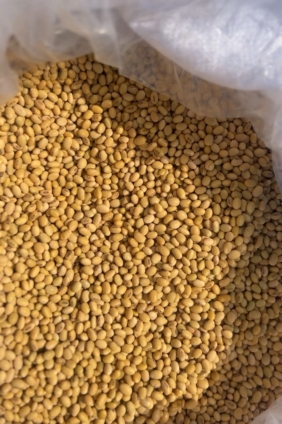
Ghana’s soybean industry is set for a major boost as the Crops Research Institute (CRI) partners with the Harnessing Agricultural Productivity and Prosperity for Youth (HAPPY) programme to scale up early generation seeds to increase local production. The initiative aims to address chronic shortages that have pushed several processing plants to the brink of collapse.
Officials say the use of improved, locally developed varieties such as the Toondana line will significantly enhance yields, support climate resilience, and strengthen the soybean value chain.
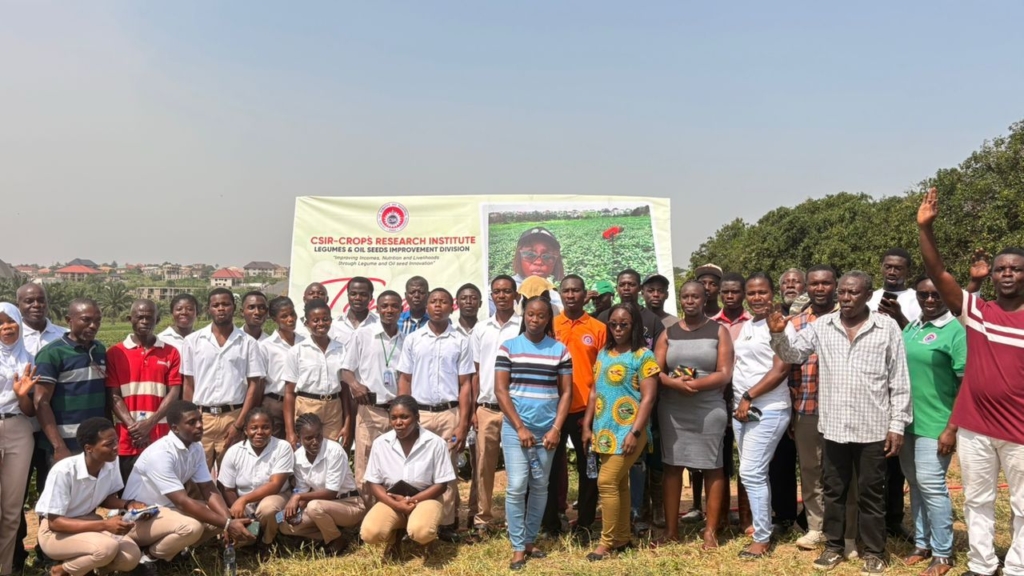
Dr Sylvester Addy, Head of the Legumes and Oil Seeds Improvement Division at CRI, said the collaboration is focused on providing quality seeds that will empower young farmers across the country.
“Partnering the HAPPY programme is seeking to assist in the production of early generation seeds so that the farmers who are the youth can adopt these certified seeds, grow them and receive higher yields and then thereby receive profits to have prosperity in their lives,” he explained.
He added that the approach aligns with the government’s job creation agenda and broader agricultural transformation efforts under programmes like Feed Ghana.
The shortage of locally produced soybeans has long been a concern for agro-processing firms, many of which face inconsistent supply due to low yields and limited access to certified seeds. The CRI–HAPPY initiative is therefore expected to help stabilise production and support long-term industry growth.
Regional Crops Officer at the Ministry of Food and Agriculture, Floris Karikari, urged farmers—especially in the Ashanti Region—to adopt the Toondana variety because of its widespread suitability.
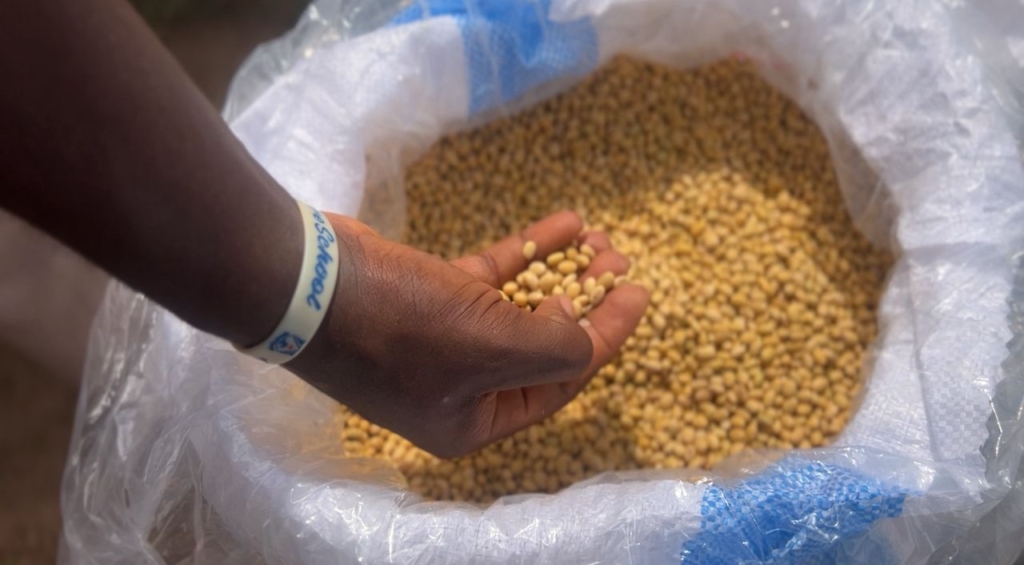
“The Toondana variety is adaptable in every part ofthe Ashanti Region. So we encourage the farmers going from next year, they should go into the production of the Toondana variety since it can do well in every part of the Ashanti region,” she said.
Beyond productivity, MoFA officers also highlighted the nutritional value of soybeans. Ms Karikari encouraged households to incorporate the crop into meals to improve family nutrition.
The initiative is also winning support from agricultural students and young farmers. Musah Yakubu from the Kwadaso Agriculture College said exposure to the project has motivated him to begin cultivating soybeans independently.
“As I leave the field for my home, I will make sure to cultivate some as a trial. That way, it will serve as a source of employment to generate some income to sustain my standard of living,” he said.
Latest Stories
-
Minority questions gov’t purchase of fuel-powered buses, pushes for electric alternative
1 minute -
GFA Executive Council to Decide on New Black Stars Coach Ahead of 2026 World Cup
2 minutes -
One injured as fire destroys 14-bedroom house at Kwame Danso
10 minutes -
GACL struggling despite recording profit, levy needed for expansion – Agalga
13 minutes -
Kwahu Business Forum: Ghana Sports Fund calls for stronger corporate backing for sports dev’t
22 minutes -
Penplusbytes’ statement on police action against deepfake and misinformation activities in Ghana
53 minutes -
QNET, EOCO partnership showcased at UN global fraud summit as model for fighting organised crime
54 minutes -
Mussa Dankwah is like a ‘lotto doctor’ – Miracles Aboagye
60 minutes -
Investors target Ho Airport for training and maintenance hub — GACL Chair
1 hour -
NDC’s ‘grand deception’ on anti-LGBTQ+ bill exposed – Ntim Fordjour
1 hour -
Speak out against Mahama government’s LGBTQI+ u-turn – Ntim Fordjour to clergy
1 hour -
Ghanaians worse off despite improved macroeconomic indicators — Miracles Aboagye
1 hour -
Police intercept narcotics, arrests five suspects in Upper West
1 hour -
Government to establish Kumasi Machinery Innovation Park under 24-Hour Economy programme
1 hour -
When Hormuz Fails: The day a waterway stops the world
1 hour