

Audio By Carbonatix
According to research, traditional farming methods often produce harmful pollutants that contribute to climate change.
Maize and rice farming have particularly been implicated in releasing harmful gases into the atmosphere.
Therefore, the Crops Research Institute of the Council for Scientific and Industrial Research (CSIR-CRI) is exploring various agricultural technologies to combat this menace through the Agroecology and Circular Economy for Ecosystem Services (ACE4ES) project.
The ACE4ES project seeks to explore innovative techniques that can reduce these pollutants while improving the health of the soil and the crops.
As part of the project objectives, scientists will try out different methods of farming, such as crop-livestock system, integrated soil fertility management, composting, biochar application, site-specific nitrogen management, rotational cropping, minimal tillage/zero tillage among others to see which ones work best for the environment and farmers.
The scientists will then build the capacity of farmers and policymakers on these technologies.
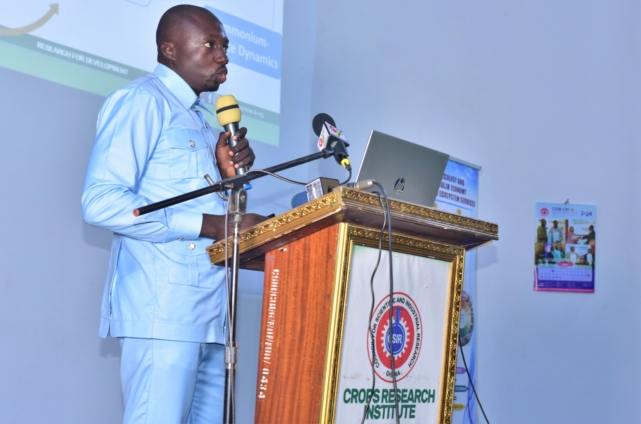
Speaking at the project launch, the project coordinator, Dr. Kwaku Onwona-Hwesofour Asante was hopeful that the adoption of these technologies will lead to better farming outcomes.
“Increased adoption of ACE practices by farmers, resulting in reduced harmful gas emissions and improved agricultural productivity,” he said.
The Director of Crops Research Institute, Prof. Moses Brandford Mochiah touted the institute’s quest to pursue initiatives aimed at combating climate change.
“As the lead institution for this project, we’re deeply honoured to spearhead efforts aimed at integrating agroecology and circular economy principles into maize and rice production systems.
“Today marks a significant milestone in our collective efforts to address the pressing challenges posed by climate change and environmental degradation,” he said.
Director-General of the CSIR, Prof. Paul Bosu was also grateful to the stakeholders for the realization of the project and asked for their commitment towards achieving the goals of the project.
Minister of Environment, Science, Technology and Innovation, Ophelia Mensah Hayford pledged the government’s support and urged the Council to intensify communication and advocacy of their activities.
Latest Stories
-
Power restoration fault suspected in Kumasi Central Market fire
4 hours -
The 7-foot giant of Ngleshie Amanfro: Seven-foot Ghanaian Ephraim Saawa dreams of joining the national basketball team
4 hours -
Government promises support for Kumasi Central Market fire victims
4 hours -
Vibes The Movie: Big Ghun’s Ghanaian film earns five nominations at 2026 REFFA
5 hours -
MamaCare CEO warns unresolved conflicts among health workers could undermine maternal and neonatal care
5 hours -
Health professionals urged to translate medical knowledge into practice to save mothers
5 hours -
Conflicts among care providers linked to maternal, neonatal deaths – Expert
7 hours -
GIS marks 10th TIME conference, champions improved teaching practices
7 hours -
BRICS Or Balance? What Ghana’s bid really means
8 hours -
GPRTU wants full TRAFFITECH-GH implementation to start in 2027
8 hours -
Mahama announces plans to import electric wheelchairs for PWDs
8 hours -
KGL U17 Colts 2026: Western beat Prempeh Elite Academy to set up final final with Greater Accra Region
8 hours -
Late Solanke strike salvages 10-man Spurs draw at Man United
8 hours -
Gender Ministry to monitor welfare of Nana Akua Addo’s children amid domestic violence case
9 hours -
Benedict Okyere Yeboah: Ghana’s football problem goes beyond sacking a coach
9 hours