

Audio By Carbonatix
Ghana imports more than $400 million worth of rice annually to supplement local production.
To reduce rice importation, the Soil Research Institute of the Council for Scientific and Industrial Research is educating farmers on a new technology to increase rice yields and cultivation in Ghana.
Rice consumption in Ghana has increased from 38 to 63 kg per person between 2008 and 2018. However, the current rice production meets less than 40% of the consumption requirement in Ghana.
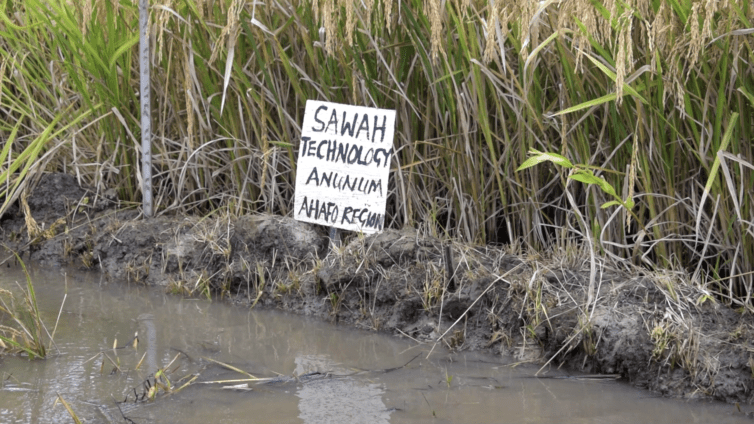
The introduction of the SAWAH technology by the CSIR-SRI will increase rice production at Asutifi South District in the Ahafo region.
Research scientist at the Soil Research Institute, Dr Ephraim Sekyi-Annan, said, “The low grain yield is due to multiple constraints including poor land management, inappropriate water management, ineffective fertilizer management, post-harvest losses and rainfall variability due to climate change.”

He continued that, “To increase productivity, reverse the pattern of production of low rice yields and subsequently the high annual rice importation, there is the need to boost rice production in Ghana by adopting the SAWAH technology.”
The SAWAH technology is the integrated management of land, water and fertilizer for increased rice production. The adoption of the technology leads to the production of more paddy rice.
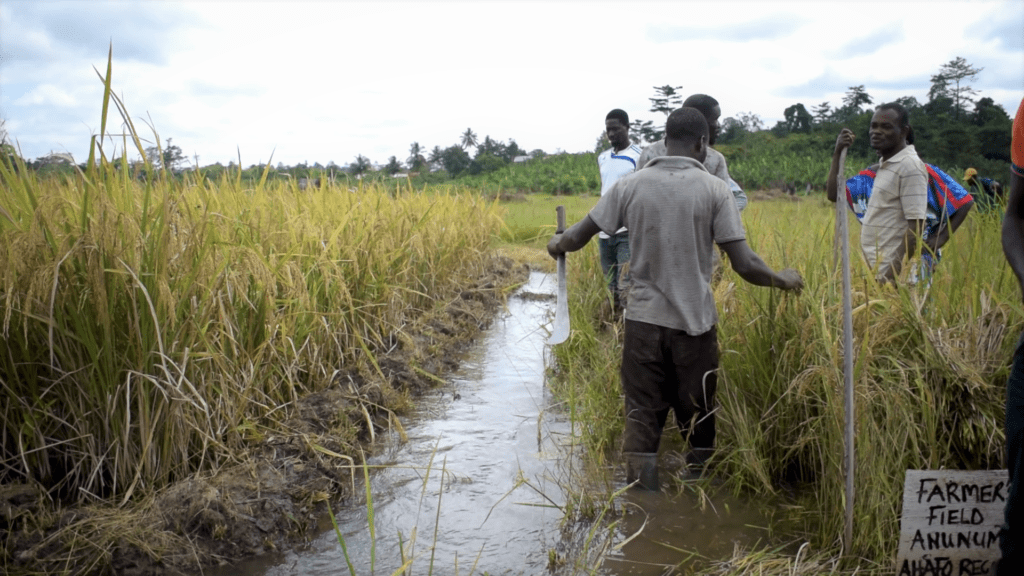
The research scientist believes “Ghana has the potential to become rice sufficient if the technology is used efficiently.
“We have about 700,000 hectares of low lands in Ghana where we can produce rice,” he emphasized.
The Modernizing Agriculture in Ghana (MAG) initiative improves food security and makes the agricultural sector modern, equitable, and sustainable.
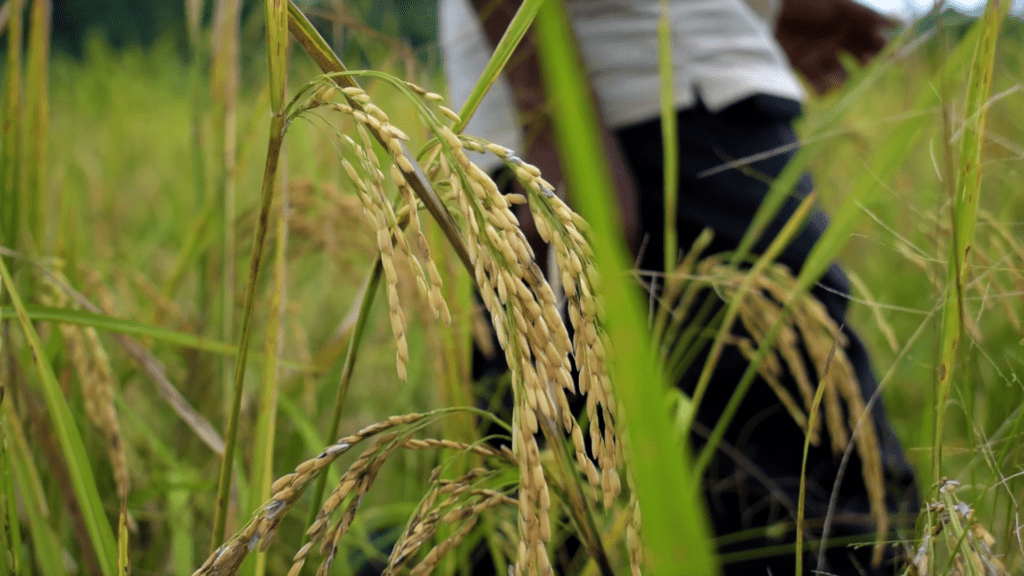
The Regional Director of Agriculture, Kingsford Nyame, promised to provide machinery to support farmers in the Ahafo region to increase rice yields.
“Rice is an emerging crop; that is why we are encouraging farmers to adopt the technology. We have an Agric Mechanization Center where farmers can hire machines for farming operations, but the government will support them with more machines,” he said.
Some farmers who benefitted from the project lauded the institution for the technology.
“After the verification demonstration on the SAWAH technology was done on my farm, I have noticed that it has increased my rice yields,” Mr Boafo noted.
Latest Stories
-
Veep Jane Naana Opoku-Agyemang to attend Africa Energy Technology Conference in Accra
18 minutes -
Court moves NAM1 trial to virtual hearing over health concerns
22 minutes -
UK and Ghana collaborate to build pioneering Neofingo Digital Trade Finance Corridor
33 minutes -
Select your 26-man Ghana World Cup squad with Joy Sports
34 minutes -
GCB Bank wins three awards as its digital transformation gains momentum
34 minutes -
We’re setting up a committee to investigate New Town building collapse – Engineering Council
37 minutes -
Ghana’s economic recovery opens new growth avenues for SMEs – Deloitte
42 minutes -
Don’t demand justice abroad and deny it at home: The McDan Aviation dilemma!
46 minutes -
Reimagining progress: Why Ghana must invest in cleaning and facilities management industry
48 minutes -
Ecobank Ghana appoints Alhassan Andani as Board Chairman
49 minutes -
NFL boosts flag football development with coaching clinic in Accra
53 minutes -
University of Ghana crowned champions of 2026 Honda Football Championship
1 hour -
PhD milestone: Archbishop Agyinasare eyes transformational impact beyond the pulpit
1 hour -
All trapped victims rescued from Accra Newtown building collapse – NADMO
1 hour -
3rd edition of Corporate Leadership Excellence Awards 2026 successfully held in Accra
1 hour