

Audio By Carbonatix
The Africa Centre for Energy Policy (ACEP) has described the government’s decision to absorb the cost of electricity of consumers as rushed.
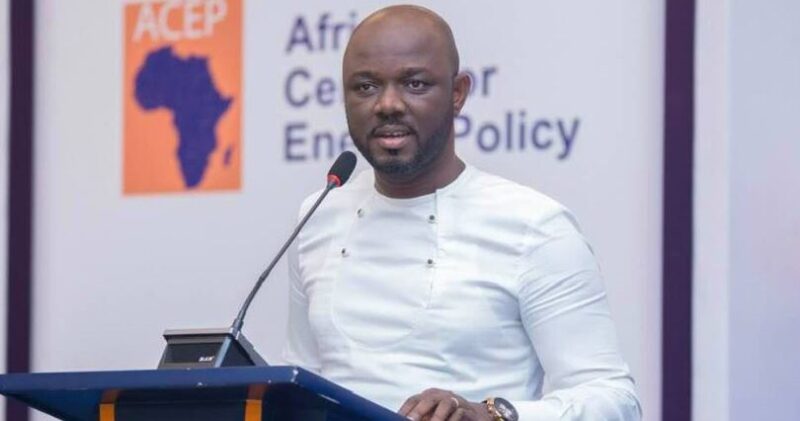
According to the Executive Director, Benjamin Boakye, there should have been extensive deliberation on the policy ahead of its rollout to ensure that it is better-tailored to achieve the intended purpose of mitigating the impact of the coronavirus on the poor in the county.
President Akufo-Addo on the night of April 9, announced three months of free electricity for consumers of a particular category, to make up for lost income following the coronavirus lockdown in Accra and Kumasi.
“We’ve decided on further measures of mitigation for all Ghanaians for the next three months, i.e April, May and June. Government will fully absorb electricity bills for the poorest of the poor, i.e, for all consumers. That is free electricity for persons who consume from 0-50 kilowatt-hours a month for this period,” the President told the nation in a televised address.
In addition, the President said the government will also absorb 50% of electricity bills for consumers in residential areas as well as those engaged in commercial activities during the period, using their March 2020 bill as the benchmark.
But speaking on the on Good Friday edition of the Joy FM Midday News, the ACEP boss says this move defeats the said attempt to reduce the burden on the “poorest of the poor” adding that “we need to have a conversation on this policy.”
“If you consume GHS18 government absorbs your electricity bill. But for the average person or the rich that is consuming GHS5,000 a month… government is going to pay GHS2,500 of your bill for you. This is so regressive that you don’t need to have that intervention at a time that government is struggling to raise money to deal with the core issue,” he said on Friday.
ACEP expressed further concern with the modality by which this policy is expected to be implemented which he believes, rather does nothing as far as the plight of the poor is concerned.
“These poor people live in compound houses and they usually consume more than the lifeline (50 units a month). So if they are consuming 50 units a month then they are automatically out of the lifeline range.”
He recommended that government rather consults employers among others in the labour sector to assess struggling individuals affected by the crisis through layoffs and others, and provide them with the interventions.
“We are just redistributing our wealth to make the rich richer and make the poor poorer.”
Energy sector debt
Considering the amount of debt owed the power sector by government, Benjamin Boakye explained that the latest policy only worsens the liquidity challenges of the sector.
ACEP says the move compounds government’s capacity to repay debts owed the power producers.
“The IPPs [Independent Power Producers] are owed over a billion dollars as we speak. Gas consumption is also not being paid for. If you check the OCTP payment schedule, since October there haven’t been payments for gas that is being consumed. This is a burden that sits on the books of the government as we speak,” he said.
Latest Stories
-
Ghana housing finance conference adopts communiqué to improve affordable housing access
2 hours -
Special Initiatives Minister urges Wa Technical Institute to enrol more girls as EU-backed solar training lab opens
2 hours -
In the matter of my first year at the Bar
2 hours -
ActionAid Ghana calls for an end to child marriage, greater investment in girls’ rights
2 hours -
Newsfile to tackle World Cup visa scandal, beach demolitions, education strikes, BRICS bid
3 hours -
UK-Ghana Trade & Investment Summit: Trade Resource Centre to help businesses maximise UK-Ghana trade opportunities
3 hours -
Embassy of Denmark celebrates World Maritime Day
3 hours -
Linking LEAP to productive inclusion could cut extreme poverty by 2030 – UNICEF
4 hours -
Trade Ministry backs use of creative arts to rehabilitate prison inmates
4 hours -
Negotiations with government to continue despite strike suspension – GNAT
4 hours -
‘Ghana cannot afford to waste public resources; every cedi has a job’ – Ato Forson
4 hours -
Ghana expects economic boost as World Assemblies of God Congress brings 10,000 delegates to Accra
5 hours -
Joy in Nayilifong as Farouk Aliu Mahama donates 100kVA transformer to improve power supply
5 hours -
Chief Justice urges employers to tackle mental health stigma in workplaces
6 hours -
Analysis: Ghana’s yellow fever numbers reveal a gap between vaccination and protection
6 hours