

Audio By Carbonatix
Why should I be deprived of the opportunity to attend my dream Senior High School (SHS) just because the school is a public school and I am the child of a rich parent or guardian?
Well, this is the conclusion I drew from President Nana Addo Dankwa Akufo-Addo’s response to the suggestion made by the outgoing President of the Ghana Bar Association (GBA) at the GBA Annual Conference held on September 9 in Kumasi, in the Ashanti Region.
At the conference, the outgoing President of the Bar, Yaw Acheampong Boafo, suggested that the government take a second look at the implementation of the Free Senior High School (FSHS) Policy, specifically the inclusion of children from affluent or privileged homes.
Interestingly, Mr Acheampong Boafo is not the first to have made this suggestion as records show that many others including the former Finance Minister who served under the Akufo-Addo government, Ken Ofori-Atta had made similar calls.
These were the words of the GBA President, “The Free SHS programme must be means-tested using the data compiled by the National Identification Authority so that rich parents do not suddenly transform to become peasant farmers, as in the days of old when we had the COCOBOD scholarship.
“Students from comfortable backgrounds who attended expensive basic schools must pay fees at the senior high school level so that resources are free to fully cater to the poor. Mr. President, we must invest more in ‘syto’ [Public schools] education, eliminate schools under trees and provide sanitary pads for poor young girls first before spending so much on secondary education.
“As one comes before two, so basic education comes before secondary education. There is also this recent revelation about the school feeding programme from the Auditor General, which should serve as a source of concern for us and call for review and improvements in the operations of the programme, the main beneficiaries of which are people from poor backgrounds.”
The remark by the GBA President drew applause from the crowd perhaps because some financially sound parents have been complaining about how the overstretched resources in Senior High Schools under the Free SHS, may be threatening quality as it takes a toll on school managers.
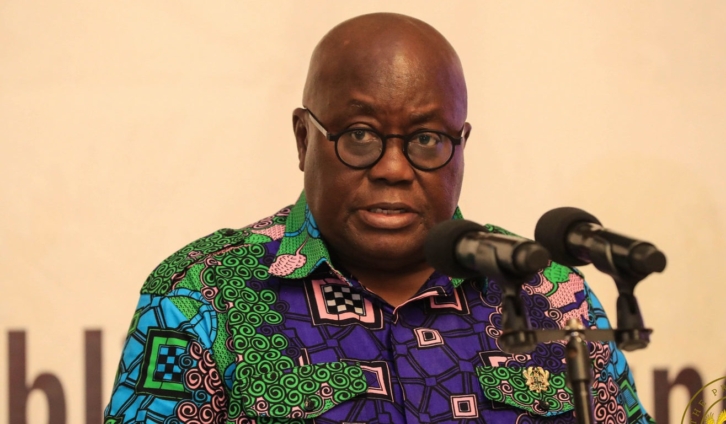
But in response to the GBA President at the conference, the President, Nana Addo Dankwa Akufo-Addo who was a guest speaker, vehemently stated his disagreement with the proposal.
He said, “Let me express before I sit down, my difference with the President of the Bar on one critical issue. People who can afford to pay fees for the education of their wards should send them to fee-paying private schools. Public schools that are funded by the taxpayer should be free to all who will otherwise be unable to pay for their education.
“That is why the number of pupils who have access to secondary education has doubled since the introduction of the free senior high school policy.”
“Over 5.7 million persons have benefitted from the policy since its inception. The following impact of this dramatic development will be felt in due course and will far outweigh the small number of privileged parents who can afford to pay for the education of their wards,” President Akufo-Addo stated.
Unlike the GBA President, President Akufo-Addo’s comment was met with murmuring in the crowd.
My take on this is that, as Ghanaian children, the prestige that comes with attending public senior high schools at the second cycle level in particular has been seared with hot irons on our hearts, and that fuels the desire to attend these schools.
Junior High School leavers work hard so that their grades can push them into these schools without having to pay extra and here comes the assertion that because they are from rich homes and want to be comfortable, they must sacrifice their dream.
Regardless of the President’s position, I believe that there is a need to find another way to absorb privileged children into the public senior high school while allowing their guardians to contribute their quota to the schools to sustain the Free SHS policy in the long term.
Amidst the claims of the mismanagement of Ghana’s public scholarship schemes, perhaps, there is the fear that it would be difficult to identify the most deserving of the Free SHS policy because it looks like Ghana’s system is a bit far from ascertaining the true state of citizens.
I believe that the GBA President thinks that if the rich pay for the education of their children the strain that has been placed on the national budget by the policy would lessen.
Considering that some 5.7 million Ghanaians have already benefited from the policy, it is anticipated that even more students will have access to education because of this great policy.
There are challenges in the implementation of the Free SHS policy. To some extent, the challenges may be salvaged if there are enough funds; these funds can be internally generated instead of creating the false dilemma: you either enjoy the Free SHS with its hitches or you attend a private fee-paying school.
The rich can attend public senior high schools while they pay for their tuition. Those funds can support the government to address some of the challenges that the policy is faced with if they are managed well. This can lead to channeling a percentage of the amount spent on senior high school education to other projects in the education sector.
-
The Author, Nana Efua Duku-Coleman is a Level-300 Communication student of the University of Cape Coast (UCC) and an intern at Myjoyonline.com.
Latest Stories
-
Sammy Gyamfi didn’t say BoG has ceded its forex role to us – GoldBod
47 minutes -
High Court sets November 4 for ruling on Wontumi’s bail application
1 hour -
Tetteh Kwetey files nomination for NDC Greater Accra Regional Chairmanship
1 hour -
Korle Bu appeals for more doctors, nurses as A&E Centre struggles under pressure
1 hour -
AFCON 2027Q: ‘I’m optimistic Black Stars can turn things around’ – Agyemang-Badu
1 hour -
Digital innovation could widen Africa’s inequalities if people are left out – Sam Jonah
1 hour -
Galamsey is an economic, health and moral problem – Sam Jonah
1 hour -
Africa must create AI technology instead of paying to use it – Sam Jonah
2 hours -
2026 U-17 WWC: Black Maidens to face Norway, Brazil and Canada in Group C
2 hours -
Agbodza, Sam George move to curb fibre optic cable cuts during road works
2 hours -
2026 U-17 WWC: Black Maidens unveil 21-player squad for competition in Morocco
2 hours -
South Africa evacuation and the minority’s half-truth
2 hours -
‘You never know tomorrow’ – Anthony Baffoe on contesting for GFA Presidency
2 hours -
Obuasi SHTS head accused of sexually abusing students is NDC Juaben secretary seeking chairmanship
2 hours -
Cedi depreciates by 7.11% against dollar in August 2026 – BoG report
2 hours