

Audio By Carbonatix
Free Senior High School (Free SHS) helped a generation of Ghanaian families send their children to secondary school without paying tuition.
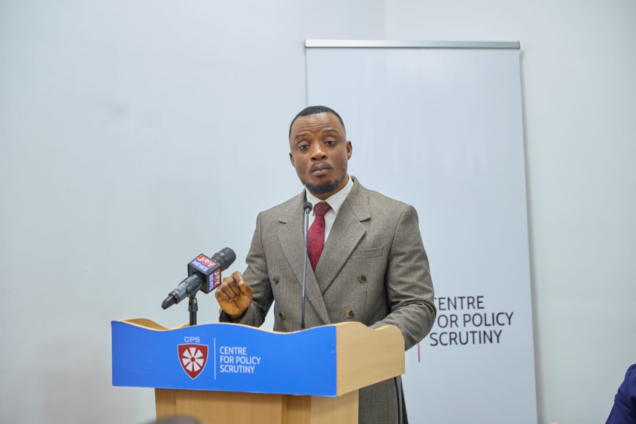
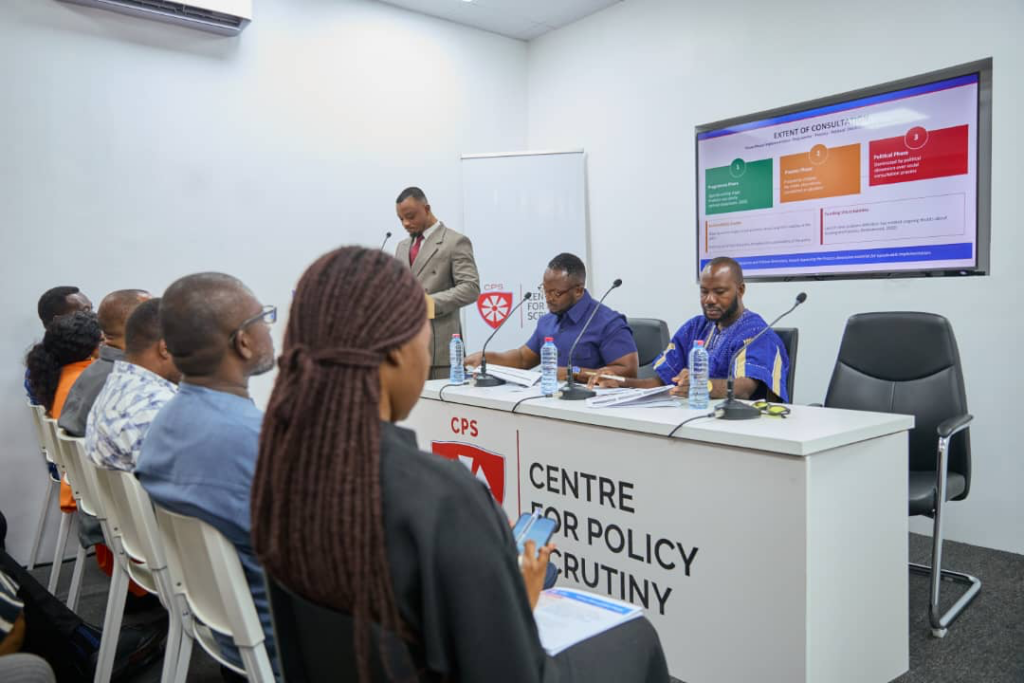
But our new 2026 independent review of how the policy has worked on the ground, drawing on accounts from teachers, kitchen staff, principals, and students across school categories, finds a far more complicated picture.
The new study has revealed the following findings and recommendations for the Free SHS policy in Ghana:
Findings
- Free SHS is a symbol of dignity, pride, social capital and social mobility for SHS students, particularly for first-generation students.
- The “Free” is not always free. Despite its name, the policy still leaves many families paying. Our study found that prospectus fees, delayed uniforms and textbooks compel parents to pay, and a double-track timetable that cuts contact hours is pushing parents toward paid private extra classes and other hidden costs that land hardest on the very families the policy was designed to protect.
- The Free SHS is not experienced uniformly, causing intra-system inequities. There is resource distribution bias. Higher-category A/B schools get timely supplies & PTA and alums support; Category C/D schools face chronic shortages and are fighting for desks, dormitory beds and enough food − with overcrowding at dining halls now serious enough to pose a health risk, not merely a comfort issue. Head teachers who lobby well get supplies on time.
- Free SHS policy has increased indiscipline and unrest in SHS. The 'No repetition' rule, no corporal punishment, strict rules regarding punishment, auto-placement, and the use of government-issued tablets, which characterise the policy, have eroded students' seriousness and contributed to teachers' apathy and students' indiscipline.
- The Free SHS policy is built on politics rather than a plan, jeopardising its sustainability. The research finds that the government skipped basic policy groundwork: the problem was never clearly defined before the rollout, and no alternatives were seriously considered. Free SHS implementation was driven more by political advantage than a rigorously tested plan, leaving lingering doubts about how the policy will be funded and sustained in the long run.
- Free SHS policy is at risk since its future lies in the hands of politicians. Free SHS remains vulnerable to redefinition with every change of government because it has not been anchored in bipartisan, binding legislation, leaving its scope, funding, and rules subject to political cycles rather than durable, cross-party commitment.
- Weak governance structures and limited platforms for dialogue between the Ministry of Education and school-level stakeholders have eroded trust and left placement and resource-allocation decisions widely perceived as opaque.
- Frontline staff, including teachers and non-teaching staff such as kitchen workers, report fatigue and low morale linked to heavy workloads, inadequate pay, and insufficient recognition, which threatens the sustainability of service delivery.
- Vulnerable and remote learners face unaddressed mobility barriers. Without formal transport or guaranteed boarding for deprived day students, “free” schooling remains geographically inaccessible for many, and these mobility gaps have functioned as a policy blind spot rather than a recognised failure.
What Researchers Are Recommending
- The government should legally define what “free” actually covers.
- We are calling for the policy to be locked into law, requiring a parliamentary supermajority to amend it and overseen by an independent, cross-party statutory board. This would ensure it survives beyond any single administration.
- The Ministry of Education should build a live national data dashboard, modelled on Ghana's COVID-19 dashboard, to track enrolment, funding, and WASSCE results district by district.
- The Government should prioritise equity by rebalancing resources toward Category C and D schools, while systematically auditing access gaps affecting remote and vulnerable students. This effort must be complemented by phased, targeted support measures, with deliberate attention to disadvantaged learners and to institutions in lower-category schools.
- The Ministry of Education should revise the SHS curriculum to embed digital learning strategies, including recorded lessons, YouTube/social media and virtual learning to reduce lost contact hours during double-track periods.
- Rebalance resource distribution to prioritise disadvantaged (Category C/D) schools, closing the gap that currently favours already well-resourced schools.
- Establish academic readiness criteria or bridging programmes, so that inclusive access does not come at the cost of educational quality or student preparedness.
- Implement accountability mechanisms including regular performance reviews, transparent reporting, and restored consequences for underperformance to rebuild academic seriousness.
- Revise the SHS curriculum to embed digital learning strategies, including recorded lessons, YouTube/social media, and virtual learning, to reduce lost contact hours during double-track periods.
- Institutionalise governance dialogue between the Ministry of Education, school leadership, parents, and frontline staff, to improve transparency and responsiveness.
- Diversify Free SHS's funding base beyond annual budget allocations to protect the policy from short-term fiscal and political pressures.
- Invest in AI-teacher training and connectivity access for a future-ready Free SHS classroom.
- Establish a transparent resource-tracking system and reform the school categorisation system so budgets guarantee baseline-equal per-student funding across all bands, prioritising Category C/D schools.
- Formally benchmark Free SHS against comparable international models and begin establishing sustainable financing instruments.
DISCLAIMER: The Views, Comments, Opinions, Contributions and Statements made by Readers and Contributors on this platform do not necessarily represent the views or policy of Multimedia Group Limited.
DISCLAIMER: The Views, Comments, Opinions, Contributions and Statements made by Readers and Contributors on this platform do not necessarily represent the views or policy of Multimedia Group Limited.
Latest Stories
-
Before they failed the BECE, did Ghana fail them?
13 seconds -
Photos: Mahama swears in Emelia Afi Agbenyo, Joseph Kwaku Asamoah as EC Deputy Commissioners
3 minutes -
Centre for CSR, West Africa partners with Climate x Culture Summit to champion corporate sustainability at Google AI Centre
8 minutes -
Petrosol donates medical equipment to Bolgatanga Hospital
9 minutes -
Zongo Health Campaign screens over 110 Mamobi residents
23 minutes -
Cybercriminals using AI tools to carry out operations – Cyber Security Authority
30 minutes -
Ghana must invest more in mental health and healthier workplaces – Nurse advises
31 minutes -
NAPG Summit equips Administrative Professionals for strategic impact and the AI-driven workplace
40 minutes -
NHIA urges amendment of Health Insurance Act to accommodate free primary healthcare
43 minutes -
Ghana is tackling cybercrime head-on, not becoming a hub for it – CSA
45 minutes -
We’ll deliver without fear or favour – New EC Deputy Chairpersons assure Mahama
45 minutes -
Six Ukrainian energy sites hit by Russia since Trump announced ceasefire, Zelensky says
1 hour -
Government directs GTEC to prepare public universities for weekend reopening as it intensifies efforts to end GAUA strike
1 hour -
Multimedia Group’s Raymond Nii Doodo Larbie called to the Ghana Bar, seeks to combine HR practice with law
1 hour -
Credible elections are the cornerstone of democracy – New Deputy EC Chairperson
1 hour