

Audio By Carbonatix
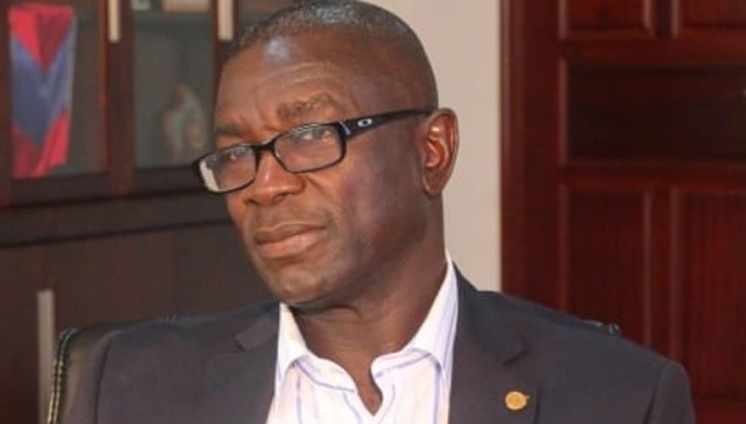
The co-Founder of defunct UT Bank, Prince Kofi Amoabeng, says the reason behind the closure of the bank might have partly been a political decision.
According to him, the Central Bank’s decision to collapse UT Bank might have been informed by his decision not to align with any political party.
Speaking on Citi TV, the former CEO stated that UT Bank could have received a bailout just like some other banks, but his lack of a strong political backing gave way for the Central Bank to close it down.
He told the host of the show, Bernard Avle, that his neutral pose had made him look anti-government no matter the governing political party.
“I don’t belong to any party…The interesting thing is that depending on who is speaking, they push you to the other side. Throughout the whole UT thing, depending on who is in power, I am [considered as being] on the other side.”
Though he admits that his bank was not faring well at the time of the banking sector cleanup in 2017, the ruling government could have done something about the situation to save the bank and the jobs of those working for it.
“The bank wasn’t doing that well at the time but the way the government acted, some banks were helped, some banks were closed. That is what irritates me,” he stated.
He added that he was disappointed by the decision of the ruling government and the Central Bank considering the immeasurable contribution the UT brand had made to Ghana’s financial sector.
“At UT, we created a Ghanaian brand which was respected internationally so to come to power to kill a local brand which is admired and used internationally [wasn’t the best]… You can bail it out and that is common [practice]. Initially, that was what was happening but that was the NDC time… For me, not because of my personal interest but I think for the country, we should have bailed it out,” he said.
Prince Amoabeng is currently in court hoping the court compels the Central Bank to reverse their revocation of UT Bank’s license.
He has petitioned the Legislature to conduct an investigation of the conduct of the Central Bank and Ghana Stock Exchange (GSE) for the revocation of UT Bank’s license and delisting the bank without due regard to the rules of Administrative Justice guaranteed under Article 23 of the 1992 Constitution.
The disgruntled CEO also wants Parliament to direct the restoration of his bank’s license and the remedying of the harms done to the shareholder’s property right as a result of the conduct of the BoG.
Mr. Amoabeng has been accused by the state of mishandling depositors’ cash by engaging in fictitious and unlawful activities which led to the collapse of UT Bank in 2017.
Latest Stories
-
I assure Otumfuo, Mahama will join him to commission KNUST Teaching Hospital by end of this year – Haruna Iddrisu
19 minutes -
Gov’t to roll out free special education for persons with disabilities from July 1 – Education Minister
41 minutes -
“We used it to test our officiating officials’ readiness” – Bawah Fuseini after CAA Athletics event
1 hour -
Volleyball emerges as Ghana’s fastest rising sport
1 hour -
National Sports Fund needs strong leadership from the top – Administrator David Wuaku
2 hours -
JoySports Exclusive: Steve McLaren in talks with GFA after expressing interest in Black Stars job
2 hours -
Fire guts auto parts warehouse at Bubuashie, one fire officer injured
2 hours -
I owe my victory to coach Ofori Asare – Allotey after winning WBA Africa Gold Super Flyweight belt
2 hours -
Church of Pentecost supports over 2,000 BECE candidates in Obuasi with career guidance seminar
3 hours -
Brandon Asante and Coventry all but promoted to Premier League despite Sheffield Wednesday draw
4 hours -
GPL 2025/26: Late Kwartemaa strike downs Hearts in Tema
4 hours -
Ghana Faces Sierra Leone Moment as Prosecutorial Powers come under strain
4 hours -
Don’t consume fish or seafood from Tema Shipyard until further notice – FDA warns
4 hours -
Why volunteering might be Africa’s most underrated career accelerator
4 hours -
ActionAid Ghana raises concern over gender gaps in Feed Ghana Programme
4 hours