

Audio By Carbonatix
Honorary Vice President IMANI-Africa, Bright Simons, has raised concerns about the credibility and continued viability of the United Nations peacekeeping mission in southern Lebanon following a missile strike that injured two Ghanaian soldiers serving under the UN mission.
The incident occurred within the operational area of the United Nations Interim Force in Lebanon (UNIFIL), which was established after Israel’s invasion of southern Lebanon to act as a neutral buffer between Israel and Lebanon and help reduce hostilities along the border.
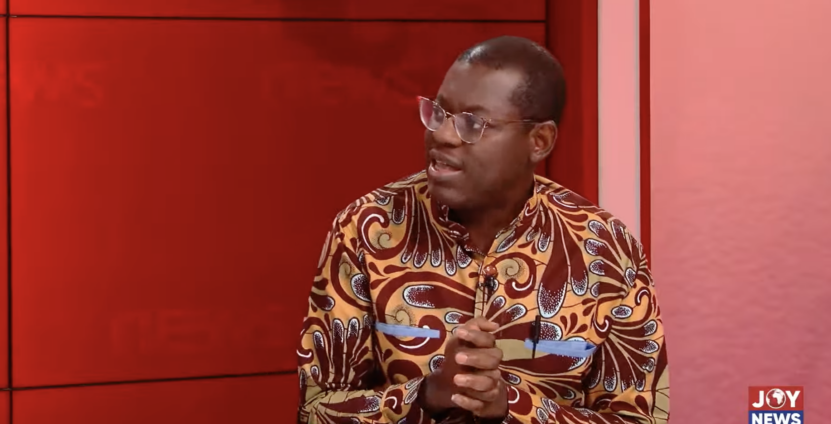
Speaking in an interview on Joy News’ Newsfile on Saturday, Mr Simons strongly condemned the attack but argued that the development also raises fundamental questions about the relevance of the peacekeeping mission.
According to him, UNIFIL was originally designed to prevent further Israeli incursions into Lebanese territory and ensure the disarmament of Hezbollah militants. However, both of these core objectives, it said, remain unfulfilled.
“The action is utterly condemnable, and I agree with everything that has been said by the preceding speakers. But we must also ask fundamental questions about the credibility and viability of this particular UNIFIL contingent,” he stated.
The mission operates under the framework of United Nations Security Council Resolution 1701, which called for a ceasefire between Israel and Hezbollah following the 2006 conflict.
The resolution required both sides to refrain from hostilities and outlined the disarmament of Hezbollah while mandating UN peacekeepers to support the Lebanese Armed Forces in maintaining stability in the region.
However, IMANI Africa argues that neither of the resolution’s key provisions has been effectively implemented. Israeli military incursions into southern Lebanon have continued, while Hezbollah remains armed and operational.
Mr Simons noted that preventing Israeli incursions would largely depend on pressure from the United States, which he suggested has shown limited willingness to enforce such measures.
He also questioned whether any international actor other than Iran could realistically influence the disarmament of Hezbollah. Given these constraints, IMANI Africa questioned what role UN peacekeepers are still playing in the region.
Mr Simons further noted that the mission was already expected to wind down by the end of September, raising concerns about the risks peacekeepers continue to face in the meantime.
“What exactly are UN forces still doing there as auxiliaries of the Lebanese army, which was their original mandate?” he asked.
In light of the recent attack on Ghanaian troops, IMANI Africa urged the government to consider expediting the country’s disengagement from the mission.
It described the situation as “double unfortunate,” warning that UNIFIL may no longer represent a credible international peacekeeping force under the current geopolitical realities.
Latest Stories
-
Obuasi SHTS scandal: Eduwatch calls for sex offenders’ register and mandatory background checks for teachers
3 minutes -
GloMeF CEO urges intensified public education on new road traffic regulations
14 minutes -
‘Any tax on ChatGPT is an attack on education and innovation’- Akim Swedru, MP
18 minutes -
Obuasi SHTS sexual abuse scandal exposes systemic failure in child protection – Moving Masculinity
18 minutes -
Hubtel CEO calls for national data-sharing framework to boost AI development
21 minutes -
Twelve Golden Rules of real estate development in Ghana, Africa
25 minutes -
Five new telephony cell sites in Ashanti Region to be activated in October 2026 – Sam George
26 minutes -
Mahama cuts sod for Afienya Industrial Park, targets 120 enterprises
31 minutes -
Rush for fuel from accident tankers is stealing, punishable by law – NPA boss, Edudzi Tamakloe
36 minutes -
GhIG pushes for legislation to regulate geoscientists’ activities
42 minutes -
Mfantsipim @150: Ace Anan Ankomah leads project to preserve school’s musical heritage
46 minutes -
Gov’t launches rCOMSDEP in Ahanta West, Mpohor Fiase to promote responsible community mining
48 minutes -
AI is forcing professionals to rethink how they deliver value – Hubtel CEO
51 minutes -
Daily Insight for CEOs: Strengthening the CEO’s Leadership Legacy
52 minutes -
Jimmy Aglah’s ‘When the River Testified’ approved by NaCCA as Supplementary Reader
1 hour