

Audio By Carbonatix
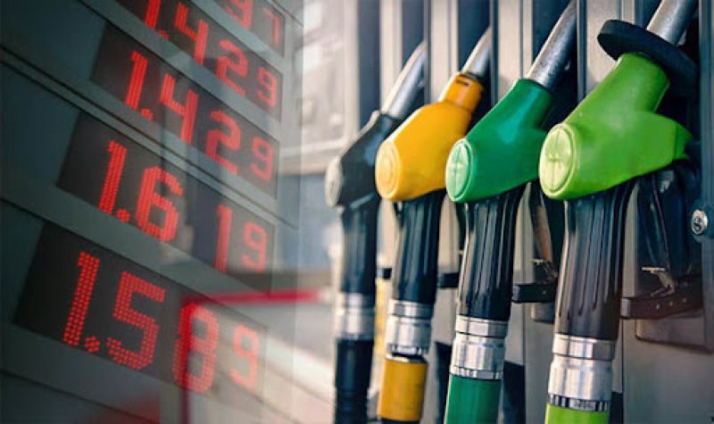
Executive Director of the Institute of Energy Security (IES), Nana Amoasi VII, says deregulating the petroleum industry is not an answer to the skyrocketing fuel prices.
According to him, deregulation is not responsible for the fuel price hikes as the situation is a direct result of the poor performance of the cedi against the dollar and also global market prices.
He noted that tampering with the existing deregulation policy now would negatively affect.
“The deregulation is to ensure that there is full cost recovery and that government is not paying any subsidies that will go and compound the energy sector debts.
"And so the deregulation is to ensure efficiency for all the players on the market and also to ensure that, traders or the distributors and the marketers get their fair share of the margin on each product and also to ensure that we have some form of supply stability and so it’s not something that we’ll push for the deregulation to go.
“It is something that has come to stay and it is helping very well. For the past six years, the BDCs and the marketers have been the ones that have held us and ensured that we have a consistent supply of products on the market because the system or the era of subsidies is gone and government owes them less or owes them nothing at all and so they can put more on the market.”
Nana Amoasi VII stressed that deregulation should not be blamed for the fuel price hikes stating that the deregulated market has rather contributed to a more stable petroleum economy since its inception in 2015.
He has rather advised that government properly manage the nation’s forex and find a solution to the depreciating cedi to ease the situation.
“Nobody should blame deregulation for the price increase we are seeing at the pump because in May 2015 when deregulation kicked in up to the end of 2016, fuel price was almost stable.
"When deregulation started, Goil was selling at around ¢3.4 per litre. At the end of 2016, it was selling for ¢3.70 per litre and so we cannot blame deregulation for what we are seeing currently.
“We should rather be concerned about our forex and be concerned about the international prices and how we would want to mitigate it. Is it through BOST? Is it through TOR? Or through the price stabilization and recovery levy? This is where we should be concerned with,” he said.
Latest Stories
-
We can tackle multiple priorities – Sam George defends Anti-LGBTQ Bill push
5 minutes -
Statement: Ghana Chamber of Mines’ Response to Claims in Joe Jackson’s “Ananse Stories about the Economy of Ghana”
6 minutes -
GES opens 2026 teacher recruitment for licensed B.Ed graduates
9 minutes -
Ghana must value skilled trades, build resilient learners — Ibn Chambas
17 minutes -
Ghana must rethink education around relevance, resilience and responsibility — Ibn Chambas
20 minutes -
Prince Harry faces defamation lawsuit from charity he co-founded
22 minutes -
South Korea deploys thermal cameras to track escaped zoo wolf
23 minutes -
Calls for royal meeting with Epstein survivors grow ahead of US visit
26 minutes -
Ibn Chambas advocates blend of technology and human values in education
28 minutes -
UMA improves healthcare access in Asutifi North with GH₵700k ‘Kim Taylor Legacy’ Walkway
33 minutes -
Scholarships Authority and Fanaka University offer sponsorship for procurement and supply chain studies
36 minutes -
Bisa Kdei drops new single ‘Go N Look’ featuring Medikal
42 minutes -
Benin facing rising terrorism in north as French military presence faces growing criticism
43 minutes -
UEW Public Lecture Series 2026: Education debate ‘about the soul of Ghana’s future’ — Dr Ibn Chambas
44 minutes -
EU fingerprint and photo travel rules come into force from today
1 hour