

Audio By Carbonatix
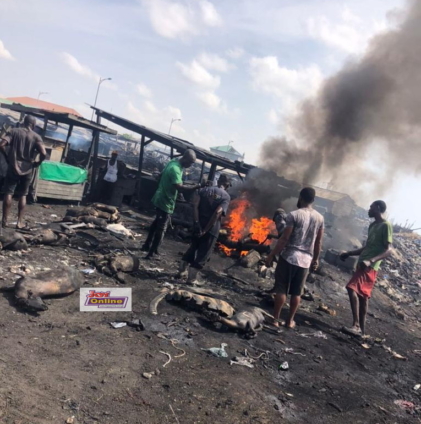
At first glance, it may seem like goldsmiths are burning to craft ornaments for sale, but a closer examination of the smoke rising into the atmosphere reveals a troubling reality.
Aside from vehicles emitting fumes, the role of goat roasters in polluting the air is often overlooked. However, residents of Korle-Boode, a suburb in Jamestown, are keenly aware of the devastating impact of these activities on their environment.
While the goat roasters themselves are hesitant to discuss the situation, some residents have bravely shared their concerns about how this pollution is affecting their health.

Sheriff, a native of Korle-Boode, recounts the toll the smoke has taken on him: "I developed an eye problem as a result of the frequent smoke entering my eyes. When I spend time on my phone, tears begin to flow as if I have been physically assaulted. I always carry eye drops with me because if I forget to apply them for a while, the pain and itching worsen."
Despite suffering from these effects, Sheriff feels he has no choice but to endure, as Korle-Boode is his only home.
Other residents also lamented the impact of roasting goat with tyres on their health and their environment.
Theresah, a resident of Korle-Boode, emphasized the dangers of being constantly exposed to the smoke: "Whether you are a schoolgirl or a worker, you inhale smoke wherever you go. I feel the people engaged in this activity have no alternative employment, so no matter the harm it causes them, they will continue because it is their livelihood. I urge the government to find them an alternative location, as we are also suffering."
Nii Okanta 1, a sub-chief of Korle-Boode, shed light on the historical context of the area's activities: "The name 'Boode' means slaughterhouse or abattoir. This activity has been part of our community since I was born. We slaughter and dress animals for sale here. While we are aware that smoking animals is illegal and harmful to the health of our people, we have been promised by the government that they will use taxes collected from the goat roasters to relocate us to a new location and provide gas for smoking the animals. We eagerly await these promises to be fulfilled."
The battle against this silent and invisible enemy in Ghana is a collective responsibility. Through government initiatives and individual actions, there is potential for cleaner air and a healthier environment for all.
Latest Stories
-
One dead, six maimed as bloody land feud tears Krachi Nchumuru apart
18 minutes -
Missing service member rescued by US forces after jet downed in Iran, Trump announces
40 minutes -
Gomoa Easter Carnival: Sarkodie, Kuami Eugene, Tinny, set festival ablaze as Day 3 ends on high note
1 hour -
“Feels amazing” – Antoine Semenyo reveals after Manchester City dismantle Liverpool
2 hours -
Mahama calls for emergency cabinet meeting over rising fuel prices
2 hours -
Asante Gold reports US$345million loss for 2025
3 hours -
‘It’s not easy’ – Mother of late Dr Omane Boamah breaks silence
4 hours -
Gov’t making progress in clearing $1.7bn power debt – Mahama
4 hours -
Justice is the engine of growth – Chief Justice
5 hours -
Meet us halfway – Trade Minister tasks private sector with AfCFTA success
5 hours -
After more than 14 years at Atletico Madrid, what next for Simeone?
5 hours -
Conquering the World – Building on the foundations laid by Otto Addo
6 hours -
[Playback] Sarkodie, Kwami Eugene, Tinny, Keche and others thrill fans at Gomoa Easter Carnival
6 hours -
Gomoa Easter Carnival: Experts charge indigenes to own festival to ensure sustainability
7 hours -
Gomoa Easter Carnival: Edem Agbana and Joy Prime fans shower festival with huge endorsements
8 hours