

Audio By Carbonatix
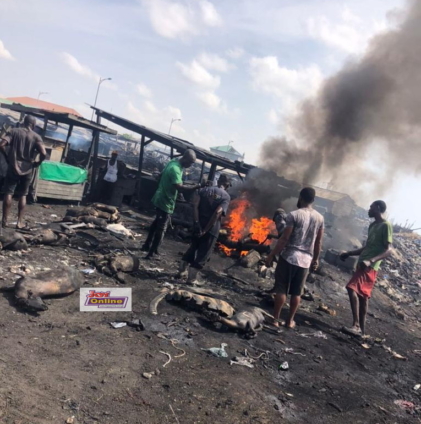
At first glance, it may seem like goldsmiths are burning to craft ornaments for sale, but a closer examination of the smoke rising into the atmosphere reveals a troubling reality.
Aside from vehicles emitting fumes, the role of goat roasters in polluting the air is often overlooked. However, residents of Korle-Boode, a suburb in Jamestown, are keenly aware of the devastating impact of these activities on their environment.
While the goat roasters themselves are hesitant to discuss the situation, some residents have bravely shared their concerns about how this pollution is affecting their health.

Sheriff, a native of Korle-Boode, recounts the toll the smoke has taken on him: "I developed an eye problem as a result of the frequent smoke entering my eyes. When I spend time on my phone, tears begin to flow as if I have been physically assaulted. I always carry eye drops with me because if I forget to apply them for a while, the pain and itching worsen."
Despite suffering from these effects, Sheriff feels he has no choice but to endure, as Korle-Boode is his only home.
Other residents also lamented the impact of roasting goat with tyres on their health and their environment.
Theresah, a resident of Korle-Boode, emphasized the dangers of being constantly exposed to the smoke: "Whether you are a schoolgirl or a worker, you inhale smoke wherever you go. I feel the people engaged in this activity have no alternative employment, so no matter the harm it causes them, they will continue because it is their livelihood. I urge the government to find them an alternative location, as we are also suffering."
Nii Okanta 1, a sub-chief of Korle-Boode, shed light on the historical context of the area's activities: "The name 'Boode' means slaughterhouse or abattoir. This activity has been part of our community since I was born. We slaughter and dress animals for sale here. While we are aware that smoking animals is illegal and harmful to the health of our people, we have been promised by the government that they will use taxes collected from the goat roasters to relocate us to a new location and provide gas for smoking the animals. We eagerly await these promises to be fulfilled."
The battle against this silent and invisible enemy in Ghana is a collective responsibility. Through government initiatives and individual actions, there is potential for cleaner air and a healthier environment for all.
Latest Stories
-
‘I don’t make music for awards, I make it to connect people’ – Rocky Dawuni
1 minute -
Farmer jailed for three months over assault on wife in viral video
7 minutes -
Police arrest eight in Okaishie operation targeting illicit drugs and medicines
10 minutes -
David Agyemang Yeboah: Marriage is not the problem; your approach is
13 minutes -
Lawyer sues Standards Authority over used-vehicle import restrictions
15 minutes -
Ukraine to restart strikes on Russian oil refineries, Zelensky says
15 minutes -
CIMG awards drive competition among Ghanaian businesses
21 minutes -
NSA regional director Emmanuel Reagan files nomination to contest NDC Ashanti Regional Organiser position
26 minutes -
Obuasi SHTS: Number of students alleging sexual abuse rises to 16
31 minutes -
Ghana’s economy grows by 7.4% in July 2026
42 minutes -
NDC member challenges Dennis Yeboah Twumasi’s eligibility for Bono Regional Secretary elections
52 minutes -
Popular Nigerian gospel singer Toluwanisings dies
1 hour -
Spio-Garbrah proposes debt swaps to fund reparative justice in Africa and Caribbean
1 hour -
Alban Bagbin calls for governance reforms and coordinated action to address Africa’s debt crisis
1 hour -
AAK Academy Ghana trains 22 chocolate and confectionery companies in production techniques
1 hour