

Audio By Carbonatix
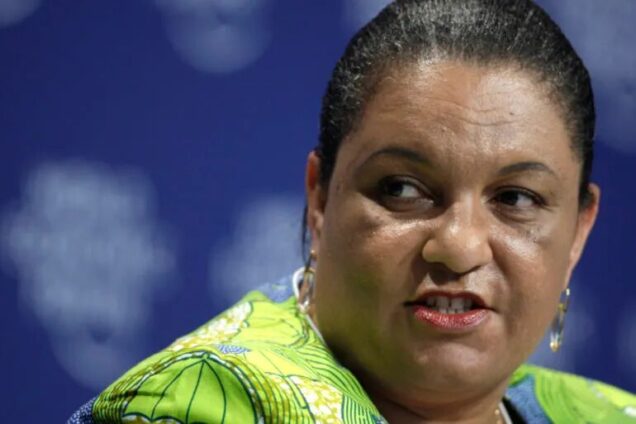
Former Minister of Foreign Affairs and Awutu-Senya West MP, Hannah Serwaa Tetteh, has raised thought-provoking questions regarding the Supreme Court’s decision-making process.
Her remarks come in the wake of the Court’s recent ruling that overturned Speaker of Parliament Alban Bagbin’s decision to oust four Members of Parliament.
Taking to her Facebook page, Tetteh questioned whether the justices of the Supreme Court consider public opinion and the broader social implications of their rulings, particularly in politically charged cases.
The United Nations Secretary-General’s Special Envoy for the Horn of Africa, emphasised the significance of the judiciary’s role in maintaining stability in Ghana’s democratic system, especially as elections draw closer.
“When the Justices of the Supreme Court take their decisions or make orders in whatever circumstances, not just in the context of the recent ex-parte decision against the Speaker’s ruling, do they listen to the public commentary and reflect on their decision, its implications and how it has been received not only by the parties to the particular suit or in a case with political undertones?” Hannah Tetteh asked.
In her post, she acknowledged the expectation for the judiciary to interpret the law impartially and ensure its fair application.
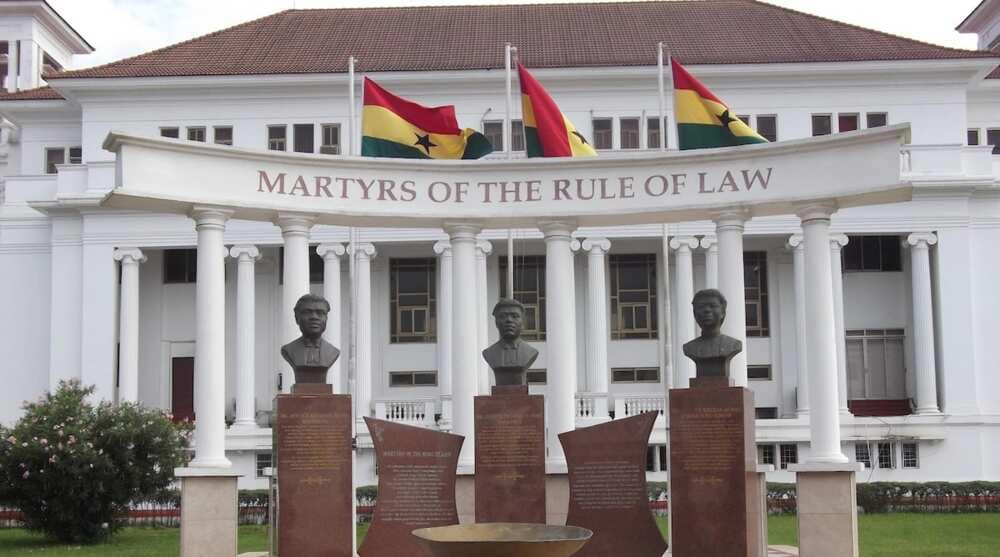
However, she stressed that these decisions are made within the context of a society governed by the same laws, which encompasses diverse stakeholders.
“We live in hyper-partisan times, and the closer we get to elections, the more tense the political environment becomes, and consequently, the times when peace and security within the state is at its most fragile,” she warned.
Read also: Supreme Court stays Speaker’s ruling ousting 4 MPs from Parliament
Hannah Tetteh’s remarks pointed to the importance of the judiciary not only surviving in such an environment but thriving as an essential pillar of Ghana’s democracy.
She highlighted the critical role a strong and principled judiciary plays in fostering a competitive yet peaceful democratic process.
“A strong, principled judiciary is essential to a competitive but peaceful democracy. They have an important role to play in ensuring this democracy not only survives but thrives,” she concluded.
Hannah Tetteh’s comments have sparked a broader discussion on the role of the judiciary in navigating Ghana’s tense political landscape, particularly as the nation approaches another election cycle.
Latest Stories
-
The hypocrisy must stop; pass Anti-LGBTQ+ Bill now – Alhassan Tampuli to Mahama
4 minutes -
Imprisonment should be rehabilitative, not punitive – Ghana Prisons boss at UNGA
25 minutes -
Ga Adangbe traditional priests petition Mahama over McDan aviation licence revocation
37 minutes -
Anti-LGBTQ Bill: NDC’s arrogance is worrying – Hassan Tampuli
47 minutes -
Let’s give OSP time to mature, not to scrap it – Hassan Tampuli
51 minutes -
Nigeria convicts 386 Islamist militants in mass trials
56 minutes -
Djibouti president wins election with 97.8% of vote, state media says
1 hour -
We don’t have mandate to deduct tax from rent allowance of security services personnel – Interior Ministry clarifies
1 hour -
Ablakwa receives Presidential Special Envoy on Reparations to advance global agenda
2 hours -
Christina Koch becomes first woman to travel around the moon on Artemis II
2 hours -
Epstein survivors’ calls to meet King Charles and Queen harder to ignore as US visit approaches
2 hours -
UN Secretary-General names Ghana’s Anita Kiki Gbeho as South Sudan envoy
2 hours -
Mali withdraws recognition of Sahrawi Republic, backs Morocco’s autonomy plan
2 hours -
Gov’t distributes over 8,500 laptops to One Million Coders project
2 hours -
Julius Debrah, ‘man to beat’ as NDC’s James Agbey dismisses Musah Dankwah’s polls
2 hours