

Audio By Carbonatix
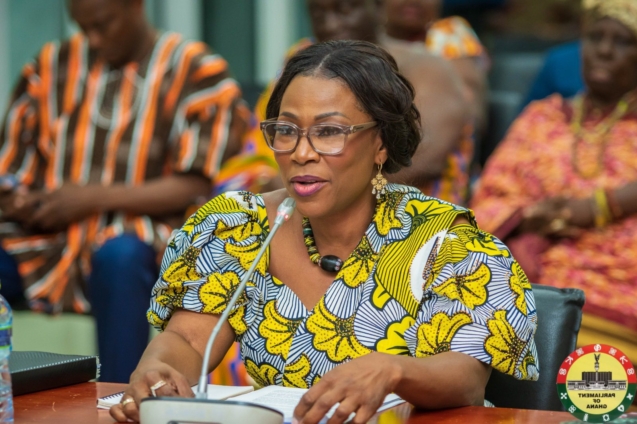
Deputy Health Minister-designate Dr. Grace Ayensu-Danquah has robustly defended her use of the title "Professor", stating she has been teaching surgery for at least 15 years.
Her clarification came in response to probing questions from Minority Leader in Parliament, Alexander Afenyo-Markin, who sought to understand the basis of her professorial title in the context of academic norms when she appeared before Parliament's Appointments Committee on Friday, July 25.
Mr. Afenyo-Markin, noting her "14-page CV", asked Dr. Ayensu-Danquah to clarify whether she should be addressed as "Doctor" or "Professor" and which title matched her rank.
In her response, Dr. Ayensu-Danquah affirmed, "Both do. I am a Professor of Surgery at the University of Utah in the United States."
The Minority Leader then pressed further, drawing a distinction with the Ghanaian academic system, where a PhD typically precedes an Associate Professor rank, followed by a full Professorship, often requiring extensive publications and research.
He asked her to clarify the jurisdiction where she earned the title and whether she held a document from a certified body confirming the conferment, as is customary in Ghana.
Dr. Ayensu-Danquah explained the divergence in academic systems.
"Thank you, Mr. Chair. The American system is completely different from the Ghana system," she stated. "I am a Professor of Surgery. I have been teaching surgery for at least the last 15 years."
She further elaborated on the nature of surgical education, emphasising its practical component.
"Surgery is a skill. So we teach in the theatre. We don't teach only in the classroom. As we are doing classroom work, we are also doing teaching in the theatre. I am a full Professor of Surgery at the University of Utah and a Professor of Global Surgery."
Understanding Academic Titles: Ghana vs. the US System
The exchange highlighted a common point of confusion regarding academic titles across different higher education systems. In Ghana and many Commonwealth countries, the progression to full professorship typically involves:
- Lecturer: Entry-level academic position, usually requiring a PhD.
- Senior Lecturer: Requires more experience, publications, and sometimes administrative roles.
- Associate Professor (or Reader): A significant step, requiring substantial research, publications, and teaching experience, often involving a rigorous review process.
- Full Professor: The highest academic rank, reserved for scholars with an outstanding record of research, publications, teaching, and often significant contributions to their field at national or international levels. The conferment is a formal process by the university.
In the United States, while a similar hierarchy exists, the specific requirements and pathways can vary significantly between institutions and even departments.
In medical education, particularly in clinical fields like surgery, the title of Professor can be granted based on a combination of:
- Clinical Expertise and Teaching: Extensive experience in practising and teaching advanced surgical techniques in a hospital or clinical setting, directly mentoring residents and fellows in operating theatres.
- Research and Publications: While often extensive, the balance between pure academic publications and clinical research or contributions to medical practice can differ.
- Leadership and Service: Contributions to departmental leadership, medical societies, and professional service.
- Years of Service: Significant tenure at a university or teaching hospital.
For clinical professors, teaching is often conducted at the bedside, in operating rooms, and through mentorship, complementing traditional classroom lectures.
Dr. Ayensu-Danquah's assertion of "teaching surgery for 15 years" in a clinical setting aligns with the typical progression for clinical professorships in the American system.
The Appointments Committee's scrutiny of such details is a standard part of the vetting process, ensuring that appointees' credentials are clear and understood by the public, especially given the differing academic terminologies across international jurisdictions.
Dr. Ayensu-Danquah's clarification aims to assure both the committee and the public about the legitimacy of her academic standing.
Latest Stories
-
EU, Ghana sign security partnership pact
8 minutes -
Vice President Opoku-Agyemang urges women to mentor younger women
13 minutes -
Mahama and his South Korean counterpart hold bilateral talks
23 minutes -
The path to gender equality requires collaboration – Vice President
37 minutes -
Gov’t condemns drone attack in Dubai injuring two nationals
44 minutes -
Land ban on transit goods could boost Ghana’s revenue by billions, says FABAG
56 minutes -
Ban on land transit goods safeguards Ghanaian manufacturers – FABAG
1 hour -
Trump says white South Africans are persecuted; some are returning to a better life
2 hours -
Security recruitment must match budget reality – Ishmael Norman defends phased hiring
2 hours -
Meritocracy is not what Ghanaians want – Security Expert backs Interior Minister’s risky reform
2 hours -
One week observance for highlife legend Ebo Taylor takes place this Saturday in Saltpond
3 hours -
Oil hits $100 a barrel despite deal to release record amount of reserves
5 hours -
Senegal lawmakers approve new, harsher anti-LGBT bill
6 hours -
Lamborghini Saga: EOCO boss has tarnished my brand and cost me business deals – Shatta Wale
6 hours -
Mugabe’s son drops bail request – what has happened to the family after losing power
6 hours