

Audio By Carbonatix
Commercial banks are increasingly reaching out to customers to offer loans, a development the Bank of Ghana says reflects easing interest rates, improved liquidity conditions and renewed confidence within the banking sector, following recent monetary policy easing.
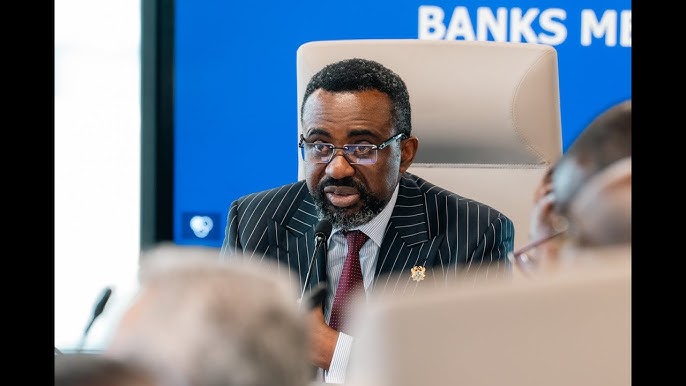
The Governor of the Bank of Ghana, Dr. Johnson Asiama, disclosed at the 128th Monetary Policy Committee (MPC) press briefing in Accra on Wednesday, January 28, that banks have begun proactively courting borrowers, offering credit at significantly lower interest rates.
“Banks are beginning to call clients if they need loans,” the Governor said.
Dr. Asiama described the trend as a positive signal of strengthening bank balance sheets, improved liquidity positions and a growing willingness by lenders to extend credit to the private sector.
“Someone told me this morning that his bank called him to come for a loan at a 15.0% per annum rate.”
The comments followed the Bank of Ghana’s decision to cut the Monetary Policy Rate (MPR) by 250 basis points, from 18% to 15.5%, marking the central bank’s first policy action for 2026.
The decision was announced after the MPC’s 128th meeting at Bank Square and builds on an earlier and more aggressive 350-basis-point cut in November 2025, when the policy rate was reduced from 21.5% to 18% amid easing inflationary pressures and improving macroeconomic conditions.
According to the Governor, the latest policy move was guided by forecasts and survey-based inflation expectations, which indicate that headline inflation is likely to remain within the medium-term target, despite potential risks from utility price adjustments and volatility in global commodity markets.
“GDP growth is expected to remain strong in 2026, with the output gap narrowing,” Dr. Asiama noted, adding that while this could introduce moderate demand-side pressures, overall monetary conditions remain tight relative to prevailing inflation dynamics.
The Governor emphasised that the rate cut underscores the central bank’s commitment to supporting economic growth and credit expansion without compromising price stability.
“Sustaining Ghana’s macroeconomic gains will hinge on disciplined fiscal policy, strong policy coordination, and targeted agricultural interventions to contain food inflation, while remaining vigilant to heightened geopolitical tensions,” he said.
With lending rates easing and banks increasingly willing to extend credit, expectations are growing that private sector activity will pick up in the coming months, providing a boost to investment, consumption and overall economic growth.
Latest Stories
-
Kwakye Ofosu rejects NPP Minority’s call for apology over anti-LGBTQ bill
4 minutes -
Music giant Universal gets $64bn takeover offer
16 minutes -
NPP criticism of anti-LGBTQ Bill ‘nothing more than political posturing’ — Kwakye Ofosu
24 minutes -
Joy FM was birthed over a bowl of fufu’ – Tommy Annan-Forson shares interesting story
30 minutes -
World Athletics to introduce standalone World Marathon Championships from 2030
35 minutes -
Africa’s voice in global journalism grows as funding, AI and misinformation shape newsrooms
36 minutes -
First Atlantic Bank holds Annual General Meeting, reports strong growth and bold outlook for 2026
39 minutes -
Ghanaian-founded fintech WeWire secures Canadian PSP license to bridge African, global payments
42 minutes -
Uganda confirms 2027 AFCON dates
50 minutes -
40 convicted in Northern Region crime crackdown
50 minutes -
‘We’re days away from parts of the world experiencing actual shortages:’ Eric Nuttall on energy
1 hour -
‘I’m Obroni in every country’ – Coco Blasian on music, survival and making Accra home
1 hour -
IMANI wants NIC to probe possible conflicts of interest in reinsurance arrangements
1 hour -
First Atlantic Bank strengthens balance sheet as net interest income surges 67%
1 hour -
Choplife Gaming donates to Korle Bu Radiotherapy unit for Women’s Week 2026
1 hour