


Audio By Carbonatix
A Congolese journalist who had been raising awareness about the Ebola virus in the Democratic Republic of Congo has been killed at his home.
The army said unidentified attackers raided Papy Mumbere Mahamba's home in Lwebma, in the north-eastern province of Ituri, killing him, wounding his wife and burning their house down.
DR Congo is experiencing the world's second-worst Ebola epidemic on record.
People working to stop the virus are often targets of attacks.
Mahamba's murder is likely to have been fuelled by deep suspicion of the Ebola virus and mistrust of those who are working to stop it, the BBC World Service's Africa editor Will Ross says.
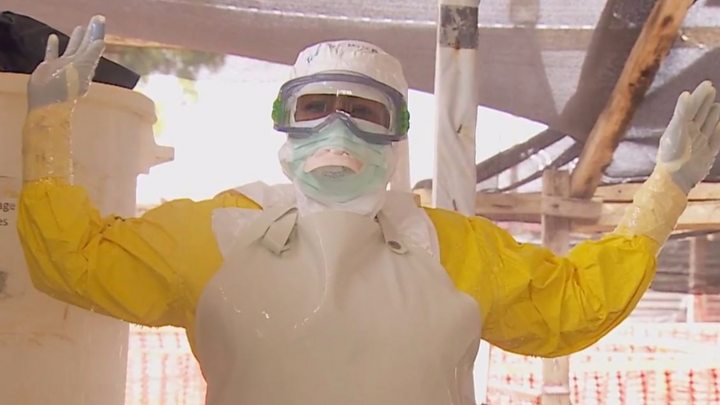 Fears and myths: Why people are still in denial about Ebola
Efforts to control the outbreak have been hampered by violence against healthcare workers and Ebola treatment facilities.
Some do not believe that the virus exists or do not trust health workers, leading people to avoid treatment.
Over the last year there have been some 200 attacks on health workers, ambulances and health centres.
Fears and myths: Why people are still in denial about Ebola
Efforts to control the outbreak have been hampered by violence against healthcare workers and Ebola treatment facilities.
Some do not believe that the virus exists or do not trust health workers, leading people to avoid treatment.
Over the last year there have been some 200 attacks on health workers, ambulances and health centres.
What happened?
Mr Mahamba had just hosted an Ebola awareness programme on a community radio station when the attack took place. Professor Steve Ahuka, national coordinator of the fight against Ebola, confirmed the reports from the army that a "community worker" involved in the fight against Ebola had been killed. A journalist at Radio Lwemba, the local radio station where he worked, also confirmed the details. Jacques Kamwina told AFP news agency that Mahamba had been stabbed to death.What is the situation with Ebola in the DRC?
The DRC declared an Ebola epidemic in August 2018. More than 2,000 lives have been lost amid a total of 3,000 confirmed infections, according to the World Health Organization (WHO). The outbreak is affecting the DRC's North Kivu, South Kivu and Ituri provinces. In July, the WHO said the situation there was a "public health emergency of international concern."
Fears and myths: Why people are still in denial about Ebola
Efforts to control the outbreak have been hampered by violence against healthcare workers and Ebola treatment facilities.
Some do not believe that the virus exists or do not trust health workers, leading people to avoid treatment.
Over the last year there have been some 200 attacks on health workers, ambulances and health centres.DISCLAIMER: The Views, Comments, Opinions, Contributions and Statements made by Readers and Contributors on this platform do not necessarily represent the views or policy of Multimedia Group Limited.
DISCLAIMER: The Views, Comments, Opinions, Contributions and Statements made by Readers and Contributors on this platform do not necessarily represent the views or policy of Multimedia Group Limited.
Latest Stories
-
Celebration or Tragedy? The deadly reality of indiscriminate gunfire in public spaces
50 seconds -
Parliament approves GH₵8.77bn DACF as MPs raise concerns over arrears and metro funding
1 minute -
2 NDC MPs petition for removal of EC Chair Jean Mensa
1 minute -
Borderless MIL Education: A Reflection from Penplusbytes’ Caravan of Hope Roadshow in Rural Ghana
5 minutes -
How IGP Christian Tetteh Yohuno vindicated a nation’s choice and outshone the noise of dissent
5 minutes -
Adom Kiki earns TGMA Best New Artiste nomination after standout year
9 minutes -
Stakeholders push for stronger investment in women to drive inclusive economic growth
15 minutes -
Public officers must declare assets before taking office – Supreme Court
15 minutes -
Government pushes AI adoption to boost productivity and economic transformation
18 minutes -
15k defection claim in Assin South false; I’ll win back every member – Ntim Fordjour
25 minutes -
Abstaining from Ghana’s UN Slavery Resolution risks ‘wrong side of history’ – PALU warns
30 minutes -
PALU backs Ghana’s landmark UN resolution on slavery as gravest crime against humanity
33 minutes -
Managing Chronic Constipation in Adults: New evidence-based dietary guidance
45 minutes -
Ghana Shippers Authority acquisition of ICT materials: The facts as we have found
50 minutes -
Freddie Blay granted GH¢800k bail in Kitase demolition case
58 minutes