

Audio By Carbonatix
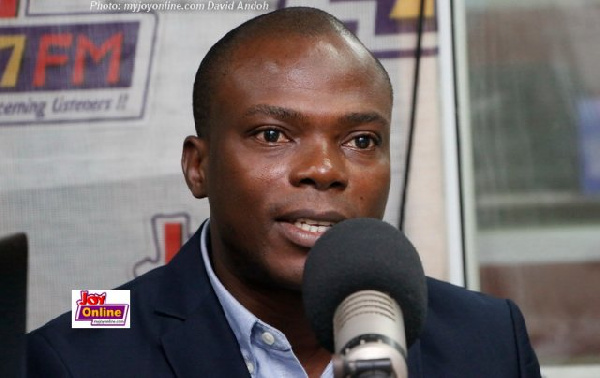
The Executive Director of the Media Foundation for West Africa (MFWA), Sulemana Braimah, has called on the Economic Community of West African States (ECOWAS), to take a more serious view on terrorism in the subregion and deal decisively with the menace.
According to him, the incidents of terrorism in the subregion are 'troubling'; hence the need for ECOWAS to work collectively to forestall any further mayhem.
Speaking on the newspaper review on the AM Show on Monday, he bemoaned the growth and expansion of terrorist movements in the subregion, making reference to the inception of Boko Haram.
Mr Braimah said the activities of Boko Haram and other terrorists groups, call for ECOWAS to work collectively to protect citizens within the subregion.
"We also need as a region to begin to see these problems as not problems for Nigeria, for Togo, for Burkina, for Mali and [other countries], but collectively begin to act as ECOWAS and confront these issues. Because if we say we will insist on Mali or Burkina doing the best that they can to stem the tide, I wonder whether these countries by themselves will be able to confront the challenges that face them.
And it's not actually a challenge for them. It's a challenge for all of us. And I've said before, that it's time that collectively as ECOWAS, whether it is our security that come together to confront these challenges in the Sahel region, we have to do that", he admonished.
Mr Braimah's made these comments in reaction to the recent killing of some Christians in Nigeria by unknown assailants.
According to the BBC, the gunmen killed church worshippers in Ondo state, south-west Nigeria.
The armed men entered St Francis Catholic church in the town of Owo during a Sunday service. They fired into the congregation and then kidnapped a priest as well as some other church-goers, witnesses said.
No figures for the numbers killed or abducted in Sunday's violence have been confirmed.
But a doctor at a local hospital, quoted by the Reuters news agency, said that "several worshippers were brought in dead". After visiting the church and hospital, state lawmaker Ogunmolasuyi Oluwole told the Associated Press news agency that children were among the dead.
In a series of tweets, Ondo state Governor Rotimi Akeredolu called it a "vile and satanic attack" on innocent people. He appealed for calm, urging people not to take the law into their own hands.
"The assailants will be hunted down and they will pay for their crimes," he added in a message sent after being briefed at the scene.
"No matter what, this country shall never give in to evil and wicked people," President Buhari also said in a statement.
Meanwhile, a Nigerian journalist, Layo Olarinde, says the country is in total shock following last Sunday’s church attack in Ondo state.
Speaking on Joy FM's Super Morning Show on Monday, Layo Olarinde, a correspondent for Channels TV said the attack was not expected.
According to her, Ondo is a relatively peaceful state and therefore the attack was not anticipated by neither the authorities nor the indigenes.
“Ondo state is in the south-western part of the country. It is relatively one of the peaceful states in the country. So this attack on Sunday was something that was really shocking and it shook the whole country”.
Layo also said activities in the State have grounded to a halt following the attack. According to her, the Ondo State is a “terrible one as of now”.
“It is a somber state now and activities are down. Families of the victims are mourning”, she added.
The journalist further disclosed that the Christian community will embark on a peaceful protest today, Monday, June 6.
Nigeria is facing worsening violence by armed groups, the BBC's Chris Ewokor in the capital, Abuja, says. But Ondo state has, until now, been relatively untouched.
A week ago the head of the Methodist Church in Nigeria was abducted along with two other clerics in the south-east of the country.
The Methodist prelate said he paid $240,000 (£190,000) to be freed with his companions.
Two weeks ago, two Catholic priests were also kidnapped in Katsina, President Muhammadu Buhari's home state in the north of the country. They have not been released.
In March, gunmen also targeted the vital rail link between Abuja and the northern city of Kaduna, killing at least nine people and kidnapping dozens of others, many of whom are still being held.
Latest Stories
-
Government procures over 2,000 transformers as Ghana’s electricity access hits 89.13% – Energy Minister
25 minutes -
UTAG-UG threatens strike on October 19 over unpaid allowance
33 minutes -
Let The Constitution direct Chieftaincy to deliver “All Development Is Local”
2 hours -
John Jinapor outlines renewable energy, nuclear power priorities for 2027
2 hours -
Ghana explores centre of excellence for hearing, communication and cochlear implant care
3 hours -
Schizophrenia-related disorders lead mental health cases recorded in Ghana
3 hours -
Dutch authorities enlist Ghana in hunt for fugitive drug lord Bolle Jos
4 hours -
Ghana housing finance conference adopts communiqué to improve affordable housing access
8 hours -
Special Initiatives Minister urges Wa Technical Institute to enrol more girls as EU-backed solar training lab opens
9 hours -
In the matter of my first year at the Bar
9 hours -
ActionAid Ghana calls for an end to child marriage, greater investment in girls’ rights
9 hours -
Newsfile to tackle World Cup visa scandal, beach demolitions, education strikes, BRICS bid
9 hours -
UK-Ghana Trade & Investment Summit: Trade Resource Centre to help businesses maximise UK-Ghana trade opportunities
10 hours -
Embassy of Denmark celebrates World Maritime Day
10 hours -
Linking LEAP to productive inclusion could cut extreme poverty by 2030 – UNICEF
11 hours