

Audio By Carbonatix
The Media Foundation for West Africa (MFWA) has opposed granting the press unrestricted access to live court proceedings.
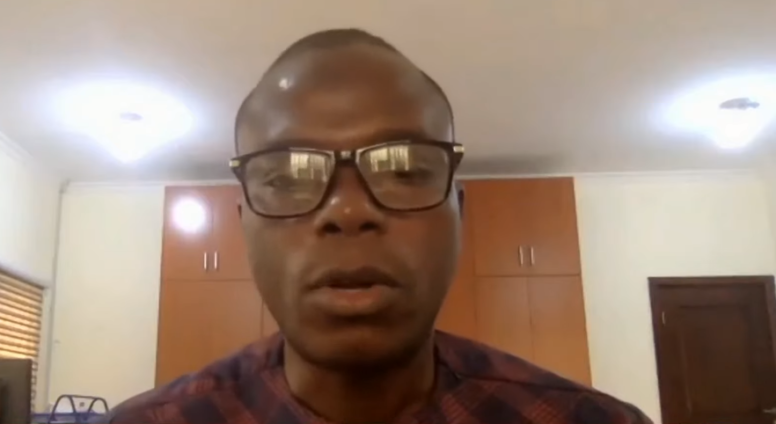
The Foundation’s Executive Director, Sulemana Braimah, in an interview with JoyNews PM Express host, Evans Mensah commended the transparency aspect but highlighted cautionary issues that must be considered.
He noted that some witnesses might feel uncomfortable standing in front of cameras, affecting their behaviour.
“There are people you go to interview and they are quite jittery in normal interviews, not cross-examination or anything…that is why people conduct media training sessions for CEOs and others so they familiarise with it and not behave awkwardly during the interviews," he stated.
He further argued that lawyers might change their behaviour knowing their friends and loved ones are watching them live, citing a case in the US where a trial was reversed due to such concerns.
Regarding media coverage, Braimah expressed concerns that local media houses in Ghana might highlight selective aspects of the proceedings based on their interests, potentially leading to misinterpretations.
He stressed the importance of caution in granting unfettered access to live court proceedings to avoid compromising the judiciary's integrity.
“The judge may be acting in a certain way and a media house will highlight it and say, ‘look at the way the judge has even squeezed his face, it shows that he is not interested in the arguments put forward by a lawyer’…we have seen that before.
“It is important that we bring whatever happens in the courtroom to the public domain but it is early days yet...we need to tread cautiously so we don’t end up getting our judiciary up in the murky situation as we find ourselves in many other areas in terms of the polarised environment, everything being turned partisan, and compromising judiciary mechanism," he said.
Mr Braimah emphasised the need to avoid rushing into decisions that could further undermine public trust in the judiciary, urging careful consideration to maintain transparency and accountability without risking the judiciary's credibility.
Background
On Wednesday, the Supreme Court allowed the live coverage of proceedings related to the controversial Human Sexual Rights and Family Values Bill, commonly referred to as the anti-LGBTQ bill.
This follows a formal request made by the Attorney General, Godfred Dame.
In a letter to the Chief Justice, the Attorney General cited significant public interest in the bill as the basis for the request.
"Respectfully, in view of the public interest in the cases concerning the Human Sexual Rights and Family Values Bill 2024 (the Bill) I would like to recommend that the media (including radio and television) be given full access to the relevant courts to undertake coverage of all proceedings in those cases concerning the Bill," he said in his request to the Chief Justice.
The move has been lauded by many including the GJA.
Latest Stories
-
George Christian Papa Mends
24 seconds -
Ali Suraj elected NPP NASARA Coordinator
11 minutes -
Mustapha Hamid misses out on NPP Vice Chairmanship by 31 votes despite early poll lead
20 minutes -
Kojo Bamba, Henry Nana Boakye and Nana Akomea elected NPP Vice Chairmen
1 hour -
From Delta Force to NPP First Vice Chairman – Kojo Bamba’s political journey
1 hour -
Police restore calm at Larteh following Odwira festival disturbance
2 hours -
‘All the camps will dissolve’ – Bawumia demands one NPP for 2028
2 hours -
There is no time to waste – Bawumia orders NPP to begin 2028 work
2 hours -
Sarkodie visits MobileMoney Fintech LTD
2 hours -
John Boadu unveils new NPP strategy to win back youth and modernise party
2 hours -
Hawa Koomson elected NPP National Women’s Organiser
2 hours -
John Boadu begins NPP rebuild from grassroots ahead of 2028 election
2 hours -
Titus Glover wins NPP National Organiser race on second attempt
2 hours -
Winning 2028 election won’t be easy; we must work harder – Bawumia
2 hours -
You’ll be part of 2028 campaign; there’s enough work for all of us – Bawumia to NPP aspirants
3 hours