

Audio By Carbonatix
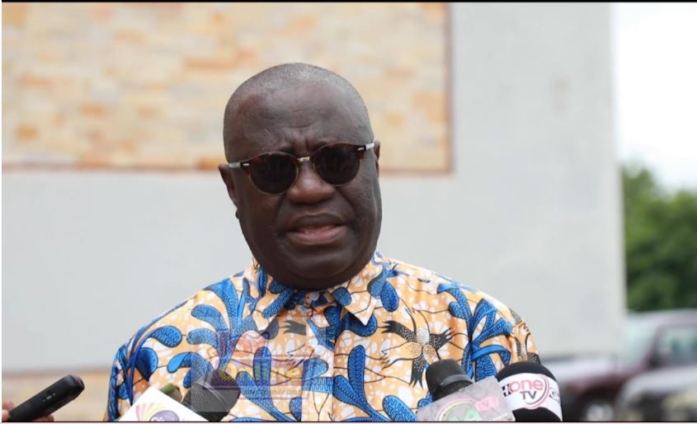
The Director of the Faculty of Academic Affairs and Research at the Kofi Annan International Peacekeeping Training Centre (KAIPTC) says the ECOWAS standby force was instituted to respond to civil wars and not to be engaged in eras of constitutional changes within its member states as it seeks to do presently in the wake of the coup in Niger.
Professor Kwesi Aning says there is no conflict or civil war in Niger, therefore the bloc should rather consider using "a graduated set of responses" to resolve the situation.
"The standby force idea was also to respond first and foremost to civil wars and not to constitutional changes or internal political misunderstandings where there is massive bye-in as to what is happening. I mean there's no conflict in Niger per se.
"There rather ought to be a graduated set of responses as an internal crisis escalates," he said on JoyNews' Newsfile on Saturday.
The expert explained that the bloc does not seem to have exhausted all options in its laid down procedures. The West African bloc has jumped steps, according to Prof. Aning. "What we've seen is an automated response from ECOWAS, from zero to hundred,"
Military option should be the last resort, he stressed.
ECOWAS has reportedly given the green light to its standby force to prepare for what it calls an intervention in Niger. According to reports, heads of forces of member states are convening in Accra to hatch an intervention plan.
This follows a one-week ultimatum given to the military junta in Niger to return the country to a constitutional order following its coup.
On the back of this, Prof. Aning explained that the bloc has even defaulted when it comes to its processes in moblising forces for interventions.
"If you look at the mechanism Article 28, 1, it specifies the processes for force generation. That has not been followed. Quite a number of these decision-making processes and procedures have been hopped over and then we have taken the decision of last resort," he explained.
He indicated that international organisations function best when there is compliance with what they have voluntarily signed on to and when there is a sense of "bindingness" relating to the values, principles and decision-making processes.
Latest Stories
-
The Ghanaian prophet and the mysterious death of his scottish wife Charmain Speirs
37 minutes -
Nearly 400 sentenced in Nigeria for links to militant Islamists
59 minutes -
Ghana’s recovery supported by gold strength despite global oil price pressures – Standard Bank Research
1 hour -
Kwaku Azar writes: A-G vs OSP
2 hours -
Mfantsipim–Adisadel rivalry built excellence, not division – Sam Jonah
2 hours -
Vice President launches Mfantsipim’s 150 years of shaping Ghana’s greatest mind
2 hours -
I assure Otumfuo, Mahama will join him to commission KNUST Teaching Hospital by end of this year – Haruna Iddrisu
3 hours -
Barcelona dominate derby to extend La Liga lead
3 hours -
Gov’t to roll out free special education for persons with disabilities from July 1 – Education Minister
3 hours -
Importers and Exporters Association declares full support for Publican AI port system
4 hours -
“We used it to test our officiating officials’ readiness” – Bawah Fuseini after CAA Athletics event
4 hours -
Volleyball emerges as Ghana’s fastest rising sport
4 hours -
National Sports Fund needs strong leadership from the top – Administrator David Wuaku
4 hours -
JoySports Exclusive: Steve McLaren in talks with GFA after expressing interest in Black Stars job
4 hours -
Fire guts auto parts warehouse at Bubuashie, one fire officer injured
4 hours