

Audio By Carbonatix
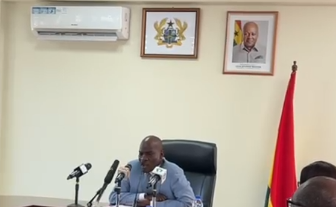
The Minister for Education, Haruna Iddrisu, has proposed that Ghana consider a ten-year transition period, after which no private university will be allowed to operate in the country without a charter.
According to the Ghana Tertiary Education Commission (GTEC), only twenty-four private tertiary institutions in the country have been granted a charter.
Addressing the GTEC during the inauguration of the Commission, Haruna Iddrisu acknowledged the regulatory autonomy of the Commission but suggested that private universities must gradually be brought under stricter regulatory oversight.
"I have no power to interfere with your regulatory regime," he said. "There is strong demand from private universities, and they are awaiting my position on this matter. However, I don’t want to go against regulatory principles and values."
He continued, "The issue of compulsory charters should be looked at by your Commission. Even though it is not the intention of the Ministry or government to interfere with your regulatory mandate, questions have been raised as to whether the charter should be compulsory. As I consider your determination, I also want to remind private universities that they cannot remain independent forever. At some point, they must accept the need for regulatory guidance and support."
He further explained that, while this is not yet official policy, he believes a solution should be worked out, where every private university is given a moratorium, while still adhering to the current regulatory framework.
"Today is 2025, and Ghana will follow a roadmap that, in the next decade, as I have suggested, no private university will be allowed to operate without a charter. Between now and then, subject to those who qualify and are issued permits, the rest should prepare accordingly. In fact, we will likely need to work on strengthening their faculties as well".
He concluded by reaffirming his support for the Commission, stressing that "standards and quality should never be compromised in the name of affiliation with another institution."
"We are satisfied with the exercise of the regulatory mandate so far, but we must find a way to regulate those private universities."
Ultimately, we must ask ourselves how we can ensure access to higher education for all Ghanaians," he concluded.
Latest Stories
-
Anti-LGBTQ Bill: Forget the rumour mongers, I’m a man of action, and will pass the bill – Speaker
6 minutes -
Women and children among those killed in Sudanese army shelling of wedding celebration
10 minutes -
President Mahama is not sincere with Ghanaians on LGBTQ bill matter – Hassan Tampuli
28 minutes -
Gov’t to establish Prison Industrial Hub to equip inmates with income-generating skills – Prison Service boss
46 minutes -
Alhassan Tampuli donates cement, roofing sheets to support storm victims in Gushegu
47 minutes -
Alhassan Tampuli appeals for urgent support for storm victims in Gushegu
50 minutes -
The hypocrisy must stop; pass Anti-LGBTQ+ Bill now – Alhassan Tampuli to Mahama
54 minutes -
Imprisonment should be rehabilitative, not punitive – Ghana Prisons boss at UNGA
1 hour -
Ga Adangbe traditional priests petition Mahama over McDan aviation licence revocation
1 hour -
Anti-LGBTQ Bill: NDC’s arrogance is worrying – Hassan Tampuli
2 hours -
Let’s give OSP time to mature, not to scrap it – Hassan Tampuli
2 hours -
Nigeria convicts 386 Islamist militants in mass trials
2 hours -
Djibouti president wins election with 97.8% of vote, state media says
2 hours -
We don’t have mandate to deduct tax from rent allowance of security services personnel – Interior Ministry clarifies
2 hours -
Ablakwa receives Presidential Special Envoy on Reparations to advance global agenda
2 hours