

Audio By Carbonatix
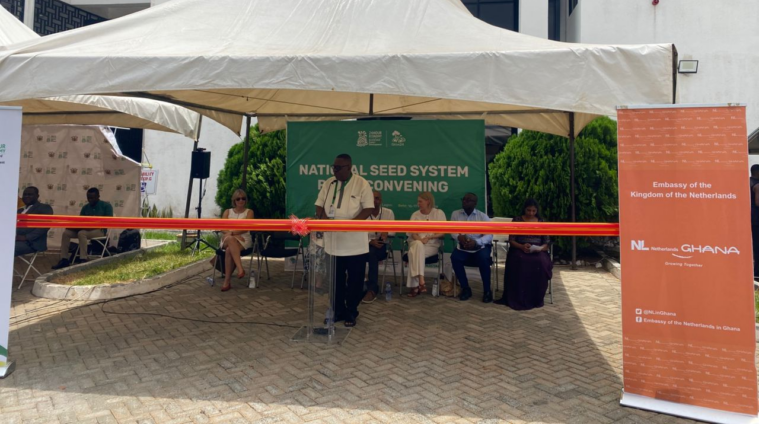
Head of Sector Strategy and Integration at the 24-Hour Economy Authority, Dr. Charles T. Nornoo, has stressed that a reliable and efficient seed distribution system will be crucial to achieving Ghana’s ambitious agricultural expansion plans under the government’s 24-hour economy initiative.
Speaking at the National Seed System Reset Programme on Monday, March 16, Dr. Nornoo said the country’s plans to significantly expand irrigated farming along the Volta Basin will require strong enabling systems, particularly in the area of seed production and distribution.
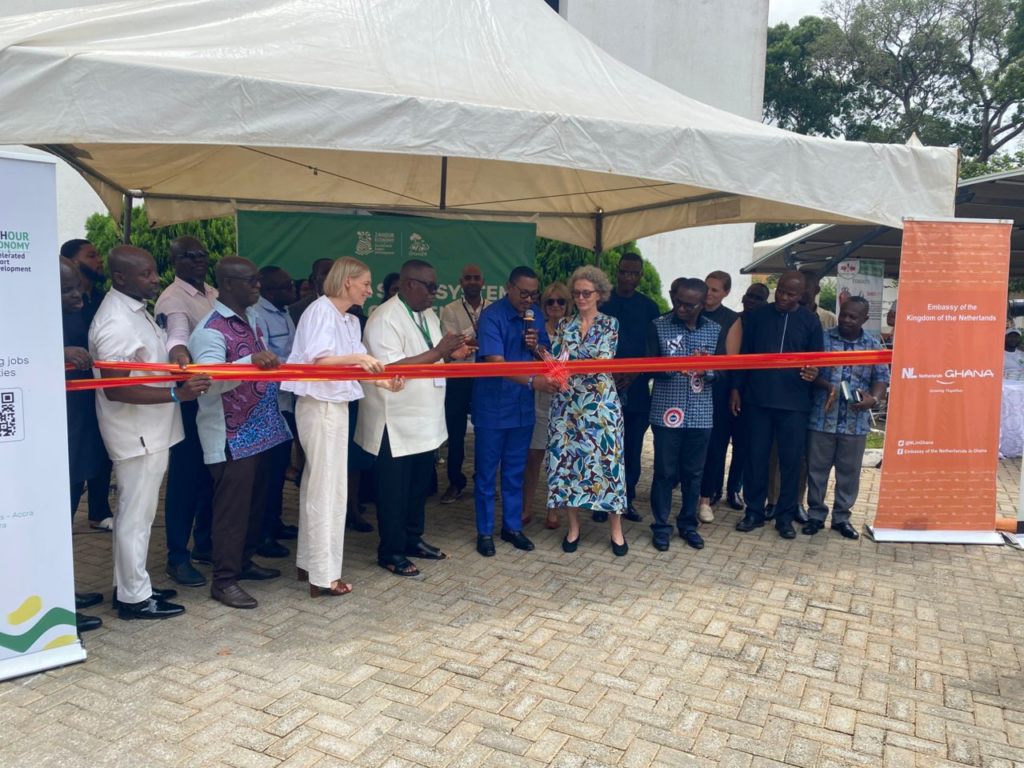
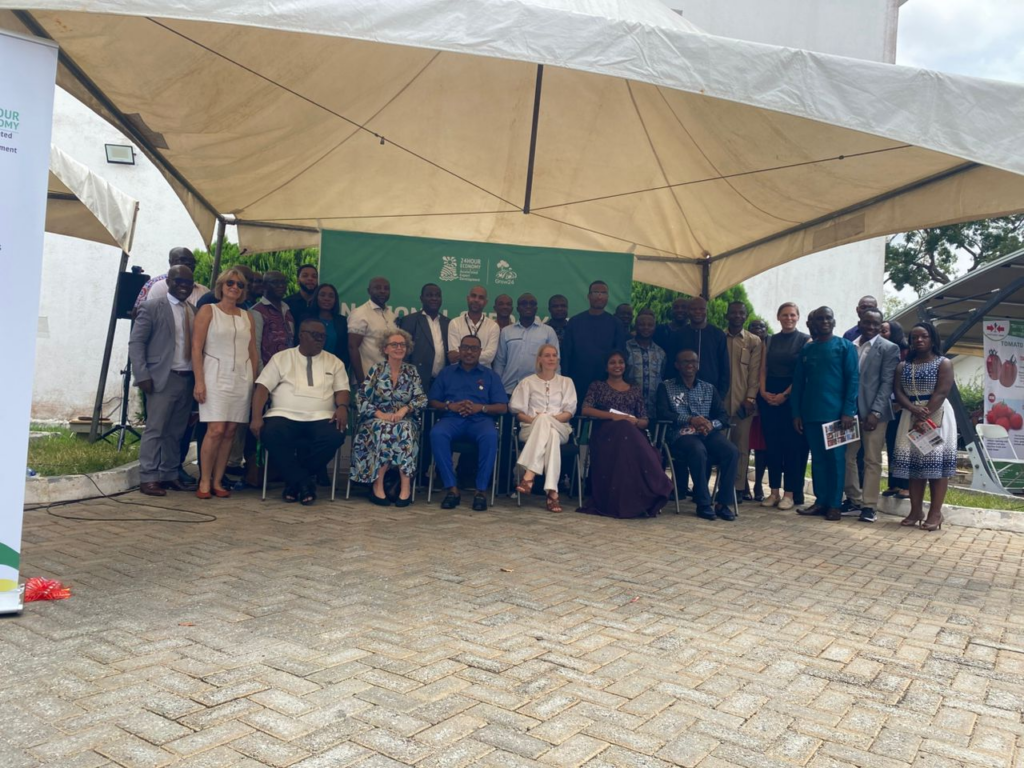
The programme was organised by the 24-Hour Economy Authority in partnership with the Embassy of the Kingdom of the Netherlands in Ghana and the Ghana Seed Partnership.
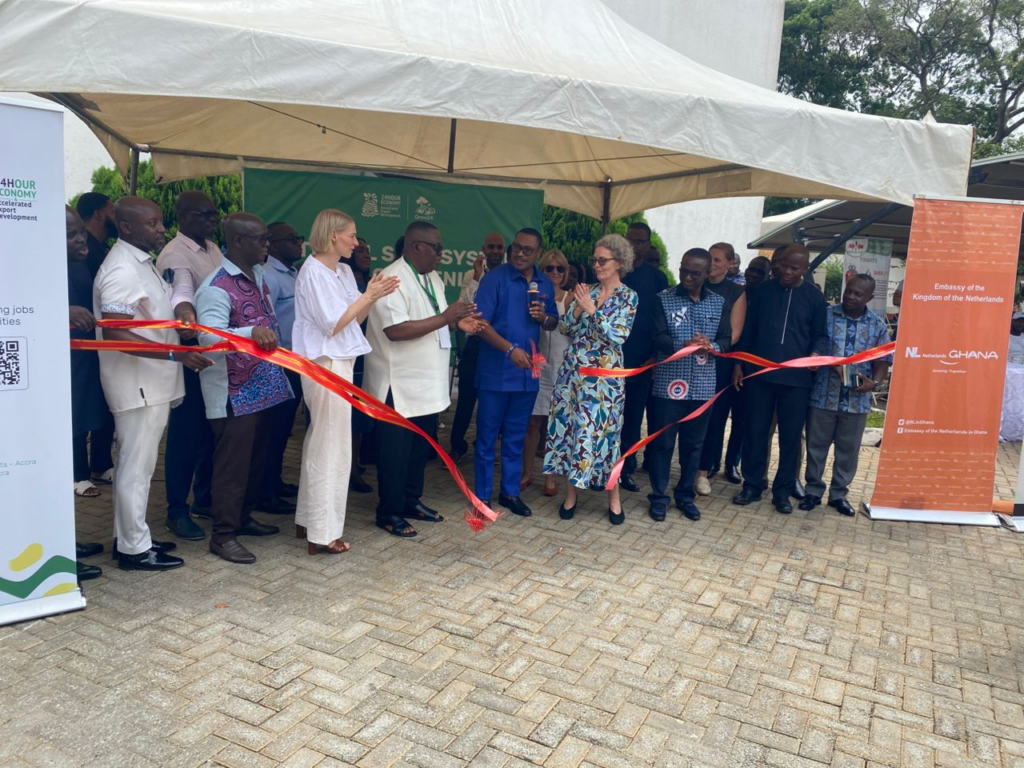
Dr. Nornoo revealed that Ghana intends to cultivate up to two million hectares of farmland, particularly along the Volta Basin and its tributaries, as part of a broader strategy to transform the agricultural sector and strengthen food security.
According to him, the initiative will take advantage of the Volta Economic Corridor, which is expected to support agricultural production through improved infrastructure, irrigation systems and multimodal transport networks.
“In addition to what we already have, we are looking at what exists along the Volta Basin and its tributaries,” he said. “To do two million hectares of cultivation requires a lot of enablers, which we recognised at the very beginning.”
He explained that the government plans to situate farms strategically along the basin while leveraging the economic corridor to facilitate transportation and market access.
Dr. Nornoo emphasised that seeds remain one of the most critical factors in ensuring the success of the agricultural expansion.
He noted that cultivating millions of hectares under irrigation will involve multiple planting cycles each year, requiring farmers to have consistent access to a variety of high-quality seeds suited to different crops and growing conditions.
“You cannot think about doing two million hectares of planting and irrigation, which means multiple crops in a year and different types of seeds, and not think about how you are going to get that seed,” he said.
He explained that the National Seed System Reset Programme was initiated precisely to address this challenge by creating a stronger pipeline between seed research institutions and farmers across the country.
Dr. Nornoo acknowledged the support of several development partners who have contributed to advancing the programme.
He specifically cited assistance from the Foreign, Commonwealth and Development Office (FCDO) of the United Kingdom, the Embassy of the Kingdom of the Netherlands in Ghana and the J.E.T. Project.
According to him, their contributions have helped lay the groundwork for the national seed system reforms currently being discussed.
“It is just the beginning of what we have to do,” he told participants while calling for recognition of the partners’ support.
While commending the progress made by research institutions and seed producers, Dr Nornoo said Ghana’s main challenge lies not in developing improved crop varieties but in ensuring that farmers are able to access them.
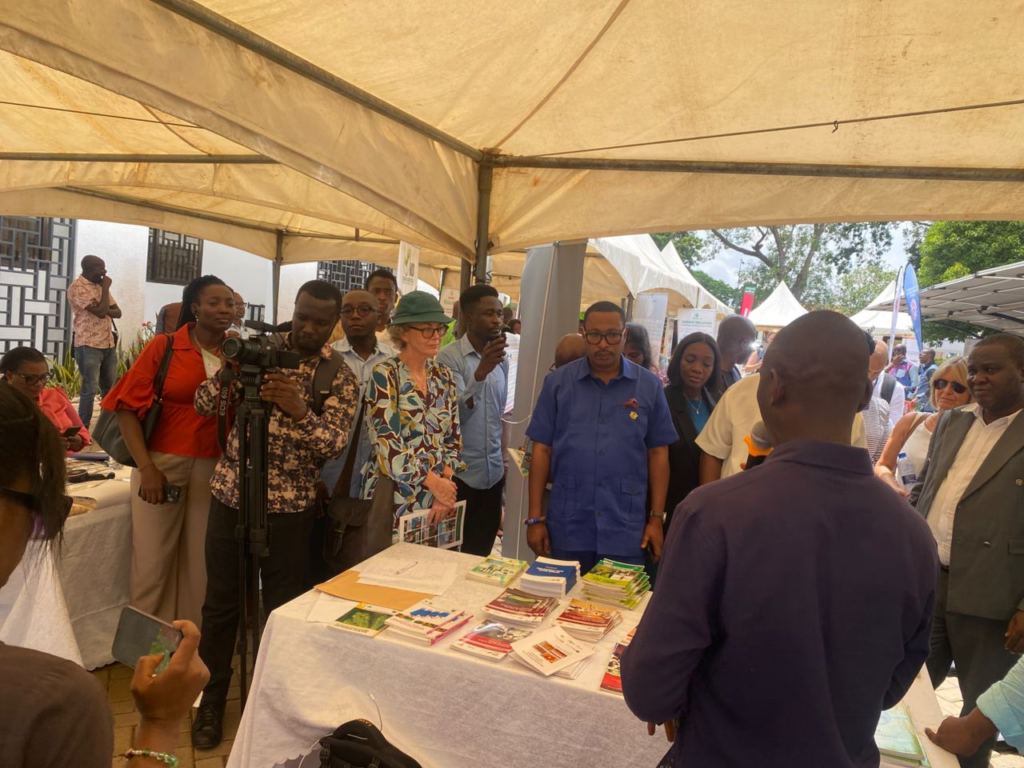
After touring exhibition stands at the event, he said it was evident that the country has strong research capacity and sufficient planting materials.
“We do not have a problem with research. We do not have a problem with material to plant,” he said. “The problem we have is how to ensure that our farmers get the seed to be able to plant.”
He explained that seeds are often available at research stations and multiplication centres, yet many farmers still rely on less productive planting materials because the distribution system is weak.
Dr. Nornoo said the objective of the reset programme is to design an effective delivery pipeline that ensures improved seeds move efficiently from research laboratories and seed multipliers to farmers across the country.
He noted that the process will involve coordination among researchers, seed companies, certification bodies, government agencies and farmer organisations.
“All of us gathered here have a role to play,” he told participants.
Although the opening session focused mainly on presentations and exhibitions, Dr Nornoo indicated that the following day’s discussions would centre on developing practical solutions.
He said stakeholders would hold detailed brainstorming sessions aimed at identifying strategies to strengthen seed distribution systems nationwide.
“I will not talk much today because tomorrow we have the whole day to talk about this issue,” he said.
The discussions are expected to culminate in the establishment of a task team tasked with implementing the decisions and recommendations emerging from the programme.
Dr. Nornoo also expressed appreciation to exhibitors who travelled from across the country to showcase their work in seed research, production and agricultural innovation.
He noted that their participation demonstrates the growing commitment among stakeholders to support Ghana’s agricultural transformation.
“You have come very far just to showcase what you have done or are doing,” he said.
According to him, the collective efforts of government institutions, private sector actors, research organisations and development partners will be essential in building a robust national seed system capable of supporting Ghana’s broader economic ambitions under the 24-hour economy agenda.
Latest Stories
-
Afenyo-Markin demands Interior Minister brief Parliament over security recruitment expansion
13 minutes -
Felicia Boadu inspires gratitude with new song ‘Aseda’
22 minutes -
Conflict of interest and the President’s use of a private jet: A constitutional perspective
22 minutes -
Otto Addo names Black Stars squad for Austria and Germany friendlies
42 minutes -
Rev. Stephen Wengam urges leaders to embrace ‘servant leadership’ to transform national institutions
51 minutes -
Ghana Development Awards spotlight need for intentional socio-economic transformation
53 minutes -
The Private Jet Debate: When generosity becomes an alleged “Scandal”
58 minutes -
IGP Cyber Vetting arrests 20-year-old woman for false publication on social media
1 hour -
Overall government debt in sub-Saharan Africa stabilises but at high level – IMF
2 hours -
We will file an appeal against Freddie Blay’s remand – Lawyer
2 hours -
Tema crash: Safety record of microlight aircraft ‘very poor’ – Aviation expert
2 hours -
Only 5% of CHPS compound in Ghana are well tooled – Agotime Ziope MP
2 hours -
PwC Ghana , UGBS call on women to embrace collaboration and take up leadership roles
2 hours -
‘My mother cried out one last time’: Palestinian boy, 12, describes how Israeli forces killed his family in car
2 hours -
National Seed System Reset Programme launched at University of Ghana to boost 24-hour economy
2 hours