


Audio By Carbonatix
Deputy Minister for Education, Dr. Clement Abas Apaak, has made a passionate appeal to newly qualified teachers to accept postings to rural and underserved communities, emphasising that their commitment is crucial to bridging the nation's persistent educational disparities.
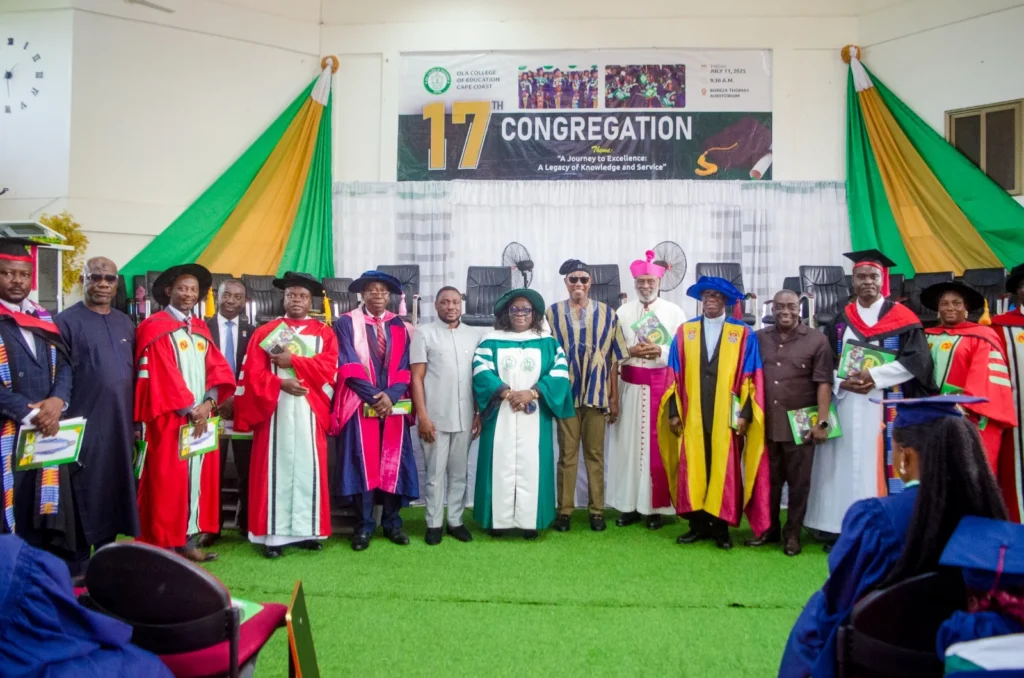
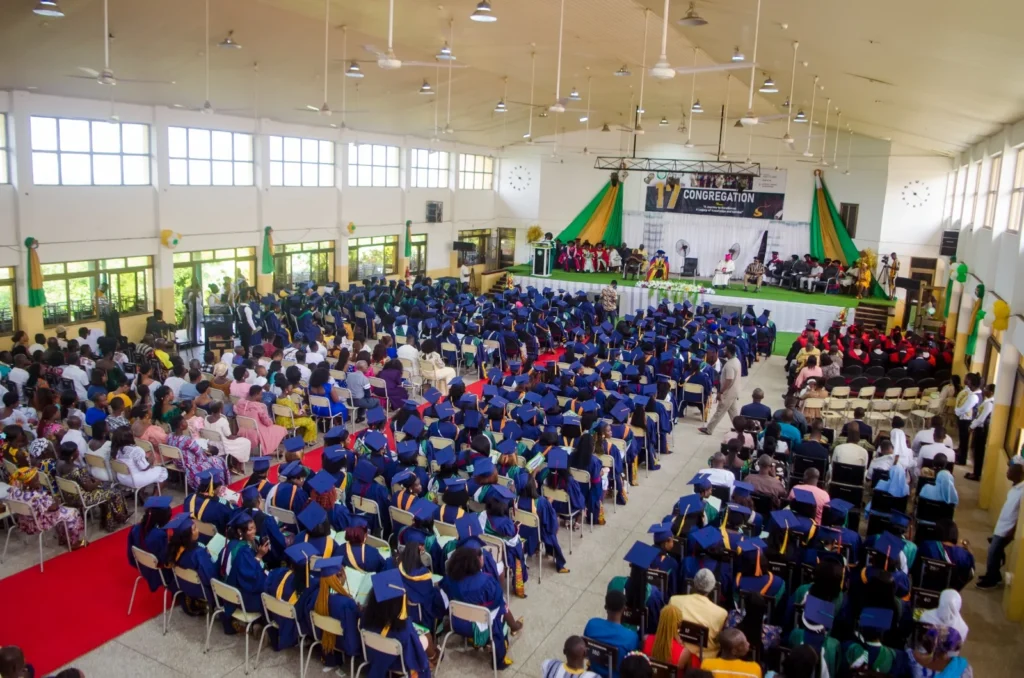
Speaking at the 17th Congregation of OLA College of Education in Cape Coast, Dr. Apaak highlighted the significant challenges faced by rural areas, which continue to suffer from teacher deficits due to a historical reluctance of educators to accept placements there.
"I urge you to accept postings to rural communities to reduce the teacher deficits and help ensure equal access to education for all," Dr. Apaak implored the graduating cohort, underscoring the vital role they play in shaping Ghana's future.
Despite continuous efforts by the Ghana Education Service (GES) and successive governments, teacher distribution remains highly skewed towards urban centres.
Research consistently shows that schools in remote and deprived areas often contend with higher pupil-to-teacher ratios, a lack of specialised subject teachers, and a greater reliance on less qualified personnel.
For instance, while the national average pupil-to-teacher ratio for primary schools hovers around 1:35, it can soar to 1:60 or higher in some rural communities. This unequal distribution directly impacts learning outcomes, contributing to lower academic performance in rural schools compared to their urban counterparts.
Government's dual-pronged incentive strategy
Recognising these challenges, Dr. Apaak outlined two key government interventions designed to make rural teaching more attractive and sustainable:
- 20% Rural Allowance: Teachers who accept postings in underserved areas will receive a 20% salary allowance. This financial incentive, recently announced by President John Dramani Mahama during his State of the Nation Address in February 2025, aims to significantly boost the remuneration of rural teachers, making the economic aspect of living in remote areas more viable.
- Teacher Dabrɛ Initiative: This programme, also championed by President Mahama, focuses on providing decent accommodation for teachers in rural communities. Lack of suitable housing has long been a major deterrent for teachers considering rural placements. The "Teacher Dabrɛ" initiative, which translates loosely to "teacher's hard work" or "teacher's struggle," seeks to ease the burden of relocation and improve living conditions, ensuring that "no new school would be built in this country without provisions for teachers' accommodation," as stated by President Mahama.
"To encourage teachers to serve in rural areas, these interventions are being implemented to enhance living and working conditions,” Dr. Apaak explained, signalling a holistic approach to addressing teacher retention in deprived areas.
This appeal for rural service comes as the government intensifies its efforts to recruit a substantial 50,000 teachers into the public sector nationwide to tackle existing shortages, especially in the hinterlands.
This recruitment drive is critical as Ghana’s education system continues to expand, requiring a steady supply of qualified educators to meet the demands of a growing school-age population.
A call to service and ethical leadership
Beyond the call for rural service, Dr. Apaak used the prestigious platform of the OLA College of Education's congregation to inspire the graduates to approach their new profession with a profound sense of purpose, integrity, and innovation.
"Never underestimate the impact of your work," he told the graduates, urging them to embrace their roles as nation-builders. "Be ethical, innovative, and compassionate. As teachers, you play a crucial role in shaping Ghana’s future."
He also extended commendation to the leadership of OLA College of Education, especially the Principal, Dr. Mrs. Regina Okyere-Dankwah, for their unwavering dedication to advancing female teacher education – OLA College is an all-female institution – and for maintaining consistently high academic standards.
The college, which celebrated its centenary anniversary in April 2024, has been a cornerstone of teacher training in Ghana, contributing thousands of educators to the public school system over its long history.
As these newly qualified teachers prepare to enter classrooms across Ghana, Dr. Apaak's message serves as a powerful reminder of the national responsibility that awaits them, particularly in areas where their dedication can make the most profound difference.
The success of these government incentives will be pivotal in determining whether Ghana can finally bridge the persistent rural-urban gap in educational access and quality.
Latest Stories
-
Iran begins laying mines in Strait of Hormuz, sources say
4 minutes -
GH¢68.7bn gov’t arrears bombshell: Parliament orders probe over suspected fraud
15 minutes -
The public display of students’ academic results in basic schools: A case against a damaging practice
30 minutes -
GOIL jumps GH¢0.21, MTN Ghana surges past GH¢6.30 in record-breaking GSE session
44 minutes -
NAIMOS disrupts illegal mining activities at Gwira Banso-Eshiem
1 hour -
Ashesi hosts Kensei Kai Foundation’s maiden Inter-University Karate Camp
1 hour -
21 suspects arraigned in Tamale Circuit Court over narcotics offences
2 hours -
A nation that prays for political failure
2 hours -
Kumasi Mayor inspects key inner-road projects, promises major upgrade of road infrastructure
2 hours -
Manhyia South MP questions authenticity of audit report presented to Parliament
2 hours -
NAIMOS destroys illegal mining structures, immobilises 4 excavators in Amenfi Central
2 hours -
Ghana to host One Vecta AI Summit 2026
2 hours -
NAIMOS destroys 50 illegal mining machines during patrol on Ankobra River
2 hours -
Police retrieve 397 slabs of suspected cannabis hidden in charcoal bags in Techiman
3 hours -
TUTAG holds 51st Delegates Congress, calls for action on IGF, post-retirement contracts, and national issues
3 hours