

Audio By Carbonatix
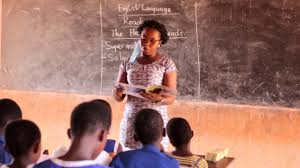
The Ministry of Education has dismissed claims suggesting that the study of English Language has been scrapped from the country’s education curriculum, affirming that English Language remains a key subject of instruction across all schools.
It follows public debate surrounding the compulsory use of Ghanaian languages as the medium of instruction in basic schools.
In a press release issued on Wednesday, the Education Ministry PRO, Mohammed Hashmin, explained that the ongoing discussion concerns the policy on the use of children’s home languages alongside English, not a replacement of the English Language.
“The Ministry of Education is keen to ensure that no learner is left behind in receiving the quality education they deserve. It is their right. We respect their right.
"At the end, we are nurturing individuals into responsible national adults and global citizens. Therefore, the Ministry will not and has not cancelled the study of English and other international languages,” the statement noted.
The Ministry indicated that the mother tongue policy, first introduced after independence, was designed to strengthen literacy and improve learning outcomes, but has faced implementation challenges over the years.
“Our education system needs to equip learners with the foundational skills they need to navigate our increasingly complex and uncertain world. All learners need to develop the skills they need to thrive and be ready for the world of work, further studies, and responsible adulthood.”
The Ministry cited strong global evidence that teaching children in a language they understand, alongside English, significantly boosts comprehension and performance across all subjects. It warned that teaching children in unfamiliar languages often creates major barriers to literacy.
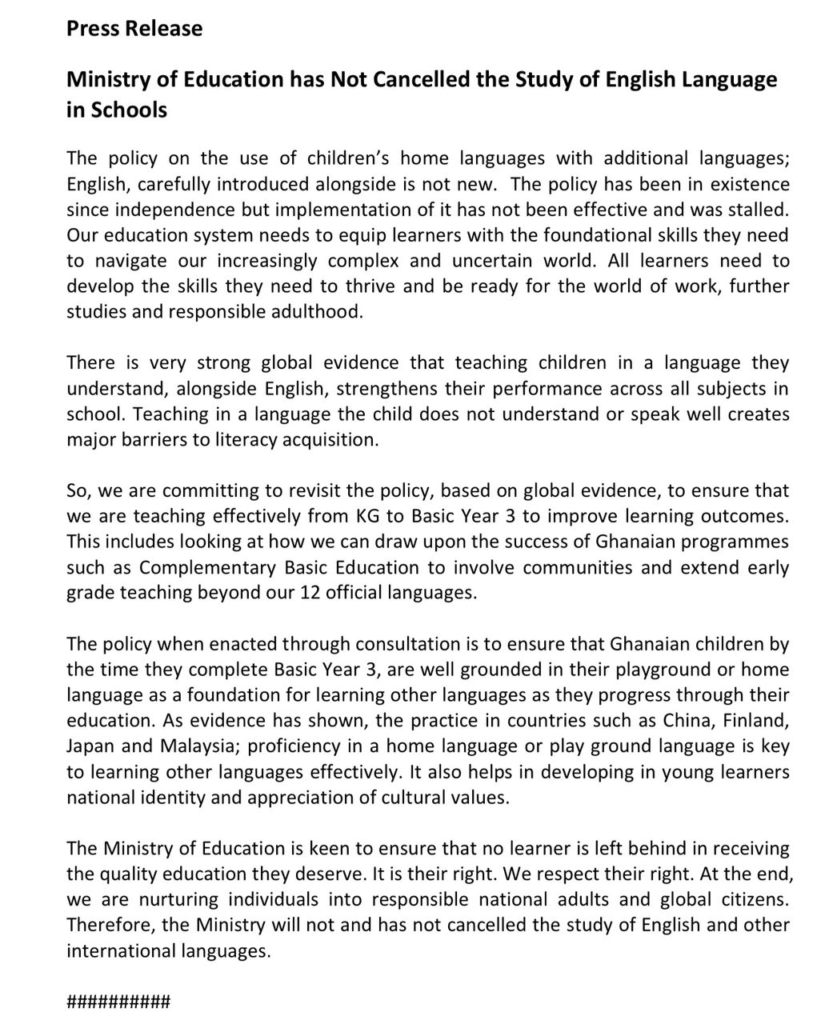
As part of its renewed commitment, the Ministry said it would revisit and improve the policy to ensure effective teaching from Kindergarten to Basic 3, drawing lessons from successful local initiatives such as the Complementary Basic Education (CBE) programme. The new framework aims to engage communities more deeply and expand early grade instruction beyond Ghana’s 12 official languages.
The statement emphasised that the goal of the policy review is to help children become proficient in both their home language and English, providing a strong foundation for learning other languages as they progress through school.
The Ministry referenced international examples from countries such as China, Finland, Japan, and Malaysia, where similar bilingual approaches have yielded strong literacy results and strengthened national identity.
Latest Stories
-
Foreign Affairs Minister engages US, Israel and Iran on protection of Ghanaians
2 hours -
The Republic at 69: A Birthday Party with Too Many Speeches and Too Few Solutions
2 hours -
Ghana’s Economic Turnaround: From Junk Status to Renewed Growth
3 hours -
Seidu Agongo donates Ramadan supplies to Accra Academy students
4 hours -
2 Ghanaian peacekeepers critically injured in missile attack on UN mission base in Southern Lebanon
4 hours -
23-year-old student arrested for publishing obscene content online
4 hours -
At 69, Ghana still struggles to fulfill Nkrumah’s vision- Hassan Ayariga
4 hours -
Nairobi County expands healthcare with new cancer centre
4 hours -
Ivorian Ambassador congratulates Ghana on 69th Independence Anniversary
5 hours -
Ghana @ 69: Oforikrom MCE calls for collective action to foster national growth
5 hours -
Ghanaian identity rooted in shared culture, not just citizenship – Prof. Ato Quayson
5 hours -
Beverly Hills Academy promotes indigenous diets to fight youth lifestyle diseases
5 hours -
GRAY Network engages stakeholders in strengthening inclusive governance
5 hours -
Tamale celebrates Independence with education, infrastructure milestones
6 hours -
Olam Agri Plant expected to enhance Ghana’s agro-processing capacity
6 hours