

Audio By Carbonatix
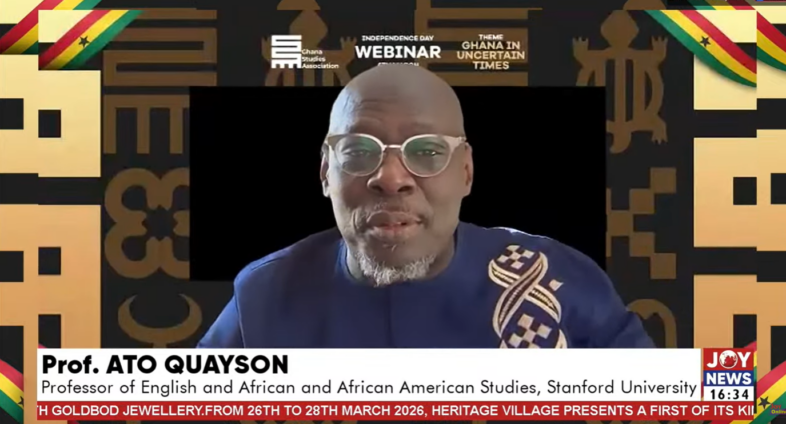
Professor of English and African and African American Studies at Stanford University, Prof. Ato Quayson, says Ghanaian identity is shaped largely by shared cultural experiences rather than by citizenship or nationality alone.
Speaking on the theme "Ghana in uncertain times " during a webinar, Prof. Quayson explained that being Ghanaian goes beyond holding a passport or even being born to Ghanaian parents.
“What it means to feel Ghanaian is not the same as owning a passport or even having Ghanaian parents,” he said. “It has more to do with feelings of attachment and pride, whether you are born and live in the country or you are part of Ghana’s growing diaspora.”
According to him, everyday cultural practices, particularly food, music, and social interactions, play a key role in strengthening this sense of belonging.
Food as Cultural Identity
Prof. Quayson described Ghanaian cuisine as one of the strongest symbols of national identity, noting that traditional meals carry shared memories and cultural meaning.
“There’s no rational reason why you should pound cassava and plantain before eating it, yet we proudly do it and call it fufu,” he said.
He explained that the preparation process, from pounding the cassava to the aromas coming from the kitchen, forms part of the cultural experience.
“The entire preparation ritual and the final meal sitting on the table generate a deep sense of nostalgia and belonging.”
Music and Collective Experience
Music, he said, also contributes significantly to the feeling of Ghanaian identity.
Referencing the popular 2014 song Adonai by Sarkodie and Castro, he noted that many Ghanaian songs reflect stories of perseverance and success.
He also highlighted the influence of highlife legend Daddy Lumba, whose songs often bring Ghanaians together, especially among communities living abroad.
“In diaspora parties, once Lumba’s songs are played, everybody rushes to the dance floor singing along,” he said.
The Role of Social Laughter
Prof. Quayson also pointed to what he described as Ghana’s culture of social laughter — a common feature in conversations, media and everyday interactions.
“The laughter is a form of safety,” he explained. “When people laugh together, they signal that the social space is friendly and welcoming.”
Appreciating Everyday Culture
He urged Ghanaians to pay closer attention to everyday cultural practices that help shape the country’s identity.
“What we often take for granted in our daily lives are actually the building blocks of our reality and what make us feel Ghanaian,” he said.
Latest Stories
-
Power restoration fault suspected in Kumasi Central Market fire
1 hour -
The 7-foot giant of Ngleshie Amanfro: Seven-foot Ghanaian Ephraim Saawa dreams of joining the national basketball team
2 hours -
Government promises support for Kumasi Central Market fire victims
2 hours -
Vibes The Movie: Big Ghun’s Ghanaian film earns five nominations at 2026 REFFA
3 hours -
MamaCare CEO warns unresolved conflicts among health workers could undermine maternal and neonatal care
3 hours -
Health professionals urged to translate medical knowledge into practice to save mothers
3 hours -
Conflicts among care providers linked to maternal, neonatal deaths – Expert
5 hours -
GIS marks 10th TIME conference, champions improved teaching practices
5 hours -
BRICS Or Balance? What Ghana’s bid really means
5 hours -
GPRTU wants full TRAFFITECH-GH implementation to start in 2027
6 hours -
Mahama announces plans to import electric wheelchairs for PWDs
6 hours -
KGL U17 Colts 2026: Western beat Prempeh Elite Academy to set up final final with Greater Accra Region
6 hours -
Late Solanke strike salvages 10-man Spurs draw at Man United
6 hours -
Gender Ministry to monitor welfare of Nana Akua Addo’s children amid domestic violence case
6 hours -
Benedict Okyere Yeboah: Ghana’s football problem goes beyond sacking a coach
7 hours