

Audio By Carbonatix
A new academic study has concluded that Ghana’s efforts to combat illegal mining, commonly known as galamsey, continue to be undermined by corruption, cultural dynamics, and ineffective crisis communication strategies.
The research found that although successive governments have introduced various interventions to curb illegal mining, including task forces and regulatory reforms, these measures have largely produced only short-term results with limited long-term impact. Enforcement, according to the study, has often been inconsistent and weakened by allegations of official complicity and weak accountability mechanisms.
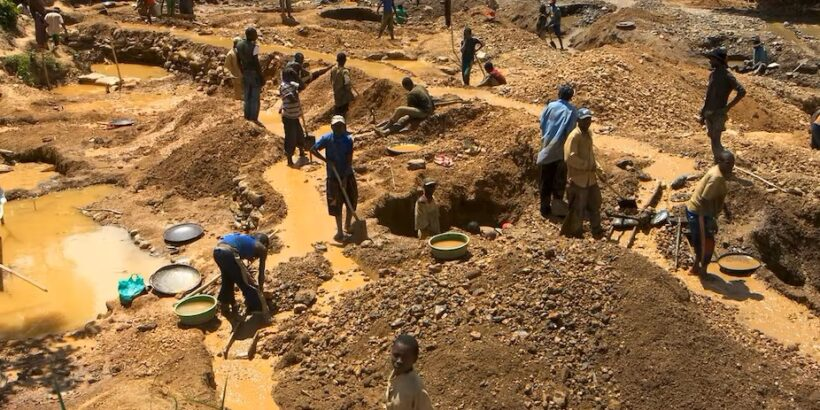
Illegal mining, which initially began as a small-scale local activity, has expanded into a major environmental crisis over the years. It has caused significant damage to water bodies, degraded agricultural land, and disrupted rural livelihoods. The problem has further intensified due to the involvement of foreign actors and the increased use of mechanised mining equipment.
The study highlights that Ghana’s political environment has also complicated the response to the crisis. Deep partisan divisions, it notes, have encouraged blame-shifting between political actors rather than fostering coordinated national action. In addition, official communication on the issue is often perceived as defensive and lacking transparency, contributing to declining public trust in government efforts.
Economic factors were also identified as a major driver of illegal mining activities. In several affected communities, galamsey provides a vital source of income that often exceeds earnings from farming and other traditional livelihoods. This economic reality has weakened resistance to illegal mining activities, particularly in areas with high unemployment.
Cultural influences were also cited as shaping responses to enforcement. The study notes that respect for authority and a preference for social harmony can discourage confrontation, while practices such as gift-giving and dwan¬tua — where influential individuals intervene to seek leniency for offenders — have, in some cases, enabled illegal miners to avoid prosecution.
Although the media has played an active watchdog role through investigative journalism and sustained campaigns drawing attention to the crisis, the study observes that maintaining consistent public pressure has been challenging.
The researchers conclude that without stronger transparency, consistent enforcement, and communication strategies that reflect Ghana’s socio-economic and cultural realities, efforts to end illegal mining are likely to remain ineffective.
The study was conducted by Dr Albert Anani-Bossman, Senior Lecturer at the University of Media, Arts and Communication (UniMAC) and Director of the Directorate of Research, Innovation and Development (DRID).
Latest Stories
-
Let The Constitution direct Chieftaincy to deliver “All Development Is Local”
52 minutes -
John Jinapor outlines renewable energy, nuclear power priorities for 2027
1 hour -
Ghana explores centre of excellence for hearing, communication and cochlear implant care
2 hours -
Schizophrenia-related disorders lead mental health cases recorded in Ghana
3 hours -
Dutch authorities enlist Ghana in hunt for fugitive drug lord Bolle Jos
3 hours -
Ghana housing finance conference adopts communiqué to improve affordable housing access
7 hours -
Special Initiatives Minister urges Wa Technical Institute to enrol more girls as EU-backed solar training lab opens
8 hours -
In the matter of my first year at the Bar
8 hours -
ActionAid Ghana calls for an end to child marriage, greater investment in girls’ rights
8 hours -
Newsfile to tackle World Cup visa scandal, beach demolitions, education strikes, BRICS bid
9 hours -
UK-Ghana Trade & Investment Summit: Trade Resource Centre to help businesses maximise UK-Ghana trade opportunities
9 hours -
Embassy of Denmark celebrates World Maritime Day
9 hours -
Linking LEAP to productive inclusion could cut extreme poverty by 2030 – UNICEF
10 hours -
Trade Ministry backs use of creative arts to rehabilitate prison inmates
10 hours -
Negotiations with government to continue despite strike suspension – GNAT
10 hours