

Audio By Carbonatix
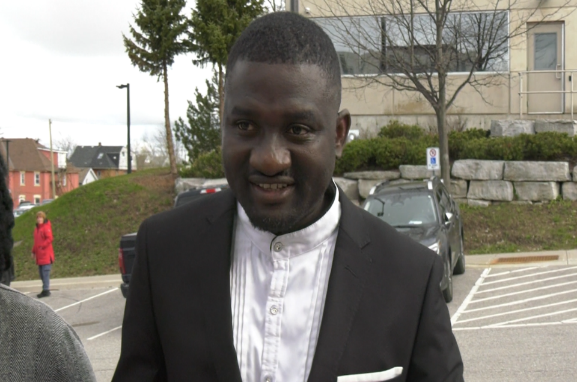
A Canadian court has sentenced Emmanuel Yeboah, a 38-year-old self-styled Ghanaian pastor based in Barrie, to 18 months in prison following his conviction in a case involving a 13-year-old girl connected to his congregation.
The sentencing, delivered by Justice Robert Gattrell, has drawn attention within both the Ghanaian and wider immigrant communities in Canada, where the case has sparked discussions about religious authority, accountability, and the responsibility of community leaders entrusted with the care of young people.
Yeboah was convicted of sexual assault, sexual interference, and assault after a trial centred on an incident that occurred three years ago.
Court proceedings heard that Yeboah was regarded not only as a pastor by members of his congregation but also as a trusted family friend of the victim’s relatives. According to evidence presented in court, he had offered to take the teenager to a piano lesson, an outing prosecutors argued later became an abuse of trust.
While the court avoided disclosing graphic details, testimony indicated that inappropriate conduct occurred while the pair were alone together. The victim later returned home, distressed by the experience.
During sentencing, Justice Gattrell noted that some of Yeboah’s actions reflected behaviour commonly associated with grooming, including attempts to build trust through gifts and friendly gestures.
The emotional impact on the teenager became more evident days later when she unexpectedly encountered Yeboah again at her family home. The court heard that she became frightened and sought refuge at a neighbour’s residence.
The case later resulted in an additional assault conviction linked to efforts to return her home.
Throughout the proceedings, Yeboah maintained his innocence. Even after the guilty verdict, the court heard that he continued to receive support from some members of his congregation and community.
During sentencing submissions, Crown prosecutors sought a four-year prison term, arguing that the offences involved a serious breach of trust and emotional harm to a vulnerable young person.
However, the defence requested a reduced sentence of one year, citing Yeboah’s lack of a prior criminal record, his role as the sole provider for his family, and the continued support he received within his community.
Justice Gattrell ultimately imposed an 18-month custodial sentence, taking into account several mitigating factors raised by the defence.
Among the considerations were the impact the sentence would have on Yeboah’s wife and children, as well as the immigration consequences he may now face as a permanent resident of Canada.
Under Canadian immigration law, non-citizens who receive custodial sentences exceeding six months may face removal proceedings. Although criminal courts do not directly determine deportation matters, the judge acknowledged that Yeboah could face deportation after serving his sentence.
Upon his release, Yeboah will also be subject to strict court-imposed conditions restricting contact with persons under the age of 18 unless another responsible adult is present.
The proceedings also raised questions about Yeboah’s pastoral background and qualifications.
Although he was widely described during the trial as a pastor, little information was presented about any formal religious training, official ordination, or the registration of a church organisation associated with him.
A LinkedIn profile linked to a Barrie resident with the same name identified him primarily as a courier driver and did not reference pastoral work. Court records also indicated that Yeboah supported his family through work as an Uber driver and other gig economy jobs.
The case has generated extensive discussion within sections of the Ghanaian-Canadian community, particularly regarding the level of trust placed in religious figures and the need for stronger accountability within faith-based settings.
Community advocates say the case serves as a reminder that positions of spiritual leadership should never place individuals beyond scrutiny or responsibility.
Child protection experts have long warned that abuse involving trusted authority figures can be especially traumatic because victims often fear they will not be believed or worry about dividing families and communities.
Following the sentencing, Yeboah was taken into custody while his wife, who had accompanied him to court, quietly left the courtroom alone, underscoring the wider emotional consequences the case has had on multiple families.
Although the legal proceedings have concluded, the broader impact of the case is expected to continue resonating within the community for years.
For many parents, faith leaders, and child advocates, the case has become a sobering reminder that trust must be matched with accountability, transparency, and safeguards designed to protect vulnerable young people.
Latest Stories
-
Power restoration fault suspected in Kumasi Central Market fire
4 hours -
The 7-foot giant of Ngleshie Amanfro: Seven-foot Ghanaian Ephraim Saawa dreams of joining the national basketball team
5 hours -
Government promises support for Kumasi Central Market fire victims
5 hours -
Vibes The Movie: Big Ghun’s Ghanaian film earns five nominations at 2026 REFFA
5 hours -
MamaCare CEO warns unresolved conflicts among health workers could undermine maternal and neonatal care
6 hours -
Health professionals urged to translate medical knowledge into practice to save mothers
6 hours -
Conflicts among care providers linked to maternal, neonatal deaths – Expert
7 hours -
GIS marks 10th TIME conference, champions improved teaching practices
7 hours -
BRICS Or Balance? What Ghana’s bid really means
8 hours -
GPRTU wants full TRAFFITECH-GH implementation to start in 2027
8 hours -
How 10-mile walks for basic education birthed a 50-year legal career for Justice Korbieh
8 hours -
Mahama announces plans to import electric wheelchairs for PWDs
8 hours -
KGL U17 Colts 2026: Western beat Prempeh Elite Academy to set up final final with Greater Accra Region
9 hours -
Late Solanke strike salvages 10-man Spurs draw at Man United
9 hours -
Gender Ministry to monitor welfare of Nana Akua Addo’s children amid domestic violence case
9 hours