

Audio By Carbonatix
An energy analyst, Lom-Nuku Ahlijah, says the Energy Sector Levies Act (ESLA) has played an important role in supporting Ghana’s energy sector, but insists it has not been enough to resolve the long-standing debt burden completely.
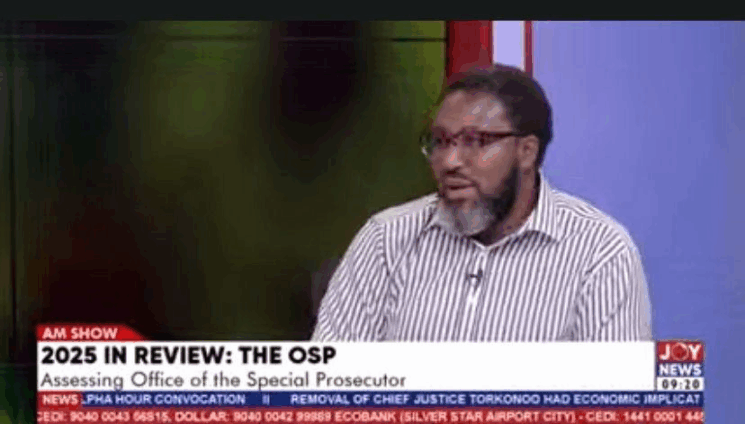
Speaking on JoyNews's AM Show, Mr Ahlijah explained that although the sector is performing better compared to previous years, significant legacy debt still remains.
He noted that recent renegotiation of power purchase agreements has provided some relief, as the savings made from these renegotiations have reduced the amount government would otherwise have paid to the Electricity Company of Ghana (ECG).
According to him, ESLA was introduced primarily to help “plug the hole” in the energy sector’s finances. Since its introduction in 2015, levies collected under ESLA have been used to service energy sector debts.
He added that the government’s recent amendment to increase fuel levies by one cedi is also aimed at strengthening the ESLA framework and addressing funding gaps in the sector.
However, Mr Ahlijah cautioned that the debt situation is not static. He explained that the sector cannot fix the debt at a particular figure and rely solely on ESLA to clear it, because Independent Power Producers (IPPs) continue to operate and generate power. As a result, unpaid obligations to IPPs are added to the debt stock whenever payments are delayed.
He further pointed out that while the cash waterfall mechanism has been implemented to ensure that key players in the energy value chain, particularly power producers, are paid more regularly, a funding gap still persists.
“The gap will remain,” he said, explaining that ECG is unable to collect enough revenue to fully meet its payment obligations.
He attributed this largely to power theft and distribution losses," he said on December 31.
Ahlijah noted that if IPPs generate power worth 100 million cedis for ECG to supply to households and industries, but a portion of that power is stolen or goes unbilled, ECG cannot collect the full 100 million cedis. This shortfall, he said, directly affects ECG’s ability to pay IPPs, leading to the continuous accumulation of debt.
He stressed that while measures such as ESLA, contract renegotiations, and the cash waterfall mechanism have improved the situation, addressing power theft and improving revenue collection remain critical to closing the persistent financial gap in the energy sector.
Latest Stories
-
‘I never did this advert’, AI clones hijack Ghanaian identities for profit
18 minutes -
25-year-old woman battles trauma after surviving deadly Nkwanta attack
35 minutes -
Vice President honoured at Tortsogbeza as South Tongu leaders highlight development needs
43 minutes -
Kwahu Business Forum 2026: Corporate citizenship, sustaining African businesses take centre stage with KGL as the case study
2 hours -
Trump seeks $152m to reopen notorious Alcatraz prison
4 hours -
Ex-Chelsea player Oscar retires with heart issue
4 hours -
CA Foundation drives constitutional literacy in Kpone Katamanso municipality
4 hours -
GPRTU to hold talks with Transport Ministry over rising fuel costs
4 hours -
CUTS International urges gov’t to halt sachet water price hike pending cost review
5 hours -
Chief Justice: Efficient Judiciary essential to reducing business costs
5 hours -
Bayern grabs 99th-minute winner to cap superb fightback
5 hours -
Ahmed Ibrahim urges Ghanaians to reflect Easter values in nation-building
5 hours -
ECG inefficiencies undermining power supply -Mahama outlines reforms
5 hours -
Lewandowski scores as Barca fight back to defeat Atletico
5 hours -
Lack of private sector consultation undermining economic growth – Jerry Ahmed Shaib
5 hours