

Audio By Carbonatix
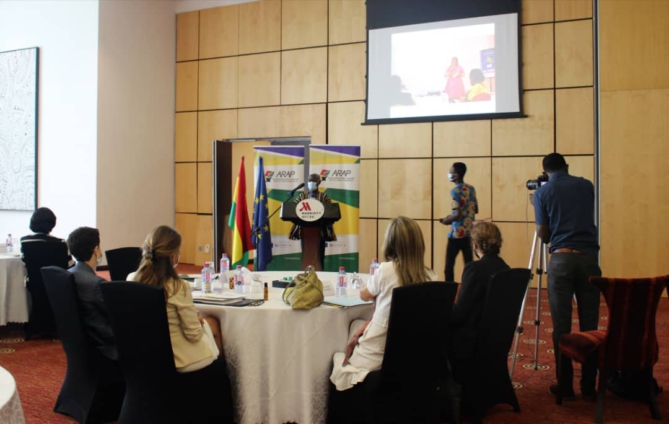
The Accountability, Rule of law and Anti-corruption Programme (ARAP), an EU funded programme, implemented by the Spanish public foundation FIIAPP held on 1st December in Accra, a closing ceremony to celebrate with its partners, and friends the achievements of the project.
This four-year programme (2016- 2020), worth €20 million, joined and supported the efforts of the Government of Ghana in its fight against corruption.
The complexity of corruption and good governance requires complex multi-level interventions capable of promoting processes of institutional reform while also generating awareness and national ownership of civil society and the citizenry.
In this regard, the programme contributed to current reform processes to reduce corruption and improved accountability, and compliance with the rule of law, particularly when it comes to accountability, anti-corruption and environmental governance.
It did so through support key institutions, while at the same time increasing the ability of the public, civil society organisations and the media to hold government to account.
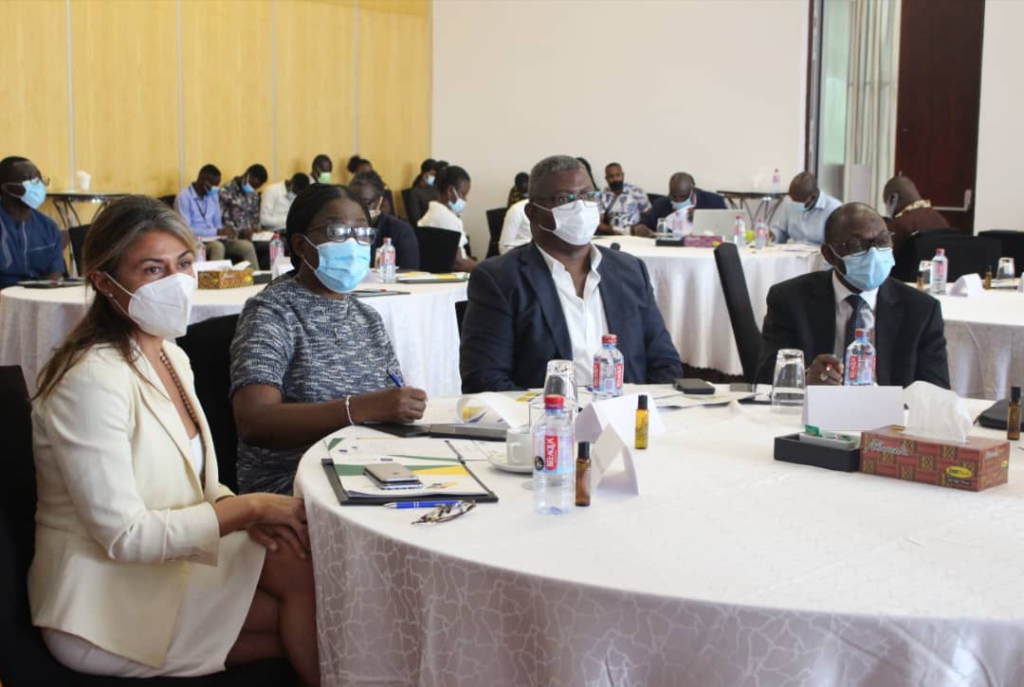
The ceremony was well attended by the programme stakeholders as well as by international officials.
The Spanish Ambassador to Ghana, Hon. Alicia Ricco underlined during her remarks that “as one of the main implementers of the ARAP Programme,
FIIAPP has put in place a complex and multidisciplinary programme adopting a multi-level, multi-stakeholder approach, to support national efforts addressing both the supply and demand side of the accountability and anti-corruption chain, strengthening the Rule of Law”.
Meanwhile, ARAP’s Team leader said in her speech “ARAP has not only strengthened the coordination among justice sector institutions at the national level, but it has also fostered the engagement of Ghanaian institutions at the international level, promoting the exchange of experience among peers and the participation in international networks”.
ARAP Programme has encouraged the use of new technologies and digital platforms as a necessary tool promoting efficiency, effectiveness and transparency of the public bodies in the daily management system.
Moreover, in a context of a highly digitalised world with an increasing use of the internet and social media, the use of ICT remains a critical tool for all communication and public education.
Furthermore, the focus on new technology has been absolutely fundamental for the continuity of the ARAP programme. Hence, it has been through the promotion of online work, that ARAP managed to continue delivering its coordinated work, despite the challenging circumstances imposed by the global covid-19 pandemic.
The EU Ambassador to Ghana, Diana Acconcia, after thanking the Coordination Unit and its partners on the conclusion of a successful project, outlined that “International cooperation, the harmonization of national and international law remains to date obligatory stepping stones in the fight against corruption.”
She added, “the way we designed ARAP as an anti-corruption programme, aiming to strengthen the accountability institutions in a concrete, politically neutral way, with a strong accent on capacity development of the people working in them and a push on digitalisation is the right way to go and it will bring results over time”.
ARAP has provided technical assistance and capacity development to key institutions in the criminal justice sector to promote good governance, enhance accountability and ensure compliance with the Rule of Law.
The Programme worked directly with the Judicial Service (JS), the Office of the Attorney General (OAG), the Commission for Human Rights and Administrative Justice (CHRAJ), the Legal Aid Commission (LAC), the National Commission for Civic Education (NCCE), Ghana Police Service (GPS), the Economic and Organised Crime Office (EOCO) and the Environmental Protection Agency (EPA).
Latest Stories
-
World Bank maintains Ghana’s growth rate forecast at 4.8% in 2026
1 hour -
Cedi was worst African currency in quarter 2, 2026 – World Bank
1 hour -
AI gains can lift three times as many people out of poverty in Ghana – World Bank
2 hours -
Police arrest suspect over jewellery theft during fire outbreak
4 hours -
EOCO returns Hanan’s £6,700, GH¢2,750 and devices after defence challenge
4 hours -
Opplift Youth Entrepreneurs Summit 2026 equips entrepreneurs with skills, mentorship and support
4 hours -
Rival clubs want range of punishments for Man City
5 hours -
Tear gas in Paris and Marseille as school protests grow across France
5 hours -
Kane inspires England to win over Czech Republic in UEFA Nations League
5 hours -
Finland orders halt to work on two Google data centres
5 hours -
Substitute Merino scores twice as Spain win in Croatia
5 hours -
Ronaldo wants Portugal ‘punishment’ but not retiring
5 hours -
White House defends Trump comment to let Iran ‘take out’ LA and San Diego
6 hours -
Asos confirms hackers sent ‘unauthorised’ notification to app users
6 hours -
US televangelist Jim Bakker, disgraced from sex scandal and fraud, dies at 86
6 hours