

Audio By Carbonatix
The European Union has released €80,000 in humanitarian funds for flood preparedness in the northern regions of Ghana.
This follows warnings from the National Disaster Management Organization (NADMO) and the Meteorological Agency of heavy rainfall and flooding in Ghana's northern regions.
The funding will be used to support the identification of early warning methods, the updating of risk assessments and monitoring mechanisms, the activation of anticipatory procedures to limit and prevent flood impacts, and the determination of priority actions and response readiness.
This was contained in a statement issued by the European Union in Ghana and copied to the Ghana News Agency.
According to the statement, the EU funding was aimed at mitigating the impact of floods for potentially 50,000 people in Northern Ghana during the peak of the rainy season.
“It will enable the Ghanaian Red Cross Society to implement both anticipatory and early actions and will prop up preparedness actions."
“Preparedness actions such as training of volunteers, prepositioning of response stocks that should enable quicker deployment of a response, early evacuation of people in identified sites, simulation exercises, awareness sessions for water-related diseases prior the floods season,” the statement added.
The statement noted that the targeted areas were the Northern, Upper East, and Upper West, where around 2,144,677 people are at risk.
It added that the assistance was targeted at vulnerable areas where floods will significantly impact agriculture and economic resilience.
According to the statement, the financing was part of the EU's overall support of the International Federation of Red Cross and Red Crescent Societies (IFRC) and the Disaster Relief Emergency Fund (DREF).
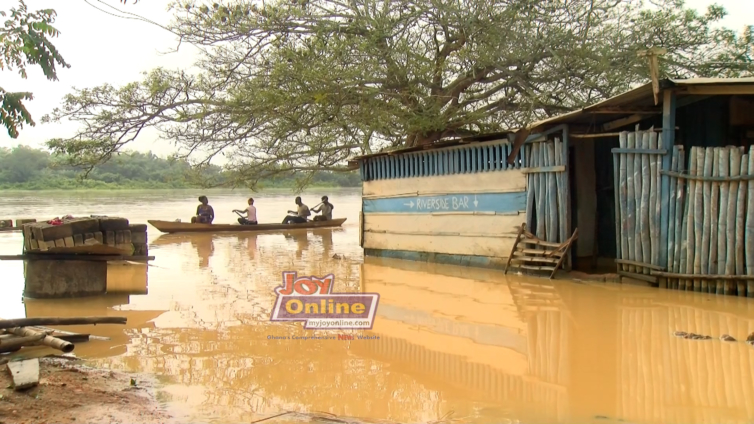
Floods caused by heavy rainfall and the Bagre dam spillage in Burkina Faso occur on a regular basis in Ghana.
The annual spilling of water from Burkina Faso's Bagre Dam causes an overflow of Ghana's river system, affecting areas near rivers, beaches, and dams in the Northern, Upper East, Savannah, Northeast, and Upper West regions.
Bagre Dam is spilt annually when it reaches its maximum operating level of 235 metres.
Flooding has already occurred in four of the seven high-risk regions, leading to the loss of lives, property, and livelihoods.
Latest Stories
-
PSG vs Liverpool: Date, time and everything you need to know about the Champions League quarterfinal
5 minutes -
Education Minister orders probe into illegal SHS online class fees
6 minutes -
Barcelona vs Atlético Madrid: Date, time and everything you need to know about the Champions League quarterfinal
10 minutes -
Monthly Indicator of Economic Growth slows to 7.5% in January 2026
12 minutes -
The Reputation Bomb: Why fraud in the digital age destroys more than freedom
14 minutes -
Mahama nominates 5 to Ghana’s Fiscal Council to strengthen economic oversight
29 minutes -
Enterprise Insurance crowns first “Insure Na Chilli” winner: Jonathan Syme set for ultimate football experience
30 minutes -
Bear with us over temporary outages as ECG begins transformer upgrade programme – Energy Ministry
57 minutes -
President Mahama has not broken promise on anti-LGBTQ bill — Akwatia MP
1 hour -
Education Minister promises swift fix to Aburi Girls’ SHS water crisis
2 hours -
Top Australian soldier charged with war crimes to remain in jail on remand
2 hours -
US journalist Shelly Kittleson released after kidnap in Iraq, officials say
2 hours -
Starmer to visit Middle East after US and Iran reach ceasefire deal
2 hours -
Telcos and regulators are failing Ghana on Mobile Money fraud
2 hours -
Discussions on petroleum taxes review ongoing with Finance Minister – Jinapor
3 hours