

Audio By Carbonatix
The National Disaster Management Organisation (NADMO) has warned that persistent indiscipline among Ghanaians is undermining efforts to tackle flooding, particularly in urban centres.
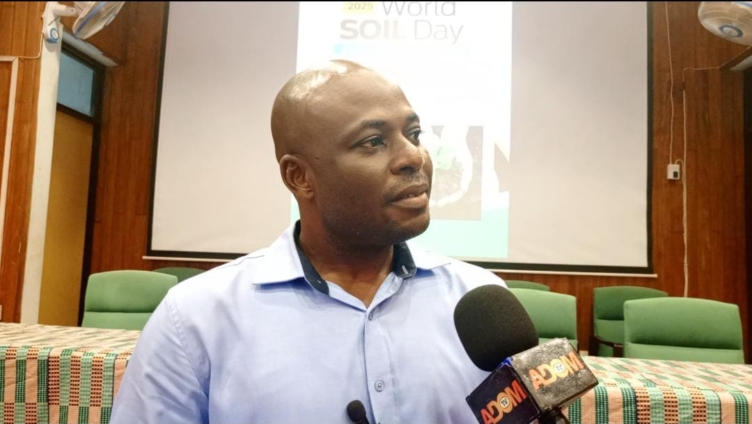
The Kumasi Metropolitan Assembly (KMA) NADMO Administrator, Jamal-Deen Ibrahim Seidu, said irresponsible waste dumping, illegal construction and disregard for drainage regulations remain the major drivers of flooding in the Ashanti Region.
Speaking on the sidelines of the World Soil Day celebration at the Soil Research Institute of the Council for Scientific and Industrial Research (CSIR-SRI) in Kumasi, Mr Seidu stressed that authorities cannot win the fight against floods without a change in public behaviour.
“Floods in the Ashanti Region are largely a result of indiscipline,” he said. “People throw rubbish into gutters, block waterways, and build on waterlogged land. When the rains come, the water has nowhere to go.”
He revealed that a new law awaiting presidential assent will empower NADMO to demolish structures illegally erected in flood-prone areas, a move he believes will strengthen enforcement.
“We need the legal power to act decisively,” Mr Seidu noted, adding that weak enforcement has allowed encroachment on waterways to persist over the years.
Despite the challenges, he said the region recorded relatively low flood incidents in 2025, attributing the improvement to intensified public education and sensitisation campaigns.
“Because of the heightened sensitisation, we did not experience any flood cases that got out of control, especially here in the Kumasi metropolis,” he stated.
Mr Seidu also disclosed that NADMO has been organising regular clean-up exercises across the metropolis, clearing choked gutters and removing waste to allow free flow of rainwater. These interventions, he said, helped prevent major flooding during the rainy season.
He further called on gthe overnment to redesign and upgrade drainage systems, arguing that many existing structures are outdated and unable to handle increasing rainfall linked to climate change and rapid urbanisation.
The World Soil Day event, held under the theme “Healthy Soil for Healthy Cities,” brought together researchers, students, local authorities and environmental groups, who all emphasised the need for responsible land use and proper waste management.
Mr Seidu urged residents to stop dumping refuse into waterways, respect drainage easements and report illegal developments, warning that flooding remains a shared responsibility.
“Together we can turn the tide against flooding,” he concluded.
Latest Stories
-
“NSA did not tell us of any embassy arrangement” – Kofi Adams
7 minutes -
Glasner suffers loss on Selhurst return as Palace beat Forest
2 hours -
WAFU B U17: ‘We won but I expected more from my boys’ – Kassim Ocansey
2 hours -
Man City cruise to statement win over 10-man Liverpool
2 hours -
Be careful with cross-border lending, foreign currency exposures – BoG to financial institutions
4 hours -
GPL 2026/27: Medeama go three clear as Hearts of Oak recover and Bechem stage stunning comeback
4 hours -
Ntiamoah Foundation launches “BEYOND 20” anniversary campaign
5 hours -
Credit Risk Management Directive: BoG to begin implementation for banks, others from July 1, 2027
5 hours -
Ghana Brands Awards 2026: Leading brands, business trailblazers to shine on November 20
5 hours -
T-bills auction: Demand improves as government exceeds target by about 76%; interest rates soften
5 hours -
Ziope undertakes initiative to build a technologically inclined community, commissions self-help ICT lab
6 hours -
ECG announces power outage in parts of Tema, Central Region due to network fault, maintenance
6 hours -
When the Gospel Becomes a Weapon: The church, blackmail and the abuse of faith
7 hours -
JoyNews’ Jacqueline Ansomah Yeboah selected for UK Media Excellence for Emerging Technologies Fellowship
7 hours -
Mental Health Alliance urges government to operationalise Mental Health Fund
7 hours