

Audio By Carbonatix
European Union leaders are gathering for a Brussels summit where a momentous decision will be taken on whether to loan Ukraine tens of billions of euros in frozen Russian assets to fund its military and economic needs.
Most of Russia's €210bn (£185bn; $245bn) worth of assets in the EU are held by Belgium-based organisation Euroclear, and so far Belgium and some other members of the bloc have said they are opposed to using the cash.
Without a boost in funding, Ukraine's finances are set to run dry in a matter of months.
One European government official described being "cautiously optimistic, not overly optimistic" that a deal would be agreed. Russia has warned the EU against using its money.
It has filed a lawsuit against Euroclear in a Moscow court in a bid to get its money back.
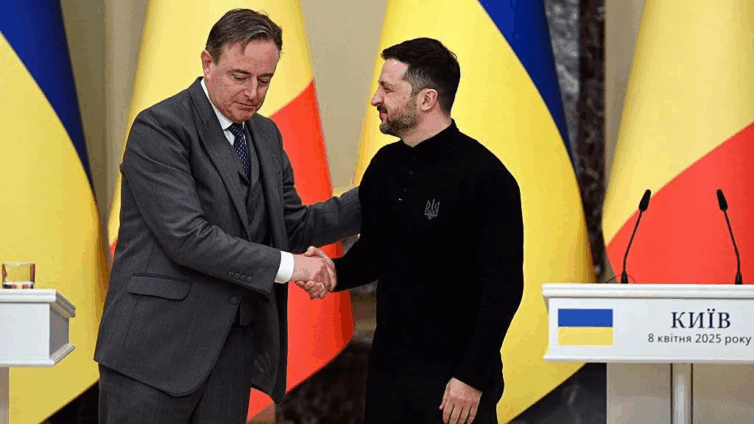
The Brussels summit comes at a pivotal moment in the war and and all eyes are on Belgian Prime Minister Bart De Wever, who told the Belgian parliament on Thursday: "I haven't yet seen any text that would persuade me to change Belgium's position".
US President Donald Trump has said a deal is closer than ever to end the war - which began with Russia's full-scale invasion of Ukraine in February 2022.
US and Russian officials are due to meet in Miami this weekend for further talks on a peace plan, a White House official told the AFP news agency. It is thought Kremlin envoy Kirill Dmitriev will talk to Trump envoys Steve Witkoff and Jared Kushner.
Ukrainian officials are also heading to the US, and President Volodymyr Zelensky, who is in Brussels, has told reporters that if Russia does not comply with US demands to end the war "in the near future, Ukraine will certainly need to be strengthened".
Russia has not yet responded to the latest peace proposals, but the Kremlin has stressed that plans for a European-led multinational force for Ukraine supported by the US would not be acceptable.
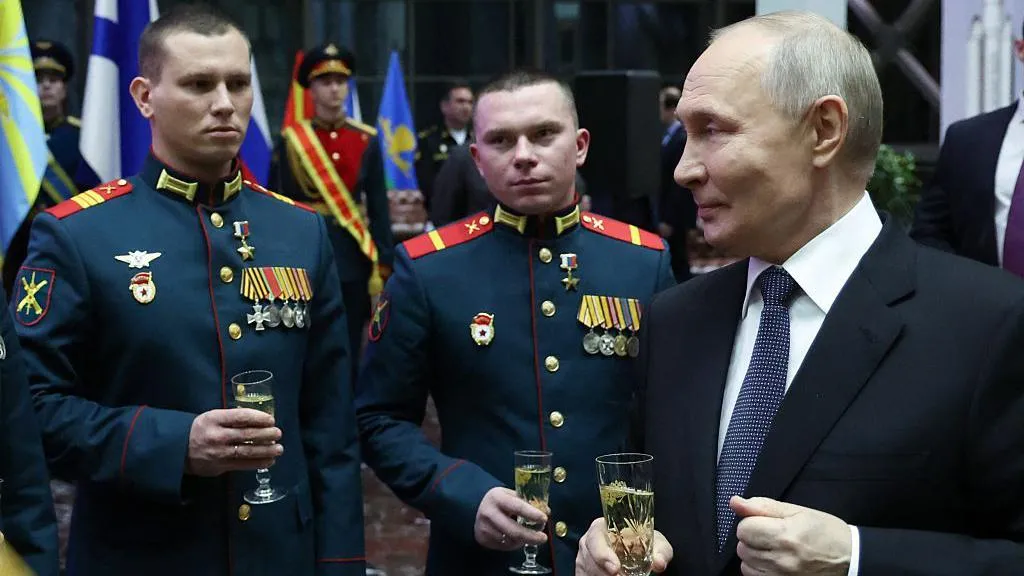
President Vladimir Putin made his feelings towards Europe clear on Wednesday, when he said the continent was in a state of "total degradation" and that "European piglets" - a derogatory description of Ukraine's European allies - were hoping to profit from Russia's collapse.
Until now the EU has handed Ukraine the interest generated by the cash but not the cash itself.
"This is a crunch time for Ukraine to keep fighting for the next year," a Finnish government official told the BBC. "There are of course peace negotiations but this gives Ukraine leverage to say 'we're not desperate and we have the funds to continue fighting'."
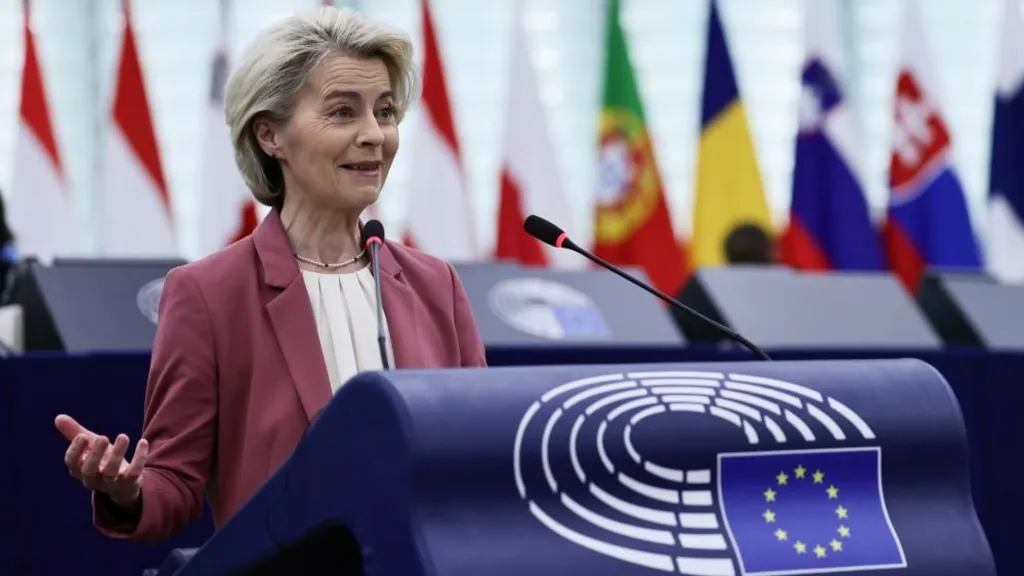
Commission chief Ursula von der Leyen says it will also ramp up the cost of war for Russia.
Russia's frozen assets are not the only option on the table for EU leaders. Another idea, backed by Belgium, is based on the EU borrowing the money on the international markets, using the EU budget as a guarantee.
However, that would require a unanimous vote and Hungary's Viktor Orban has made it clear he will not allow any more EU money to help Ukraine.
For Ukraine, the hours ahead are significant and President Volodymyr Zelensky is in Brussels for the EU summit.
EU leaders have been keen to stress the momentous nature of the loan decision.
"We know the urgency. It is acute. We all feel it. We all see it," von der Leyen told the European Parliament.
German Chancellor Friedrich Merz has played a leading role in pushing for the Russian assets to be used, telling the Bundestag on the eve of the summit it was about sending a "clear signal" to Moscow that continuing the war was pointless.
EU officials are confident they have a sound legal basis to use the frozen Russian assets, but so far the Belgian prime minister remains unconvinced. His defence minister Theo Francken warned ahead of the talks that it would be a big mistake to loan the Euroclear cash.
Hungary is seen as the biggest opponent of the move and, ahead of the summit, Prime Minister Orban and his entourage even suggested that the frozen assets plan had been removed from the summit agenda. A European Commission official stressed that was not the case and it would be a matter for the 27 member states at the summit.
Slovakia's Robert Fico has also opposed using the Russian assets, if it means the money being used to procure weapons rather than for reconstruction needs.
When the pivotal vote does finally take place, it will require a majority of at least 15 member states making up 65% of Europe's population to go through. Whatever happens, European Council President António Costa has promised not to go over the heads of the Belgians.
"We're not going to vote against Belgium," he told Belgian public broadcaster RTBF. "We'll continue to work very intensively with the Belgian government because we don't want to approve something that might not be acceptable for Belgium."
Belgium will also be aware that ratings agency Fitch has placed Euroclear on a negative watch, partly because of "low" legal risks to its balance sheet from the European Commission's plans to use the Russian assets. Euroclear's chief executive has also warned against the plan.
"There are many hiccups and obstacles of course still on the way. We have to find a way to respond to Belgium's worries," the Finnish official added. "We are on the same side as Belgium. We will find a solution together to make sure all the risks are checked as much as they can be checked."
However, Belgium is not the only country to have doubts, and a majority is not guaranteed.
Italian Prime Minister Giorgia Meloni has told Italian MPs she will endorse the deal "if the legal basis is solid".
"If the legal basis for this initiative were not solid, we would be handing Russia its first real victory since the beginning of this conflict."
Malta, Bulgaria and the Czech Republic are also said to be unconvinced by the controversial proposals.
If the deal is passed and the Russian assets are given to Ukraine, the worst-case scenario for Belgium would be one in which a court would order it to hand the money back to Russia.
Some countries have said they would be prepared to provide billions of euros in financial guarantees, but Belgium will want to see the numbers add up.
At any rate, Commission officials are confident that the only way for Russia to get it back would be by paying reparations to Ukraine - at which point Ukraine would hand its "reparations loan" back to the EU.
Latest Stories
-
Health Ministry engages Ga Mantse ahead of Free Primary Healthcare launch
1 minute -
We can tackle multiple priorities – Sam George defends Anti-LGBTQ Bill push
36 minutes -
Statement: Ghana Chamber of Mines’ Response to Claims in Joe Jackson’s “Ananse Stories about the Economy of Ghana”
37 minutes -
GES opens 2026 teacher recruitment for licensed B.Ed graduates
40 minutes -
Ghana must value skilled trades, build resilient learners — Ibn Chambas
48 minutes -
Ghana must rethink education around relevance, resilience and responsibility — Ibn Chambas
51 minutes -
Prince Harry faces defamation lawsuit from charity he co-founded
53 minutes -
South Korea deploys thermal cameras to track escaped zoo wolf
54 minutes -
Calls for royal meeting with Epstein survivors grow ahead of US visit
57 minutes -
Ibn Chambas advocates blend of technology and human values in education
59 minutes -
UMA improves healthcare access in Asutifi North with GH₵700k ‘Kim Taylor Legacy’ Walkway
1 hour -
Scholarships Authority and Fanaka University offer sponsorship for procurement and supply chain studies
1 hour -
Bisa Kdei drops new single ‘Go N Look’ featuring Medikal
1 hour -
Benin facing rising terrorism in north as French military presence faces growing criticism
1 hour -
UEW Public Lecture Series 2026: Education debate ‘about the soul of Ghana’s future’ — Dr Ibn Chambas
1 hour