

Audio By Carbonatix
The Delegation of the European Union to Ghana, Ministry of Lands and Natural Resources and the COCOBOD have hosted the second multi-stakeholder roundtable on Sustainable Cocoa in Accra
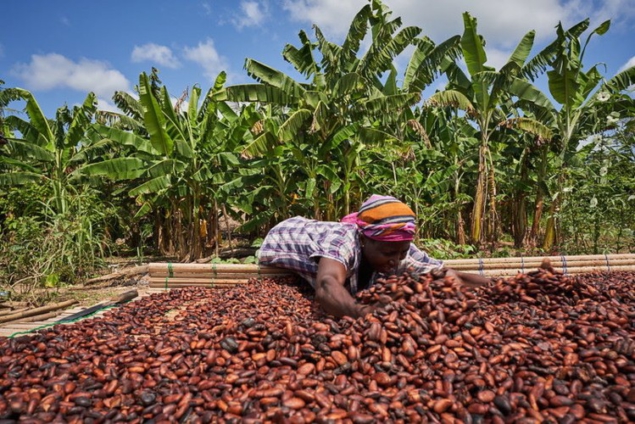
The environmental sustainability of cocoa production is at the heart of the second online roundtable discussion organised in the framework of the National Dialogue on Sustainable Cocoa.
A joint statement from the parties said the National Dialogue on Sustainable Cocoa in Ghana was launched in March 2021 by the EU and COCOBOD.
EU Ambassador to Ghana, Madam Diana Acconcia said, "The EU is committed to tackling the problem of global deforestation and forest degradation.
She said together as partners, "we can tackle climate change and biodiversity loss while ensuring socio-economic transformation."
"Transparent traceability system is essential to guarantee to all actors of the value chain that Ghanaian cocoa is environmentally sustainable,” she added.
Chief Executive Officer at COCOCBOD, Mr Joseph Boahen Aidoo said “COCOBOD, in partnership with the Forestry Commission, is currently working on a digital Cocoa Management System".
He said this system woild map all cocoa farms, collect data on the profile of cocoa farmers, and ensure that Ghanaian cocoa can be traced from the farm to the fork.
Chief Executive Officer at the Forestry Commission, Mr. John Allotey said a “Transparent and inclusive traceability systems will facilitate the monitoring of cocoa production and its potential impact on deforestation and forest degradation."
He said such systems would establish a climate of trust among all stakeholders in the value chain, as "we have learnt in the set-up of the Forest Law Enforcement, Governance and Trade - Voluntary Partnership Agreement and REDD+ Governance Structures.”
The first two online events attracted more than 150 participants each, confirming the high interest around sustainability matters in Ghana.
The second roundtable focuses on how traceability and transparency can be further improved to support a cocoa supply chain that can prove to be deforestation free.
Representatives of a large spectrum of stakeholders involved in the cocoa sector - government officials, civil society organisations, farmers’ organisations, private sector representatives and development partners shared their experiences and lessons learnt around traceability as a mechanism to monitor and prevent deforestation.
Recommendations from these discussions feed a broader dialogue launched last year by the European Commission together with global cocoa lead producers Ghana and Côte d’Ivoire.
Latest Stories
-
MamaCare CEO warns unresolved conflicts among health workers could undermine maternal and neonatal care
3 minutes -
Health professionals urged to translate medical knowledge into practice to save mothers
10 minutes -
Conflicts among care providers linked to maternal, neonatal deaths – Expert
2 hours -
GIS marks 10th TIME conference, champions improved teaching practices
2 hours -
BRICS Or Balance? What Ghana’s bid really means
2 hours -
GPRTU wants full TRAFFITECH-GH implementation to start in 2027
3 hours -
Mahama announces plans to import electric wheelchairs for PWDs
3 hours -
KGL U17 Colts 2026: Western beat Prempeh Elite Academy to set up final final with Greater Accra Region
3 hours -
Late Solanke strike salvages 10-man Spurs draw at Man United
3 hours -
Gender Ministry to monitor welfare of Nana Akua Addo’s children amid domestic violence case
3 hours -
Benedict Okyere Yeboah: Ghana’s football problem goes beyond sacking a coach
3 hours -
GPL 2026/27: Darkwah Wiafe’s winner sees All Blacks beat Kotoko
4 hours -
ITF World Tour : Patel Wins Boys’ Singles Final at J100 Accra
4 hours -
Ghana must pursue BRICS partnership if it brings economic benefits – Kpebu
4 hours -
Success and Wright Claims J100 Accra Girls’ Doubles Championship
4 hours