


Audio By Carbonatix
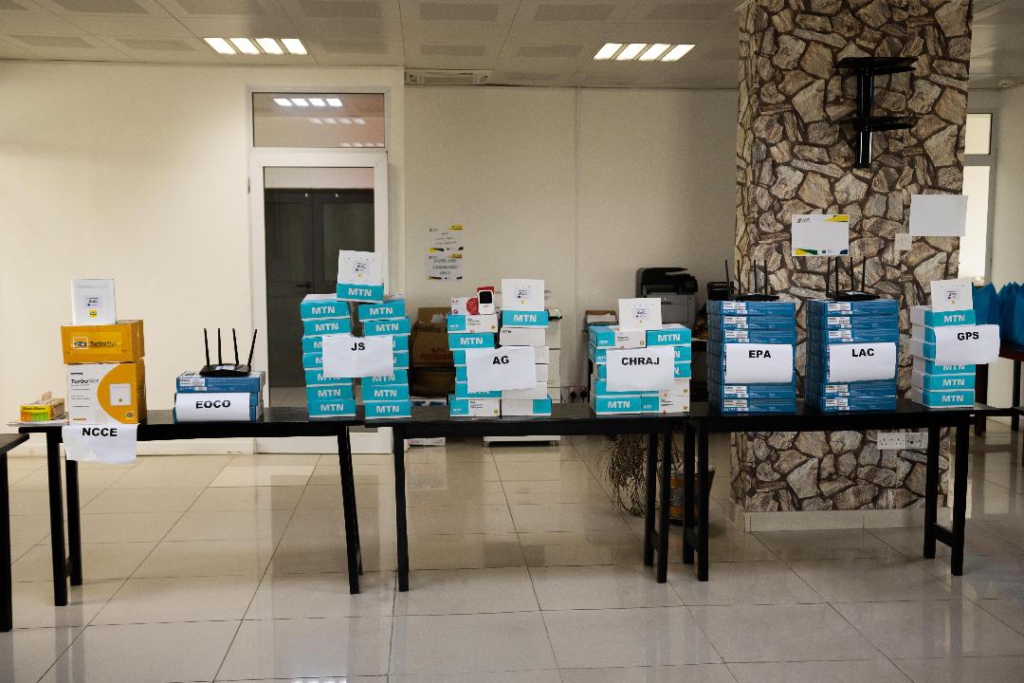
The European Union has donated digital tools worth €38,364 in support of the Accountability, Rule of Law and Anti-corruption Programme's (ARAP) fight against Covid-19.
The institutions that stand to benefit from this donation are the National Commission for Civic Education (NCCE), the Commission on Human Rights and Administrative Justice (CHRAJ) and the Ghana Police Service (GPS).
The rest are the Office of the Attorney General and Ministry of Justice, the Judiciary and Judicial Service, the Environmental Protection Agency, Legal Aid Commission and the Economic and Organised Crime Organisation.
A statement issued in Accra on Saturday said the deployment of these digital tools within the public sector is a core mandate of the ARAP programme.
"In this regard the use of Information and Communication Technology (ICT) has been a key area of work across all stakeholders, strengthening internal capacities and establishing online platforms such as the National Anti-Corruption Action Plan (NACAP) Online Reporting Dashboard or the Public Relations and Complaints Unit web application," it said.
This is very much in line with the government's strategic outlook on digitisation to boost connectivity of the programme’s stakeholders, the statement said.
"Supporting the digitisation entails boosting data connectivity of all ARAP stakeholders through the provision of Wi-Fi routers and data."
The ARAP will, therefore, provide its stakeholders with a range of modems and routers, coupled with data subscriptions until the end of the year.
In addition to this, licenses to online conference tools such as Cisco Webex and Microsoft Teams had been procured for all stakeholders in accordance with their specific needs and requirements.
The statement said this intervention was in response to a critical situation heightened by the global pandemic. It also seeks to equip the programme to conduct all its final activities such as trainings, workshops, and validations through online meetings.
The intervention also "enhanced the effectiveness and efficiency of stakeholders to ensure that both central and regional offices were fully connected and could continue providing essential services to citizens".
Latest Stories
-
[Watch Live] Shatta Wale, Kofi Kinaata, and others ignite the grand finale of Gomoa Easter Carnival
1 hour -
Berekum Chelsea edge Aduana FC in Bono derby to boost survival hopes
4 hours -
‘They can’t control the team’ – Ernest Thompson doubts local coaches for Black Stars role
5 hours -
Ghana-born midfielder Seidu realises ‘dream’ with Atlético Madrid debut
5 hours -
GPL 2025/26: Bubakari strikes late to hand All Blacks vital win over Dreams FC
5 hours -
Fatal crash on Kintampo–Tamale highway claims four lives
5 hours -
2025–26 FA Cup Semifinal Draw: Chelsea, Man City Learn Wembley Opponents
6 hours -
GPL 25/26: Gold Stars back on top after beating Nations FC
6 hours -
GPL 2025/26: Heart of Lions roar back with victory over Vision FC in Kpando
7 hours -
Solomon Agbasi: Hearts keeper in stable condition after concussion
7 hours -
GPL 2025/26: Late Salim Adams penalty earns Medeama draw at Bechem
7 hours -
Hearts pip Young Apostles 1-0 to end 5-game winless run
8 hours -
Boakye Agyarko marks Easter Sunday with a call for Godly leadership ahead of nationwide campaign tour
9 hours -
Pepsi withdraws as UK festival sponsor after Kanye West backlash
9 hours -
Pope Leo calls for global leaders to choose peace in his first Easter Mass
9 hours