

Audio By Carbonatix
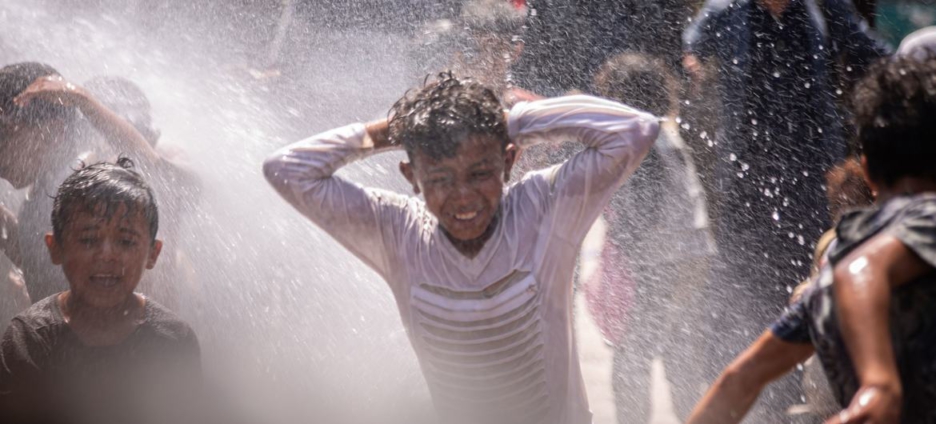
Regardless of whether the world achieves a "low greenhouse gas emission scenario" with an estimated 1.7 degrees of warming or a "very high greenhouse gas emission scenario" with an estimated 2.4 degrees of warming, it is predicted that over 2 billion children will experience more frequent heatwaves by 2050.
This is according to the most recent UNICEF report.
Around 624 million children are currently exposed to one of the other two high heat measures, such as extremely high temperatures and approximately 559 million children are already exposed to high heatwave frequency.
The report says heatwaves are growing longer, stronger, and more frequent as a result of the climate crisis.
The report highlights the urgent need to modify the services that children depend on as the unavoidable effects of global warming manifest. In order to mitigate the worst effects of the other high heat measures, it also makes the case for a more significant reduction in emissions.
Depending on how hot the world gets, millions more children will be exposed to intense heatwaves and extremely high temperatures.
By 2050, nearly half of all children in Africa and Asia will experience prolonged exposure to extremely high temperatures. Children in northern regions will experience the most dramatic increases in high heatwave severity.
The report urged countries to take action immediately to protect children from the effects of climate change by modifying social services, educating kids about how to adapt to a changing climate, and giving children and youth priority in climate finance and resources. Heat is particularly harmful to children's health and has an impact on their education and future livelihoods.
It also encouraged nations to maintain 1.5 degrees Celsius and avoid a climate catastrophe by drastically cutting greenhouse gas emissions.
According to UNICEF Executive Director, Catherine Russell, the report expands on the ground-breaking 2021 analysis of UNICEF's Children's Climate Risk Index and looks at the effects of heatwaves on children both now and in the future.
"Children, especially young children, are more vulnerable than adults to the effects of extreme heat, which can cause severe dehydration, respiratory trouble and make them more vulnerable to other diseases," she said.
In order to show the impact that very high greenhouse gas emissions will have on children's lives in the future, the report compared two warming scenarios for the year 2050: a low greenhouse gas emission scenario with an estimated 1.7°C of warming and a very high greenhouse gas emission scenario with an estimated 2.4°C of warming. Already, the average global temperature is 1.1°C warmer than it was before industrialisation.
According to current policies, it is predicted that global warming will reach 2.8°C by the end of the century. Limiting global warming to 1.5°C is unachievable without immediate and significant emissions reductions in every sector.
Children still face a number of grave risks from heatwaves and other climate hazards, but public awareness, according to the report, policy responses, and funding are woefully insufficient.
It says that, by modifying the vital social services children require, such as health, water and sanitation, and education, to withstand heatwaves and other climate and environmental shocks, countries must protect children from the immediate climate devastation.
By giving them the education, skills, and opportunities to actively participate in the development of climate policies, it also says, countries must equip them to live in a world where the climate is changing. Children must also be given priority in climate finance and resource allocation in order to protect and prepare them.
The 52-paged report also encouraged governments to significantly cut greenhouse gas emissions if they want to avoid the very worst scenarios.
Latest Stories
-
Aboboyaa Company Ltd CEO donates 5 tricycles to Ghana Prisons Service
2 minutes -
National Cathedral: ‘There’s no clarity as to what they want to use the site for’ – Afenyo-Markin on site’s future
3 minutes -
Investigators meet family, community over deaths of 3 children found in car trunk
5 minutes -
Teachers have legitimate concerns, but prolonged strike will affect pupils – Joseph Kumah
11 minutes -
Ahafo NHIA Beats 2025 Target to Secure Second Year of Universal Health Coverage
11 minutes -
Innovative Teachers threatens legal action over exclusion from Collective Bargaining Agreement negotiations
28 minutes -
17-member committee formed to address concerns over Adipa landfill
31 minutes -
Team Volta wins NPA 2026 Staff Welfare Week Quiz
43 minutes -
Team Eternity Ghana releases new album “The Promise – Phase 1”
47 minutes -
Inside the human genome: Why scientists are still discovering who we are
50 minutes -
PAC grills Central Regional Coordinating Council over GH¢14.9m payments processed outside GIFMIS
58 minutes -
Ghana’s industrial dream at risk? How the Yuan policy could deepen China dependence
58 minutes -
Teachers’ strike: Government has funds, but processes are causing delays – Education Committee Vice Chair
1 hour -
Afenyo-Markin urges Christian Council to intervene over arrests linked to free speech
1 hour -
GCB Bank urges MSMEs to formalise businesses for easier access to finance
1 hour