

Audio By Carbonatix
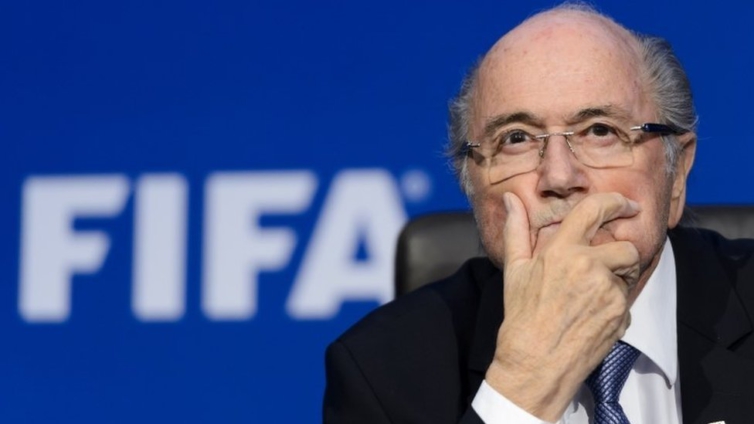
The former FIFA president, Sepp Blatter, on Monday backed a proposed fan boycott of the World Cup, scheduled to be co-hosted by the United States, Canada, and Mexico from June 11 to July 19. Blatter cited the domestic and international conduct of President Donald Trump and his administration as the primary reason for his support of the movement.
The 89-year-old former executive is the latest international soccer figure to call into question the suitability of the United States as a host country. Blatter expressed his support via a post on X that supported recent comments made by Mark Pieth in an interview with the Swiss newspaper Der Bund.
Pieth, a Swiss attorneyspecialisingg in white-collar crime and an anti-corruption expert, chaired the Independent Governance Committee’s oversight of FIFA reform a decade ago. Blatter was president of the world’s governing body for soccer from 1998 to 2015. He resigned amid a corruption investigation.
An expert warns fans to stay away.
In his interview with Der Bund, Pieth advised football supporters to avoid the North American nation entirely, citing concerns over domestic turmoil and the aggressive nature of U.S. border officials.
“If we consider everything we’ve discussed, there’s only one piece of advice for fans: Stay away from the USA! You’ll see it better on TV anyway," Pieth said. "And upon arrival, fans should expect that if they don’t please the officials, they’ll be put straight on the next flight home. If they’re lucky.”
In his X post, Blatter quoted Pieth and added, “I think Mark Pieth is right to question this World Cup.”
White House defends "Common Sense" vetting.
The Trump administration has defended its stringent immigration policies as essential for national security. A White House fact sheet described the measures as "strengthening national security through common sense restrictions based on data."
Officials argue that many restricted nations suffer from widespread corruption and fraudulent documents. President Trump cited “screening and vetting deficiencies” as the main reason for the suspensions. To assist legitimate travellers, the administration recently unveiled the FIFA Priority Appointment Scheduling System (FIFA PASS). This service offersprioritisedd visa interviews for ticket holders from non-banned countries, such as Ghana, ensuring they can complete their interviews before the June 11 kickoff.
Trump spoke about the FIFA Pass in November, saying the Departments of State and Homeland Security had been working "tirelessly" to "ensure that soccer fans from all around the world are properly vetted and able to come to the United States next summer easily."
To ease international tensions, Trump also recently announced a "framework of a future deal" with NATO Secretary General Mark Rutte regarding Greenland and the Arctic region. Trump posted on Truth Social that the deal could mitigate the friction caused by his administration's interest in the territory, which had initially fueled European boycott calls.
African nations face travel hurdles.
The controversy has sparked particular outrage across Africa, where fans are calling the restrictions "disgraceful." Earlier this month, travel plans for fans from Senegal andthe Ivory Coast were thrown into disarray when the Trump administration announced a ban that effectively bars people from these nations unless they already have visas.
In these cases, the White House specifically highlighted high visa-overstay rates. Data suggests overstay rates of approximately 4% for Senegal and 8% for Côte d'Ivoire for visitor visas. Fans from Iran and Haiti will be barred from entering the United States as well; they were included in the first iteration of the travel ban.
African fans "wait and see" amid dismay.
Following the conclusion of the Africa Cup of Nations (AFCON) in Morocco, fans who recently celebrated Senegal’s victory in Rabat have joined those calling for boycott of the 2026 FIFA World Cup in the US “If we’re not accepted as supporters, our teams shouldn’t go and neither should we,” one Senegalese soccer fan told reporters, echoing a sentiment growing in West Africa.
“I don’t know why the American president would want teams from certain countries not to take part. If that’s the case, they shouldn’t agree to host the World Cup,” Senegal supporter Djibril Gueye noted in Tangier. Gueye argued that it is the host nation's responsibility to provide the means for everyone to support their team.
“We really want to participate,e but we don’t know how,” said Fatou Diedhiou, president of a group of female Senegal fans. “Now we just wait... maybe they’ll change their minds. We wait and see.” For dedicated supporters like Sheikh Sy, the situation is heartbreaking: “We’vtravelleded everywhere with our team... we absolutely have to go.”
Steep costs and "grassroots" exclusion
The travel ban is not the only hurdle. Many fans feel the 2026 tournament has become an exclusive "business" event. One Senegalese fan, Pape, who holds a French passport and could legally enter the US, stated he will not go as a “matter of political conviction” and because of the exorbitant cost of tickets.
“I have the impression it’s all about the business world. They completely ignored the grassroots aspect,” Pape said. Ivorian supporter Tan Detopeu expressed similar fears, noting that even without a ban, few could afford the trip. “It’s kind of expensive,” she noted.
Global soccer community reacts.
The pressure for a boycott has moved beyond rhetoric into the leadership of major federations. Oke Göttlich, a vice president of the German soccer federation, told the Hamburger Morgenpost newspaper in an interview last Friday that the time had come to seriously consider boycotting the World Cup. Göttlich’s concerns are tied to Trump’s expansionist posture on Greenland and the conduct of the US Immigration and Customs Enforcement (ICE).
Public anger has intensified following the deaths of two US citizens—Renee Nicole Good and Alex Pretti—who were killed by federal agents during immigration crackdowns in Minneapolis this month. These incidents have led Pieth to describe the US as becoming "increasingly authoritarian."
While FIFA President Gianni Infantino maintains a close friendship with Trump—even accepting the inaugural "FIFA Peace Prize" from the administration in December—the rift between Washington and the international soccer community continues to widen. Fans across Africa and Europe now face the reality that the "Beautiful Game" may be overshadowed by a host nation in crisis, and for many, supporting their teams on US soil may be restricted to those who managed to secure visas long before the new proclamations took effect.
Latest Stories
-
Ghana pays tribute to 1948 heroes at 78th anniversary observance
2 minutes -
Allowance payout will strengthen Ghana’s decentralization framework – Tano North Assembly Members
3 minutes -
Two arrested in connection with Effiakuma viral video
39 minutes -
Keta MP lays mother to rest
1 hour -
We must put an end to cocoa politics – Victoria Bright
2 hours -
There is a cabal in electricity sector determined to rip off Ghanaians – Prof Agyemang-Duah
2 hours -
NSA pays January 2026 allowance to National Service Personnel
2 hours -
24-Hour Economy not just talk — Edudzi Tamakloe confirms sector-level implementation
2 hours -
Four arrested over robbery attack on okada rider at Fomena
2 hours -
NDC gov’t refusing to take responsibility for anything that affects Ghanaians – Miracles Aboagye
3 hours -
Parental Presence, Not Just Provision: Why active involvement in children’s education matters
3 hours -
24-Hour economy policy fails to create promised jobs – Dennis Miracles Aboagye
3 hours -
Ghana Embassy in Doha urges nationals to take shelter after missile attack
4 hours -
Government’s macroeconomic stability commendable, but we need focus on SME growth – Victoria Bright
4 hours -
Macro stability won’t matter without food self-sufficiency- Prof. Agyeman-Duah
4 hours