

Audio By Carbonatix
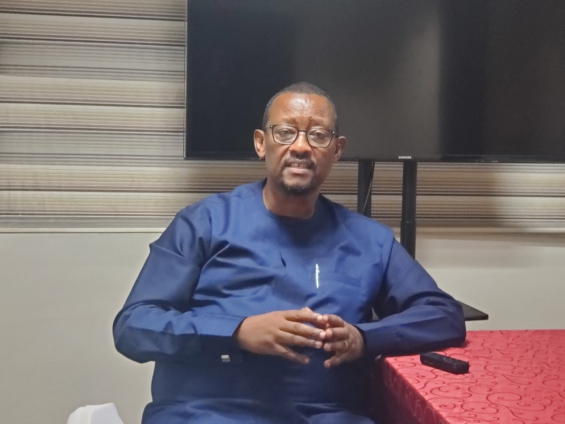
Executive Director of the African Agricultural Technology Foundation (AATF) Dr Canisius Kanangire says farmers on the continent need technology if they can survive the impact of climate change.
He says with the impact of climate change on agricultural production getting more severe as the years go by, urgent steps are needed to use technological innovations to improve crop production.
“We believe that technology can play a big, big role in transforming agriculture and changing the livelihoods of the smallholder farmers on the continent… For example with climate change. We know that climate change is real, and it is impacting our productivity and food production in Africa,” he observed.
“What we have been doing is (to use technology to) produce varieties of seed for very important crops which can tolerate drought for example. And insect infestation,” the head of the Nairobi-based foundation noted. He was speaking to the media during a visit to Ghana.
AATF has been supporting countries on the African continent to develop improved crops using genetically modified organisms (GMO) and genome editing technologies.
In Ghana, scientists at the Savanna Agricultural Research Institute (SARI) have used GMO technology to produce cowpea (beans) that has inherent resistance to the pod borer pest. The pest can cause 100% crop failure on cowpea fields.
“I want to commend the leadership and the scientific community in Ghana for the work they are doing first in approving the adoption of technology.
"I think it is a great thing and the research community is adopting and adapting the technology to the needs of the Ghanaian population,” he observed.
Last year, the GMO cowpea received environmental release approval from the National Biosafety Authority and is awaiting final approval from the Ministry of Food and Agriculture.
“Those developing these technologies are Ghanaians. They feed themselves from the products you have in the same market. They go to the same restaurants.
"They also benefit from the work of the same smallholder farmers. So, what they're doing, they do it because they believe that this technology is safe for themselves and their children as well,” Dr Kanangire noted.
“They have the data that this technology will bring benefits to the farmers and the whole country. So they do it for their people so that we can eliminate hunger and ensure that we have food security and then make sure that what we eat is sufficiently nutritious so that we have a healthy population,” he added.
“We the sons and daughters of this continent are doing all the things we are doing bringing these technologies because we believe that they are beneficial for us, for our children and grandchildren,” he concluded.
Latest Stories
-
Ga Adangbe traditional priests petition Mahama over McDan aviation licence revocation
31 seconds -
Anti-LGBTQ Bill: NDC’s arrogance is worrying – Hassan Tampuli
11 minutes -
Let’s give OSP time to mature, not to scrap it – Hassan Tampuli
15 minutes -
Nigeria convicts 386 Islamist militants in mass trials
20 minutes -
Djibouti president wins election with 97.8% of vote, state media says
24 minutes -
We don’t have mandate to deduct tax from rent allowance of security services personnel – Interior Ministry clarifies
39 minutes -
Ablakwa receives Presidential Special Envoy on Reparations to advance global agenda
56 minutes -
Christina Koch becomes first woman to travel around the moon on Artemis II
1 hour -
Epstein survivors’ calls to meet King Charles and Queen harder to ignore as US visit approaches
1 hour -
UN Secretary-General names Ghana’s Anita Kiki Gbeho as South Sudan envoy
1 hour -
Mali withdraws recognition of Sahrawi Republic, backs Morocco’s autonomy plan
1 hour -
Gov’t distributes over 8,500 laptops to One Million Coders project
1 hour -
Julius Debrah, ‘man to beat’ as NDC’s James Agbey dismisses Musah Dankwah’s polls
1 hour -
GPRTU in Savannah Region to protest alleged eviction in Damongo
2 hours -
Re: Reinsurance does not replace process — A response to the SIGA–SIC defence
2 hours