

Audio By Carbonatix
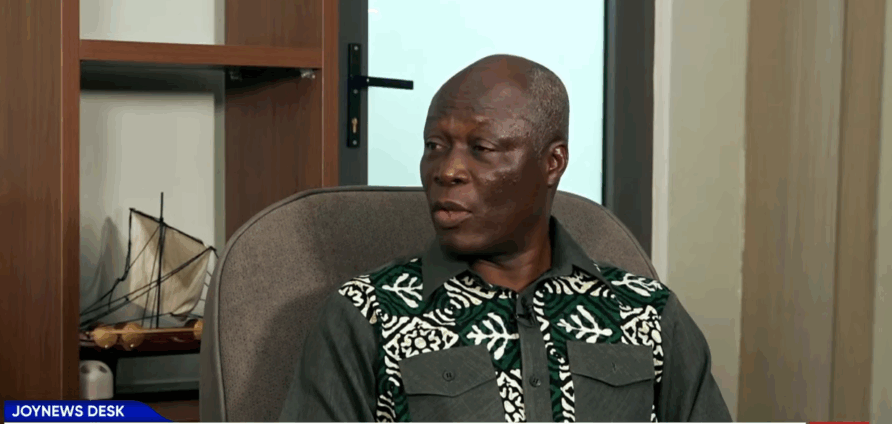
The National Coordinator for the District Road Improvement Programme (DRIP), Edwin Nii Lantey Vanderpuye, has dismissed the perception that the initiative is meant only for rural roads, saying that urban and metropolitan areas are major beneficiaries.
Speaking in an interview with JoyNews on Monday, January 19, Mr Vanderpuye explained that it was wrong to assume that DRIP serves only rural communities, noting that urban areas often face more serious road challenges.
“People should not look at DRIP as only serving people within the rural areas. In fact, it is rather the urban centres that benefit more,” he stated.
Mr Vanderpuye explained that DRIP is a broad intervention designed to improve all roads under the responsibility of district assemblies, including those in metropolitan areas.
“The DRIP should not just be seen as rural roads. DRIP is an intervention in improving roads within the district assemblies, be it metropolitan,” he said.
He cited ongoing road works in parts of Accra, supported by district authorities using DRIP equipment.
"I saw my brother, Dr Alfred Okoe Vanderpuye, supporting his assembly, the AMA, and his sub-metro to improve roads in Mamprobi, in Chorkor, and in Korle Gonno. These are not rural areas. They are urban centres, metropolitan areas,” he said.
He explained that potholes in urban roads often worsen quickly and become difficult to manage without timely intervention.
“When potholes generate, you cannot do anything. Sometimes it’s better to get off the tarred road and even have laterite on the road. That sometimes makes people feel much happier.”
Mr Vanderpuye pointed to several urban communities in Accra where road conditions remain poor despite their location in the capital.
“In some of our urban areas, the connecting roads are very bad. If you go to places like Kpone Katamanso, Ga Central, Ga North, Bortiano and English Amanfrom, it’s horrible.”
He said that such roads fall squarely under the responsibility of district assemblies.
“They may be in Accra, but their roads are horrible. And these are roads the assemblies are supposed to use the equipment to fix. DRIP is not only about rural areas per se, but it’s about district roads.”
According to him, any road within the jurisdiction of a district assembly can be improved using DRIP resources.
All roads that fall within that particular district and its jurisdiction are a responsibility,” he explained.
Mr Vanderpuye shared examples from the Bono Region to show how district assemblies are using DRIP equipment to address urgent road problems without waiting for central government intervention.
“I went to the Bono Region, and between Dumesua and Brekum, in the Sunyani West District, there was a portion of the Ghana–Côte d’Ivoire highway that had deteriorated so badly that cars could not pass,” he said.
He said that the assembly acted quickly because the poor road was affecting livelihoods.
“The assembly could not wait for the government to say a big push is coming. People were using that road, and businesses were suffering.”
“The assembly took it upon themselves to use the DRIP equipment to repair that part of the road. It was done, and now people are using it and are very happy.”
Another example, he said, was the stretch between Doma Ahinkro and the Côte d’Ivoire border, about five kilometres on the Ghanaian side.
“The road had deteriorated so much that buses dropped passengers at the border, and they had to walk or use motorbikes. No car could go and come.”
According to Mr Vanderpuye, the district assembly again stepped in without waiting for central government funding.
“They took it upon themselves, using their own resources, and fixed the road. Now buses are moving freely from Abidjan to Ghana without any problem.”
Latest Stories
-
Nana B passport claims a diversionary tactic — Abu Jinapor
25 minutes -
Pope Leo diagnosed with cancer as doctors remove lobe of lung, Vatican says
25 minutes -
Legal Aid Commission takes free legal services to Techiman main lorry terminal
30 minutes -
Nana B denies seeking passport favour, accuses Ablakwa of failing to account for GH¢16.4m
35 minutes -
Young girls demand climate action, stronger protection against child marriage
47 minutes -
Ex-gang boss sentenced to 40 years for orchestrating Tupac Shakur’s murder
47 minutes -
From near-deferral to three awards: UMaT graduate’s academic journey
49 minutes -
Atta Akyea denies seeking presidential pardon for Wontumi in galamsey case
1 hour -
Photos: Mahama commissions 85-bed Police Hospital ward, donates two ambulances
2 hours -
GTEC directs Ghana’s public universities to reopen by October 16 and begin lectures on October 19
2 hours -
Star Oil donates GH¢1million towards construction of new CID facility
2 hours -
Court hands Adjetey Sowah, two others lifetime bans after Amputee Football legal dispute
2 hours -
NDC appoints Julius Kwame Anthony as a Deputy Communications Director
2 hours -
Ghana repatriates 120 Nigerians rescued from suspected cybercrime centres
2 hours -
NPP rejects Emelia Agbenyo’s appointment as Deputy EC Chair, demands withdrawal
2 hours