

Audio By Carbonatix
Lawyer and Senior Vice-President of IMANI Africa, Kofi Bentil, has criticised authorities over what he describes as “insincere” communication regarding Ghana’s persistent power outages.
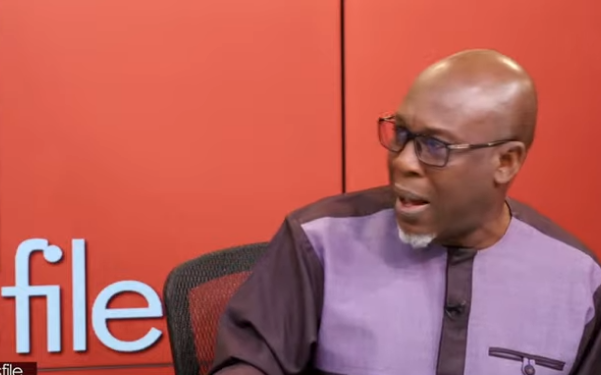
Speaking on Newsfile on Saturday, 2 May, Mr Bentil said the country’s energy challenges are not solely technical but are compounded by poor and unreliable public communication.
He noted that the energy sector remains highly sensitive and inherently political, stressing the need for careful and responsible handling of both policy and messaging.
“Everything that is serious is political, and energy is serious,” he said, adding that while politics cannot be entirely removed from the sector, it must be managed in a way that does not undermine long-term stability.
Mr Bentil observed that Ghana’s power challenges have followed a recurring pattern over the years, suggesting that underlying systemic issues remain unresolved. Despite this, he expressed confidence in the technical competence of engineers at the Volta River Authority (VRA), indicating that they have consistently delivered results when given the necessary independence and effective leadership.
“The engineers at VRA have proven that if you leave them alone and provide the right leadership, there is almost nothing they cannot do,” he stated.
He attributed the country’s ongoing power difficulties largely to political interference rather than a lack of expertise, arguing that decision-making within the sector is often influenced by competing interests and financial incentives.
“The biggest problem with our energy sector is that it has suffered political interference, not leadership,” he said.
Mr Bentil further maintained that Ghana’s size and structure do not make its energy needs unmanageable, suggesting instead that entrenched interests within the sector continue to hinder progress.
“There’s been too much political interference, and there’s too much money in that sector; it is messing with us,” he added.
He called for what he described as a “rational consensus” on key national issues such as energy, arguing that a unified and depoliticised approach would help prioritise long-term national interest over short-term gains.
Mr Bentil also pointed to recent developments within the VRA as a potential foundation for broader reforms across the energy sector.
He insisted that with the right systems and leadership in place, Ghana can significantly reduce prolonged outages, noting that it is possible to ensure power disruptions do not exceed 48 hours.
Latest Stories
-
President Mahama ends Resetting Ghana tour of Ahafo Region
49 minutes -
African negotiators seek delivery of climate commitments at COP31
50 minutes -
BoG develops AI rules for financial sector
52 minutes -
‘Big Push’: Government assures contractors of prompt payments
56 minutes -
Court fines miner for breaking into gold buying shop
1 hour -
Tarkwa court jails labourer for three years over GH¢123,000 theft
2 hours -
GAEC must retain nuclear scientists for Ghana’s nuclear ambitions – Minister
3 hours -
Man reportedly mistaken for game and shot by hunter dead in forest
3 hours -
19-year-old mason jailed 15 years for defiling seven-year-old pupil
3 hours -
Ghana’s banking sector assets rise 20.47% to GH¢500.2bn – BoG Governor
3 hours -
22 injured as Sprinter bus overturns at Sege after tyre burst
3 hours -
UN housing expert urges Ghana to strengthen Rent Control Department amid housing affordability concerns
3 hours -
Delta-BCI partnership reaches 166,000 people with breast cancer education
3 hours -
Power restoration fault suspected in Kumasi Central Market fire
8 hours -
The 7-foot giant of Ngleshie Amanfro: Seven-foot Ghanaian Ephraim Saawa dreams of joining the national basketball team
9 hours