

Audio By Carbonatix
Poultry farmers in the country are in anticipation of a successful implementation of the government’s revitalisation project in the poultry sector, following the recent near-collapse of the industry.
Under the Rearing for Food and Jobs programme, the government established the ‘Broiler Project to reduce the importation of chicken and create jobs.
According to data by the Animal Production Directorate of the Ministry of Food and Agriculture (MoFA), Ghana imports about 180,000 Mt of poultry meat, with local production averaging 57,000 MT.
Broiler meat constitutes over 80% of the total imported meat into the country.
After realising the potential of reducing meat imports through local production of broilers, the government instituted the broiler project in 2020, targeting 40,000 MT of broiler meat production on a pilot basis.
But National Chairman of the Poultry Association of Ghana, Victor Oppong Adjei, says the government must commit to the actualisation of the project’s objectives to salvage the struggling poultry industry.
“It’s not only the poultry farmers who will be benefiting, but the entire economy. Over 80% of poultry farms collapsed in the last three years. The broiler chicken cannot really compete with imported chicken. The government has begun a project to support the sector but it must be serious with it to revamp the poultry industry,” he said.
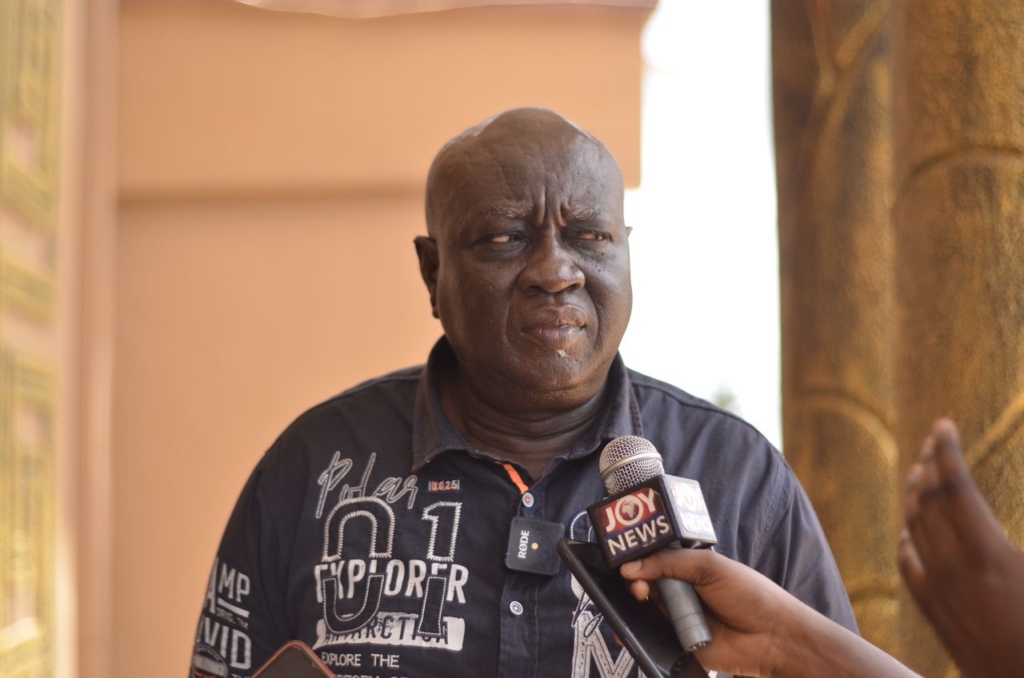
Victor Oppong Adjei - Chairman, National Poultry Farmers Association
He continued that; “the industry can create a million jobs to reduce the unemployment rate in the country.”
The project saw a 40% subsidy benefit from the government for a period to attract farmers into the dying broiler production sub-sector.
The cost of 1,000 – 2,000-day-old chicks, vaccines and feed for the first two weeks of production were subsidised by 50%.
There have been calls by stakeholders in the poultry industry on the government to place a ban on imported chicken as dint to control the influx of foreign meat.
But the Ministry of Food and Agriculture believes an outright ban on the commodity could affect the country’s food security.
Head of the Animal Production Unit at the Ministry, Ricky Aboagye says regulation of import is essential to allow free inter-continental trade.
“As part of food security, the country must have some buffers then empower the local farmers to venture into massive production. Then, the importation can be regulated. If the country is able to produce and gets to excess point, exportation is also necessary. So, the government can’t simply ban the import of chicken,” he said.
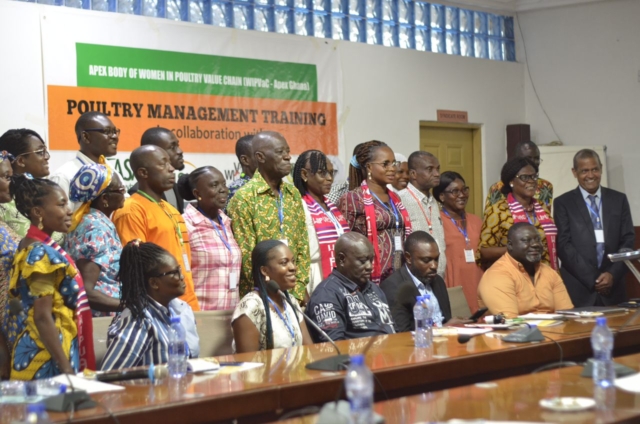
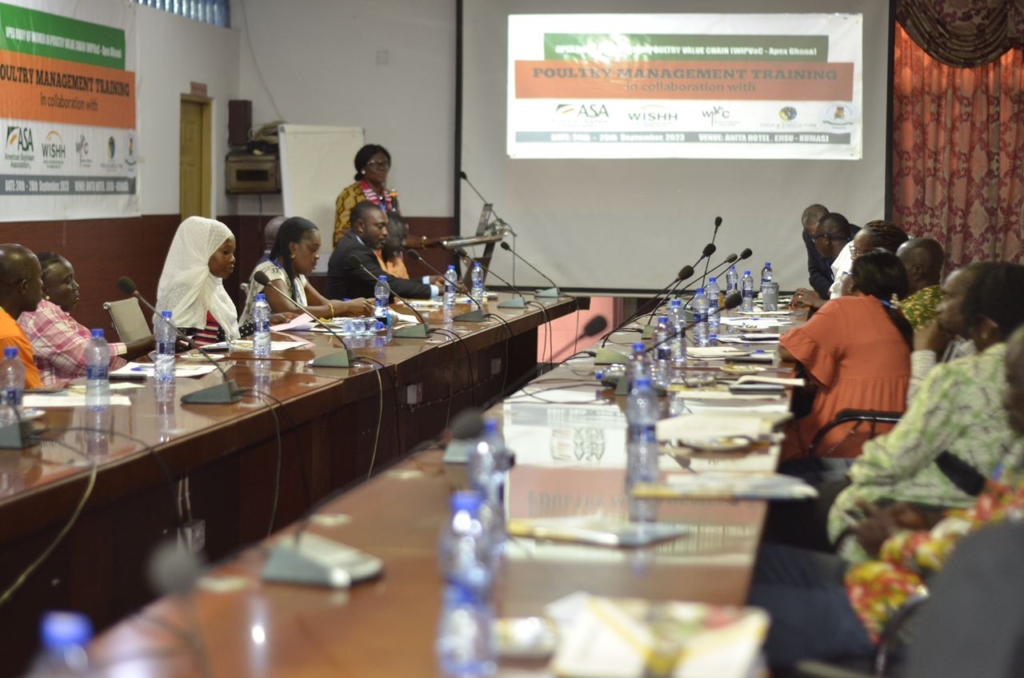
Mr. Aboagye was speaking at a two-day workshop for poultry farmers in the Ashanti region on farm management practices.
The event was targeted at building the capacity of poultry farmers and expanding their knowledge base on the best practices for efficient production.
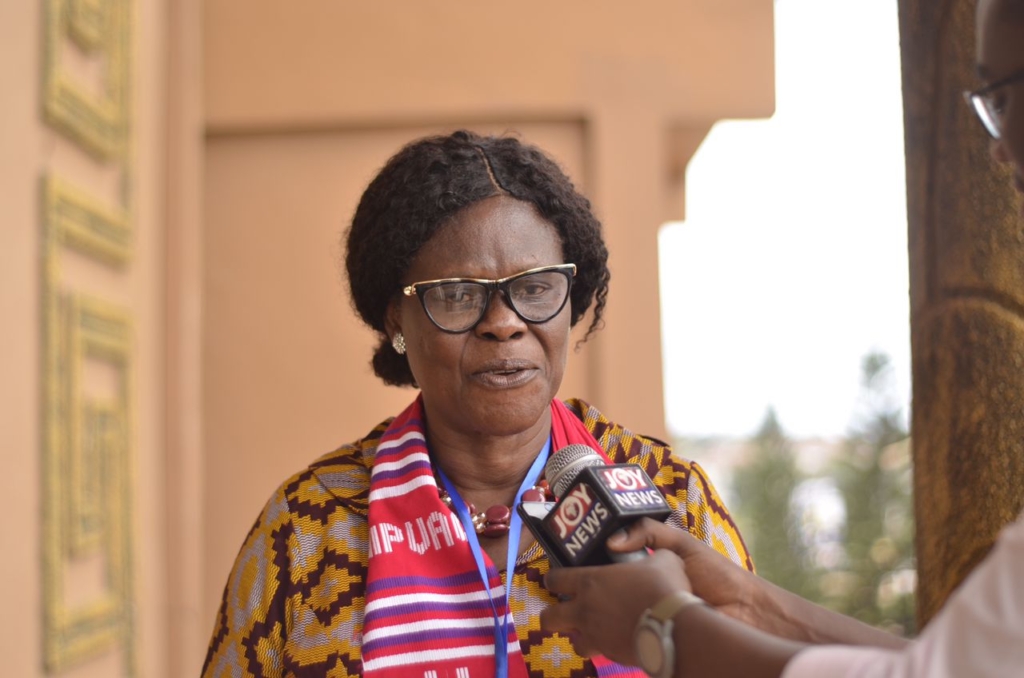
Dr. Mrs. Victoria Norgbey - President, Women in Poultry Value Chain
President of the Women in Poultry Value Chain, Dr. Victoria Norgbey says the training complements government’s efforts to bolster the poultry industry.
“If you have all the resources for poultry farming and you don’t have good farming management practices, your farm cannot still survive. These trainings come together to help the farmer stay afloat in the business,” she said.
The workshop was in partnership with the World Institute for Soy in Human Health with support from the American Soybean Association.
Consultant for the Association, Khalid Benabdeljelil, is positive of an improved sector through the training.
“This training would augment participant’s skills in poultry management and that would enhance their efficiency as they would be exposed to various international best practices. This would complement their already known skills,” he said.
The training is expected to be replicated in the Bono region and other regions across the country.
Latest Stories
-
Teachers’ strike: School in Wa turns ghost town; pupils forced onto ‘virtual holiday’
1 minute -
Gov’t should not see bipartisan probe into 3.9-tonne cocaine haul as attack – Akuapem North MP
13 minutes -
The foundation of every boy’s upbringing is important – Kobby Kyei
15 minutes -
Middle East conflict pushed Ghana fuel prices higher in first half of 2026 – COMAC
21 minutes -
President Mahama puts mining firms on notice over 2030 raw mineral ore export ban
24 minutes -
Ghana’s fuel consumption rises 12.24% to 4.06 billion litres in first half of 2026
24 minutes -
Global oil shock tests Ghana’s shift towards domestic fuel production
27 minutes -
Roads Ministry threatens legal action against utility companies over excavation of completed roads
28 minutes -
Mammography available in only 5 regions, making breast cancer screening difficult – Radiologist
39 minutes -
Pastor Daniel Amoateng pays for release of 23 Nsawam prison inmates
40 minutes -
Government to equip health facilities with mammography, radiotherapy machines – Deputy Health Minister
42 minutes -
Floodwaters recede in Hohoe as residents begin returning home – NADMO
54 minutes -
Celine Dion kicks off Paris Fashion Week with surprise performance
54 minutes -
4 years of kidney failure: 28-year-old nurse appeals for $100,000 to undergo life-saving kidney transplant
1 hour -
Hohoe flood: About 5,000 affected as NADMO begins emergency relief
1 hour